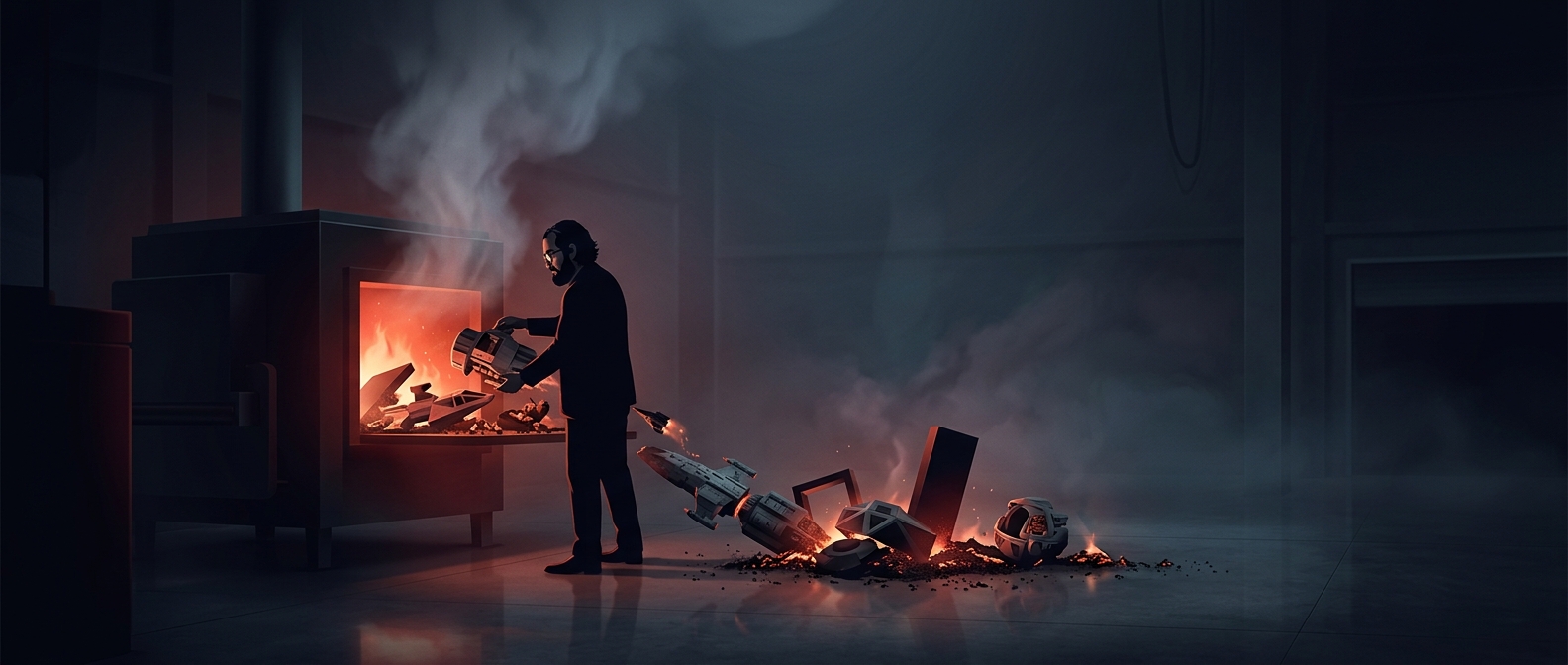
A film’s look could be copied from its hardware
Before computer-generated imagery became a routine tool, science-fiction films often made spacecraft and futuristic interiors tangible: crews built physical sets, props, and miniatures, then photographed them to create the finished images. Those objects embodied expensive design work. A rival production with access to them could potentially adapt the look without paying to develop every element from scratch.
That made the materials themselves valuable. Destroying the blueprints removed a guide to rebuilding the designs; destroying the props and models removed the objects that could be borrowed, studied, or repurposed. The choice treated 2001: A Space Odyssey’s visual world not just as a collection of filming equipment, but as a form of creative property.
The cost of keeping a design exclusive
The decision came with a tradeoff. Preserving the materials might have helped with future production or allowed others to examine how the effects were made. Destroying them made reuse harder, but also meant that later filmmakers could not simply inherit the original physical work. They would have to create their own designs and constructions.
It also changed what could survive from the production. Once a miniature or set was gone, the finished film became the most accessible record of how it looked on screen. The striking implication is that protecting a movie’s visual identity could mean deliberately erasing the very objects that had made it possible.