Designing a Computer You Could Read From Across the Room
For Minority Report, Steven Spielberg wanted the future to feel usable, not merely decorated with glowing screens. He brought in technology experts, including MIT Media Lab researcher John Underkoffler, to imagine how people might work with computers in 2054. Their challenge was to make an advanced interface legible in a film: viewers had to understand what Tom Cruise’s character was doing even when the screen itself was unfamiliar.
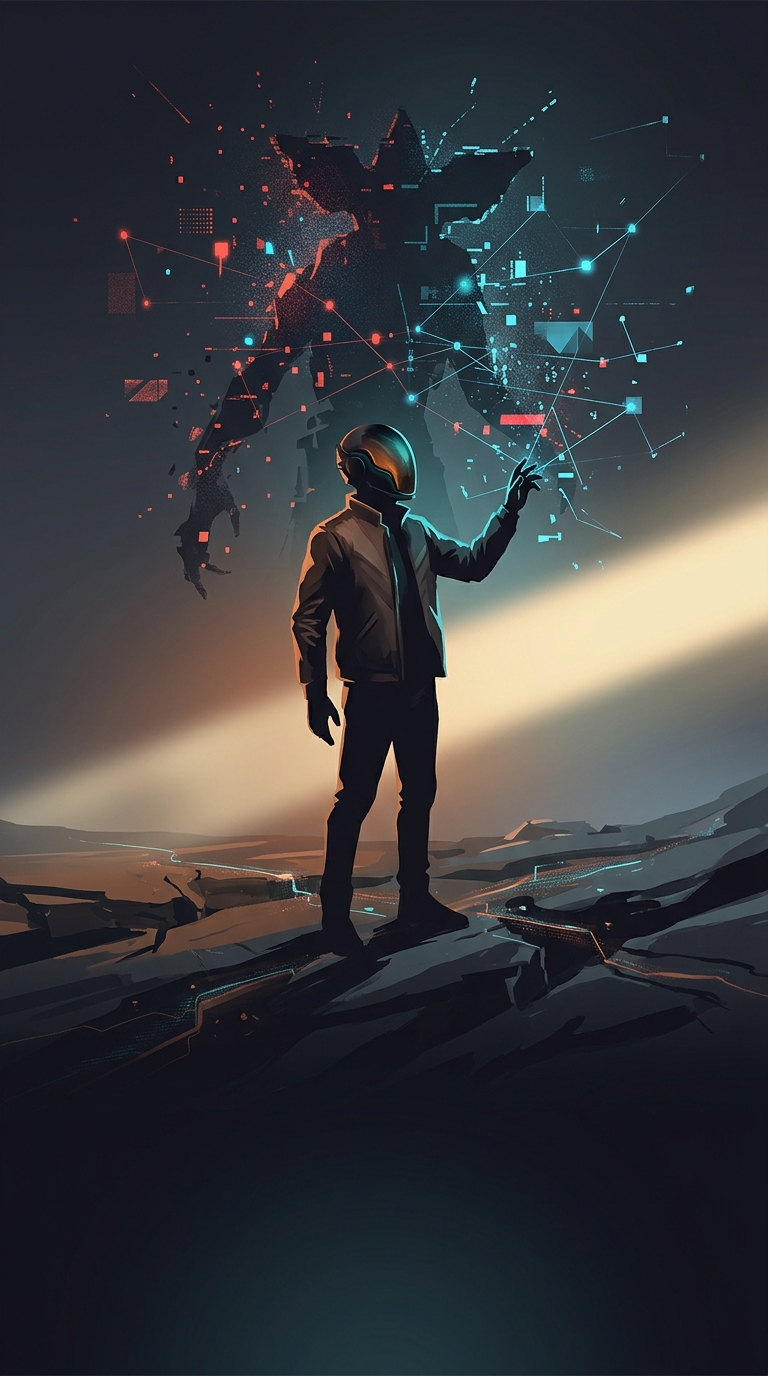
The solution replaced the familiar desk-bound routine of typing and clicking with large, projected displays and hand gestures. Cruise wore tracking gloves; sensors could follow his movements, letting the character grab, move, and enlarge images as if they were objects in space. The gloves were not magic controls: the important idea was that a computer could interpret a person’s position and gestures, then translate them into commands.
Why the Gestures Worked on Screen
A mouse hides most of the user’s movement. The film’s interface made movement the spectacle. A sweep of the arm could move information across the display, while a smaller gesture could select or adjust it. That gave the audience a visible cause-and-effect link: hand moves, image responds. The system also fit the story’s setting, where investigators needed to sift rapidly through images and records.
That visual clarity came with a practical tradeoff. A cinematic interface can make every action broad and dramatic; real work often depends on precise, repetitive tasks that are tiring to perform with raised arms. The film’s version was therefore a persuasive design idea, not a complete blueprint for everyday computing.
From Film Prop to Design Reference
Underkoffler later developed spatial-computing ideas in real systems, helping turn the movie’s sweeping gestures into a lasting reference point for interface designers. The film did not invent gesture control, but it gave a complicated possibility a memorable form: a computer that responds to the user’s hands in the same space where its information appears. That is why the scene still feels futuristic—the screen is not just displaying data; it seems to let the investigator handle it.