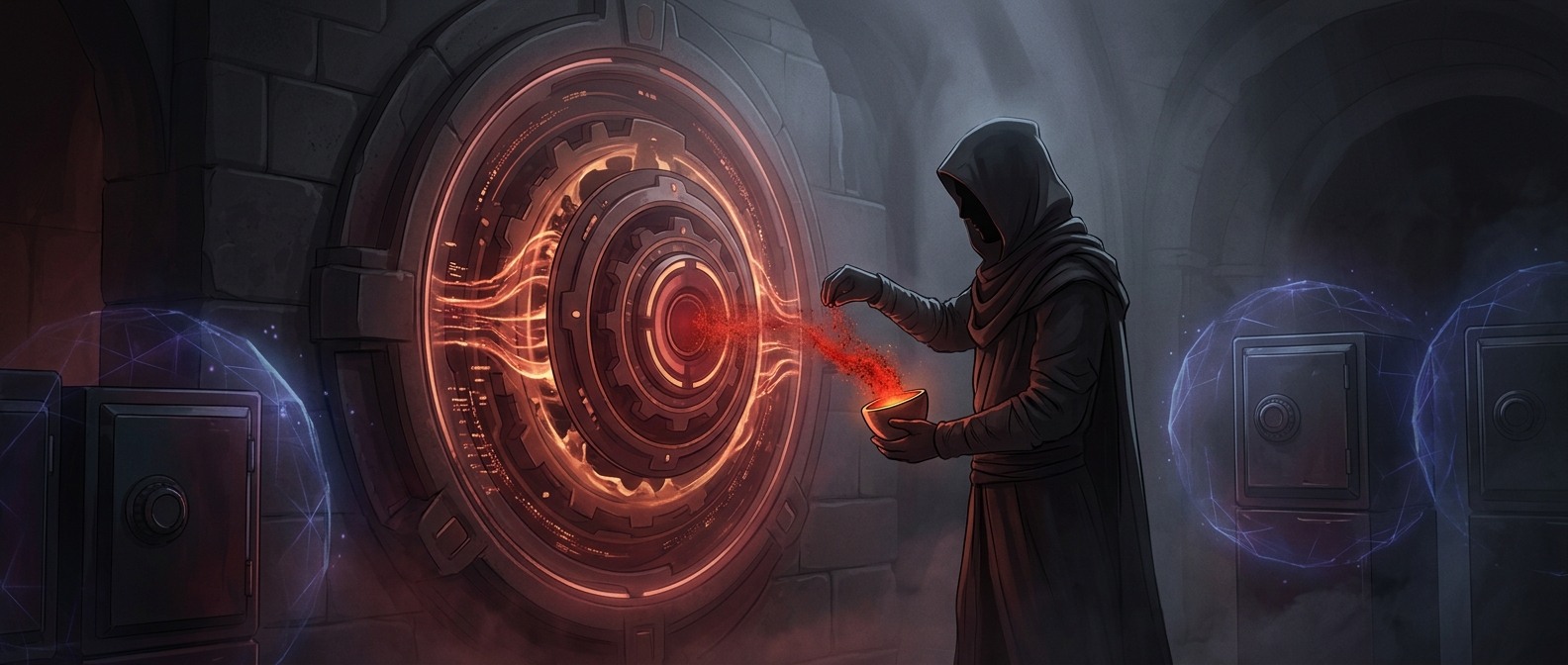
Why a Short Fingerprint Can Match Two Files
A hash function turns data of any size into a fixed-length output: a compact fingerprint often used to identify or check files. Because there are vastly more possible files than fingerprints, different files must sometimes produce the same result. That shared result is a collision. It does not mean the files contain the same data; it means the hash alone cannot distinguish them.
For a well-designed cryptographic hash, finding any two files with the same output should be impractical. But the relevant question is not just whether collisions exist—it is whether someone can deliberately construct a useful pair with the particular hash system being used.
How a Collision Can Fool a Check
Imagine a system that approves a file after comparing its hash with the hash of a trusted file. If an attacker can create a harmless-looking file and a malicious one that share the same hash, the approved fingerprint could identify either file. A check that relies only on that match might accept the malicious version as if it were the trusted one.
The attack depends on the surrounding process. A hash match does not automatically install or run malware, and systems may also verify digital signatures, check where a file came from, or use other safeguards. The risk arises when a collision-prone hash is treated as decisive proof of identity.
Why the Choice of Hash Matters
A checksum is designed mainly to catch accidental changes, such as damage during transfer; it is not necessarily built to resist deliberate manipulation. Cryptographic hashes are designed for that harder job, but older algorithms can become unsafe as weaknesses are discovered and computing methods improve. Replacing a vulnerable hash matters most where a match grants trust—such as approving software or validating a signed file. In those settings, the fingerprint is only as reliable as the algorithm behind it.