A royal seat turned into a public spectacle
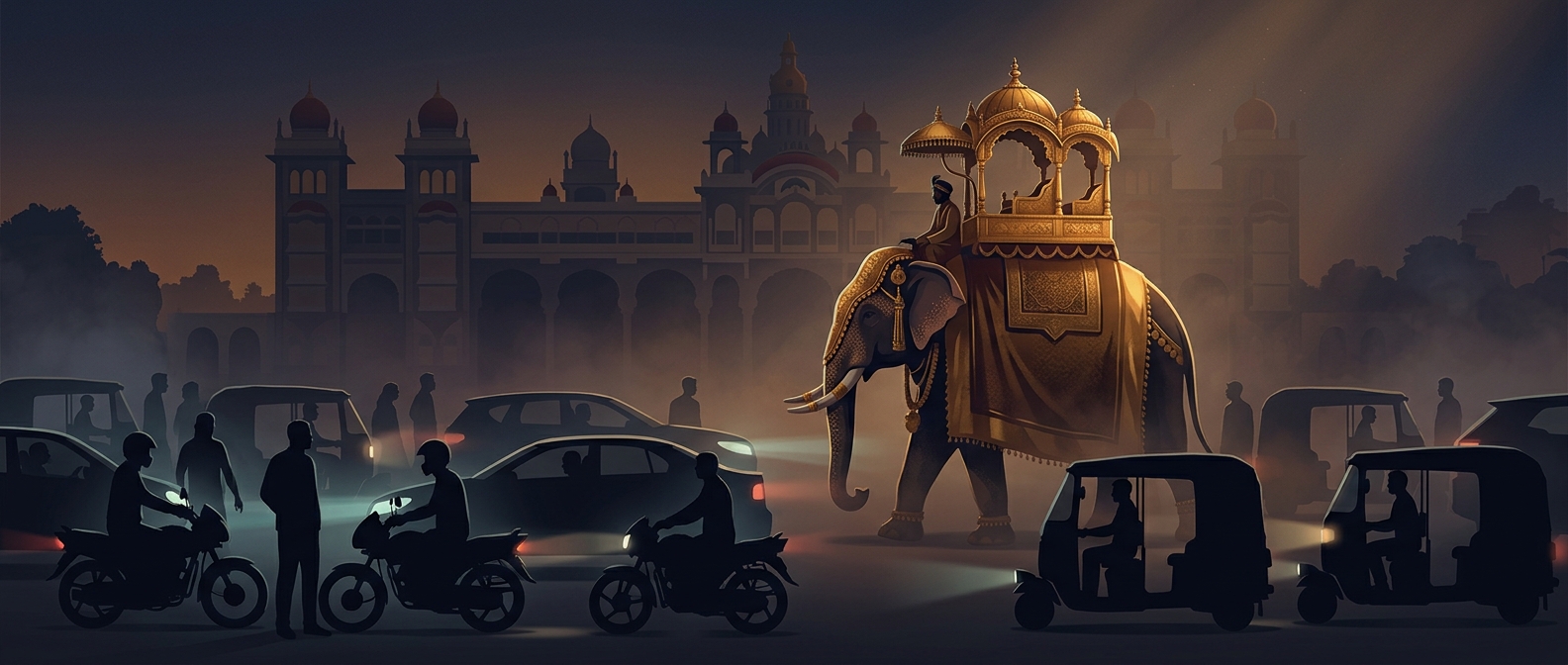
The elephant’s elaborate seat is a howdah: a raised platform carried on an animal’s back for a rider. In Mysore’s Dasara procession, the celebrated golden howdah gives the parade a visible link to royal ceremony. Its weight—about 750 kilograms—also makes clear that this is not an ordinary saddle but a substantial ceremonial structure, borne as part of a carefully staged procession.
The spectacle draws visitors because it brings together two things that are usually separated: a piece of royal regalia and a living, moving parade. The elephant makes the object visible above the crowd, while the slow procession gives onlookers time to watch it pass.
Why a procession can snarl the streets
A parade changes how a city’s streets work. The route becomes a corridor for the procession, and spectators gather along it; ordinary traffic must yield space or find another way through. When travelers come specifically to see the royal display, the crowd is not just a local audience—it is part of the event’s draw.
That is the practical twist behind the image: the golden howdah is built to be seen, but its appearance depends on a large animal, a moving procession, and a city making room. For a few hours, the ceremonial route can matter more than the usual traffic flow.