A Window Into the Stomach
In the nineteenth century, a physician gained an unusual view of digestion through a patient whose injury had left a lasting opening, or fistula, into his stomach. The opening made it possible to observe the stomach lining directly—something ordinarily hidden behind the abdominal wall. During examinations, the physician noted that the lining could look redder when the patient was emotionally upset.
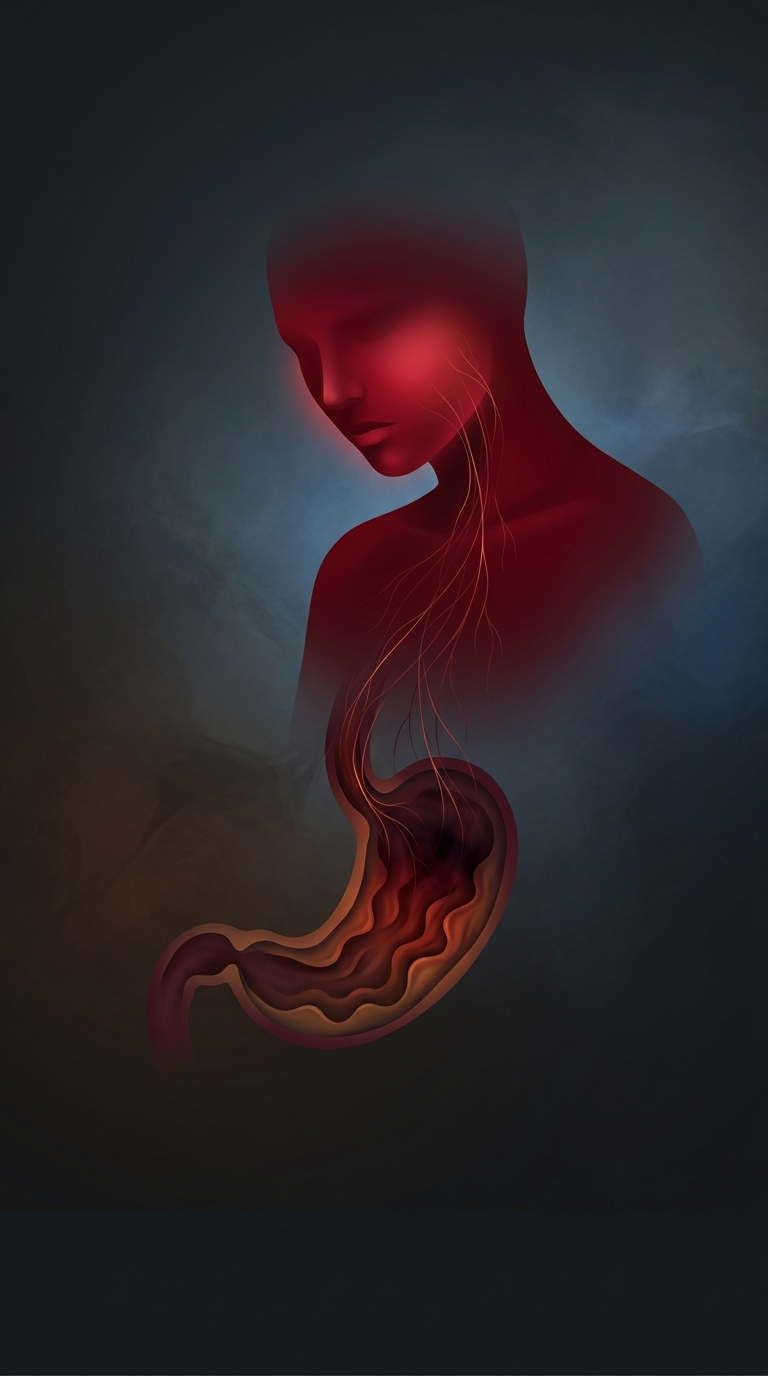
That observation suggested that an emotional reaction could alter not just visible skin but tissue inside the body. It also offered an early glimpse of how closely the brain and digestive system are linked.
Why the Lining Can Change Color
The stomach’s mucosa—the moist inner layer that protects it and helps it function—is supplied with blood vessels. Their flow can shift as the body responds to changing conditions. Stress and strong emotion activate the autonomic nervous system, which regulates processes such as heart rate and digestion without conscious control. Changes in circulation can therefore affect how blood-rich tissue appears.
Facial blushing is a familiar example of emotion-linked changes in blood flow, but the stomach is not simply a hidden copy of the face. Its appearance also varies with factors such as digestion and the condition of its surface. The historical observation was a visible clue, not proof that every bout of embarrassment produces a predictable color change inside every stomach.
What the Unusual View Revealed
The fistula turned a private internal process into something a doctor could watch. It helped make the connection between emotion and bodily function tangible: a feeling could coincide with a physical change in tissue far beyond the face.
The striking part is how rarely such a connection can be seen directly. Most of the time, the stomach’s response to emotion unfolds out of sight, even as the brain and gut continue to influence one another.