A bend across the middle of the large intestine
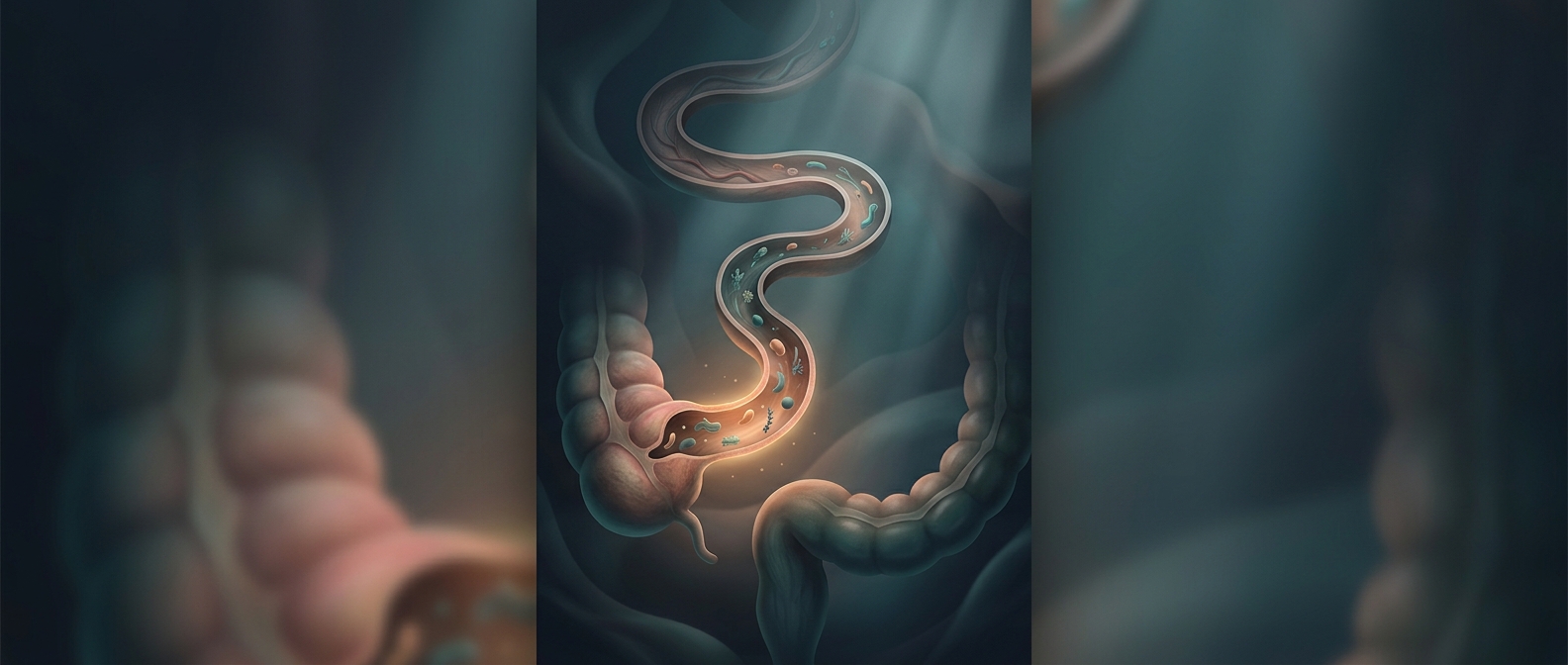
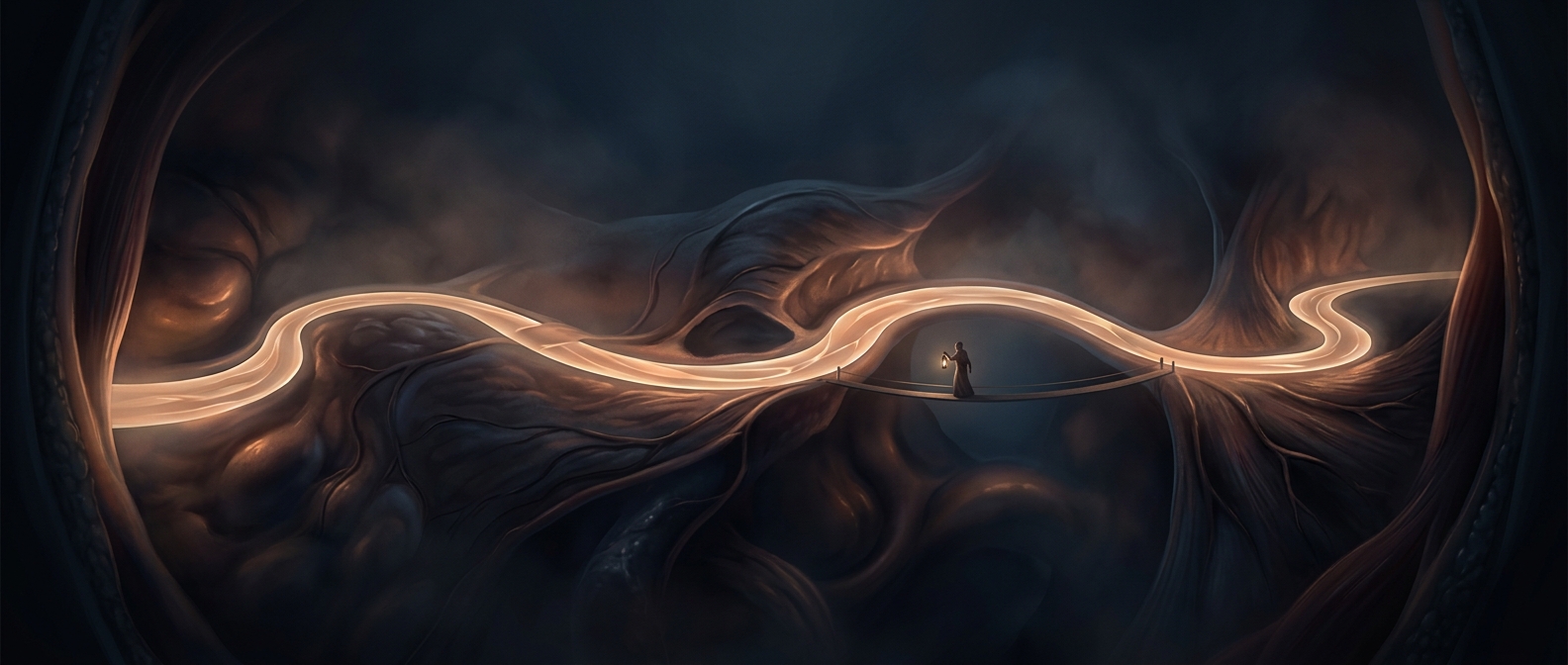
The transverse colon links two turns in the large intestine: the hepatic flexure beneath the liver on the right and the splenic flexure near the spleen on the left. Its course gives the colon a bridge-like shape, though the exact height and curve vary from person to person.
That span is supported by the transverse mesocolon, a fold of tissue that connects the colon to the back wall of the abdomen. The fold carries blood vessels and nerves as well as helping hold the bowel in place. It also permits some movement, so the colon is supported rather than rigidly fixed or simply resting on the organs below it.
What happens along the route
As material passes through this section, the colon continues absorbing water and salts. Muscular contractions mix and move the contents onward toward the descending colon, where further water absorption helps turn them into stool. The transverse colon is therefore not just a connector: it is an active stretch of the large intestine, carrying and processing material as it crosses the abdomen.
Its suspended arrangement matters because the abdomen is crowded with moving organs and changing pressures. A flexible attachment lets the bowel shift somewhat while keeping its route connected at both ends—one reason the colon can span the abdomen without being a fixed, straight tube.