Why the Stomach Is Mostly on the Left
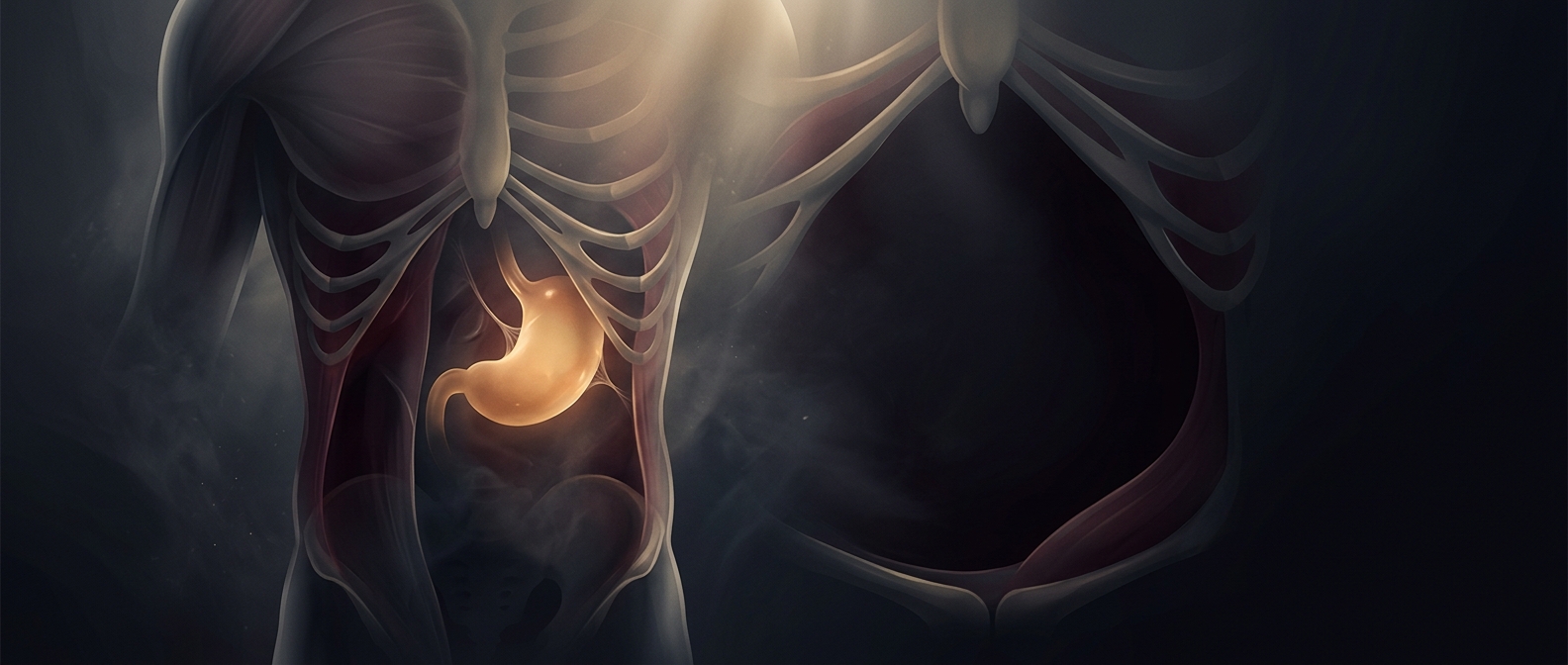
The stomach sits in the upper abdomen, tucked beneath the diaphragm—the broad muscle that helps you breathe—and partly sheltered by the lower ribs. Its larger portion lies left of the body's midline, but the organ is not a neat pouch confined to one side. It curves inward, so parts extend toward the center and can approach the right side.
A Flexible Organ, Not a Fixed Shape
The stomach’s outline and position vary with how full it is and with a person’s anatomy. When food arrives, its muscular walls relax and expand; as digestion proceeds, waves of muscle contractions mix the food with acid and enzymes, then move it toward the small intestine. That changing volume can alter the stomach’s shape without changing its basic location in the upper abdomen.
Nearby organs also help define that space. The liver occupies much of the upper right abdomen, while the spleen lies to the stomach’s left. The stomach curves between them, which is why a simple left-or-right label is only a rough guide.
Why the Distinction Matters
A location description can help orient someone, but it cannot identify the cause of abdominal discomfort by itself. The stomach’s position overlaps the central upper abdomen, and pain there may come from other organs or tissues. In practical terms, “upper left” is a useful starting point—not a precise map of where the stomach begins and ends.