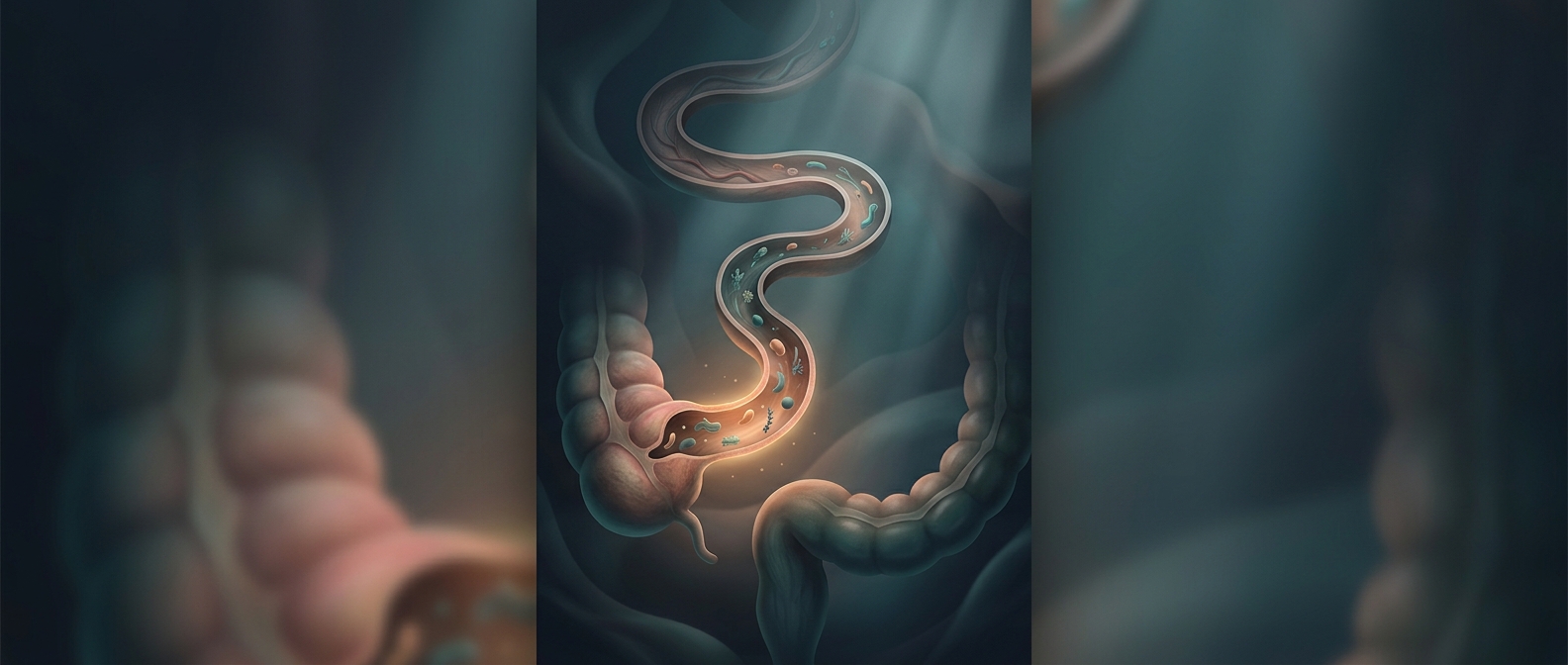
The ileum’s one-way handoff
At the end of the small intestine, the ileum meets the first part of the large intestine, the cecum. Their junction is more than an open seam: a ring of muscle called the ileocecal sphincter helps regulate when intestinal contents pass through. It relaxes to let material enter the cecum and generally limits backward flow.
Why the timing matters
The small intestine is where most digestion and nutrient absorption take place. By the time its contents reach the ileum, the body has already taken up much of the usable material. The ileum absorbs some remaining nutrients—particularly vitamin B12 and bile salts—and passes the rest onward, including water and undigested material.
The large intestine handles the next stage. It absorbs more water and salts from the incoming material, gradually making it more solid. The junction helps coordinate this transition: contents arrive in measured passages rather than simply spilling continuously from one section to the next.
That controlled handoff also helps keep the contents of the large intestine from moving freely back into the small intestine. The ileum is therefore both a final absorption zone and a regulated gateway—a small junction with a role in keeping digestion moving in the right direction.