How an ice luge chills a moving drink
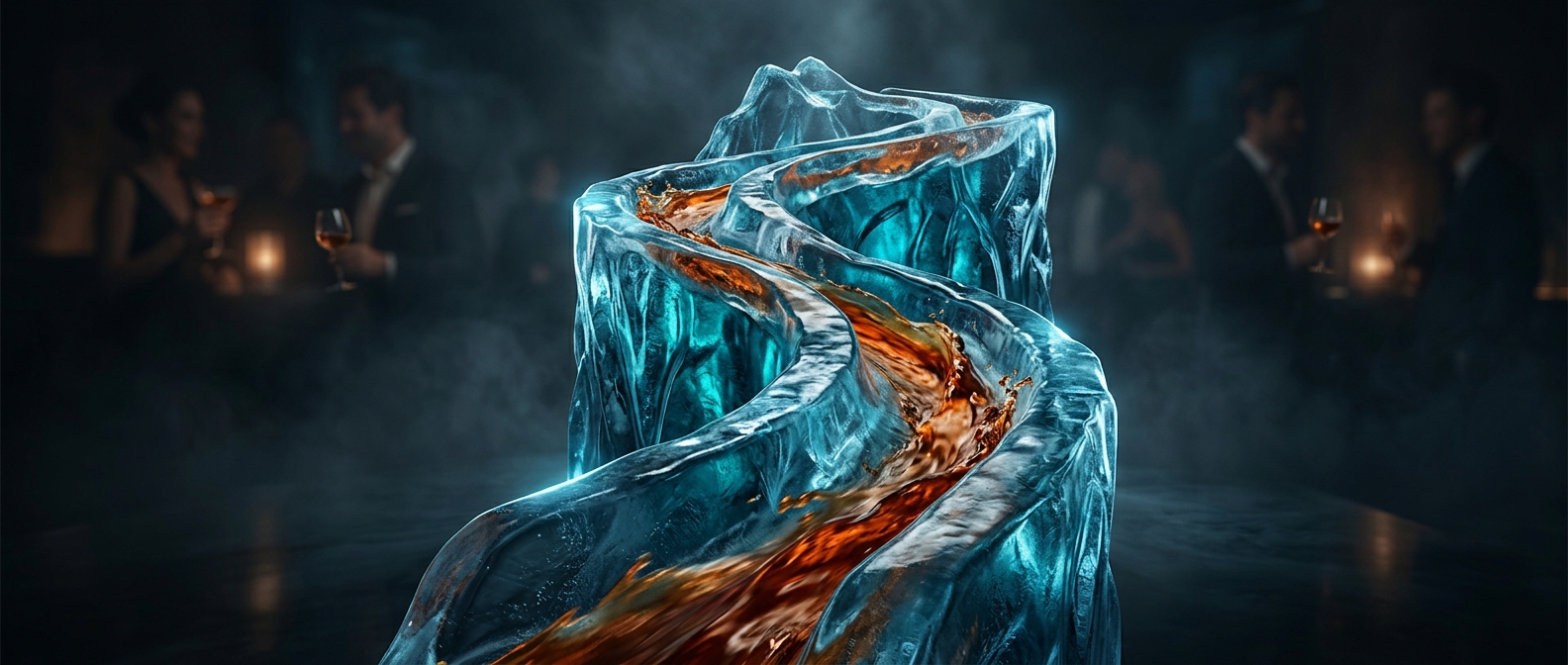
An ice luge turns a block of ice into a sloped, open channel. Pour a drink at the top and gravity carries it downhill, spreading it across the cold surface before it reaches a glass. Heat flows from the warmer liquid into the ice, so the drink arrives colder than it was poured.
The channel’s shape sets the pace. A steeper or smoother route lets the liquid travel faster; a longer route gives it more time in contact with the ice. The drink also spreads into a relatively thin stream, exposing more of it to the cold surface at once. The result is rapid chilling without needing to leave a glass in a freezer.
The design is part of the game
An ice luge is both a cooling device and a party challenge: the carved path makes the drink’s journey visible, and its turns or length can make the pour harder to control. But speed and chilling pull in opposite directions. A fast stream spends less time on the ice, while a slower one has longer to exchange heat. The channel must also be steep enough for gravity to keep the liquid moving.
As the ice melts, the surface changes and the channel can become shallower or rougher. That can alter how quickly the drink runs and how much contact it makes. So each pour is a small race between gravity moving the liquid onward and the ice drawing heat out of it.