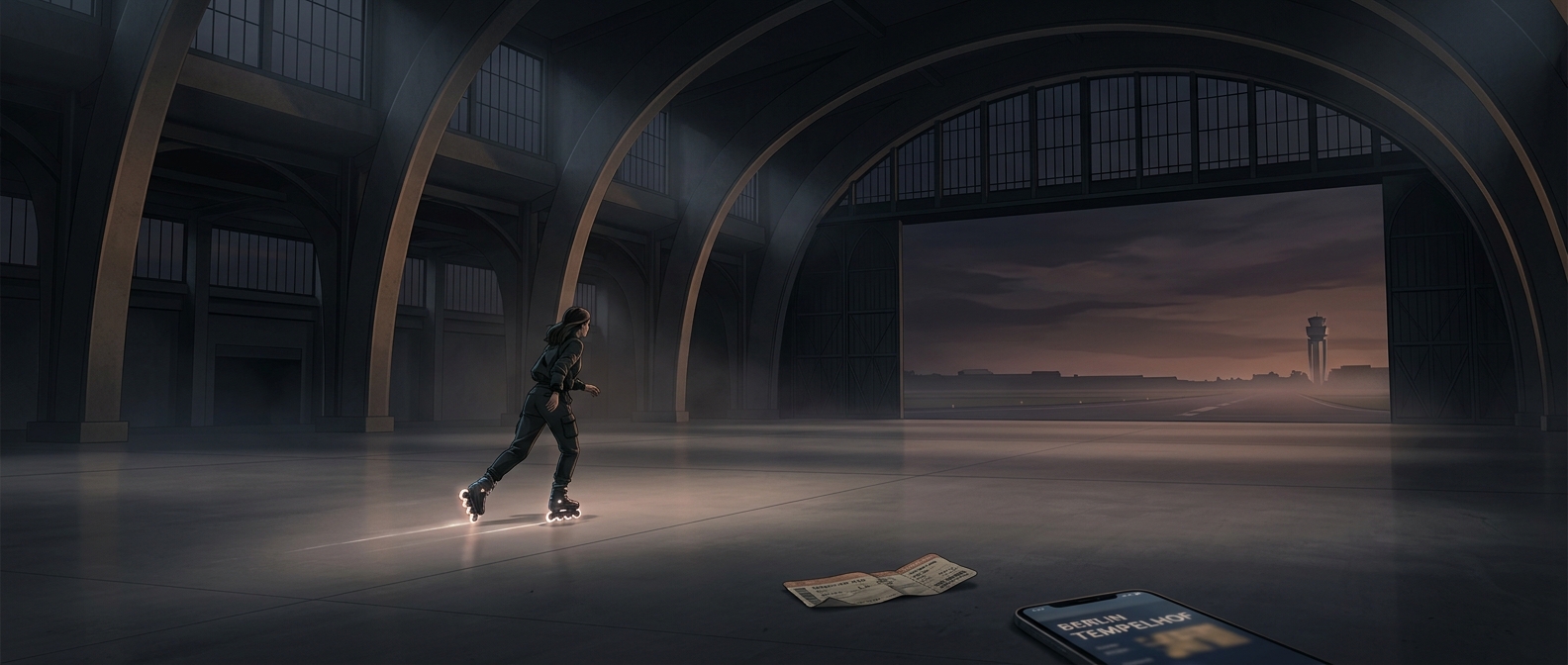
Tempelhof’s runways found a second life
Berlin’s Tempelhof Airport stopped operating in 2008, but its broad, paved runways did not disappear beneath new construction. The former airfield reopened as a public park, where the surfaces built for aircraft now make unusually smooth, uninterrupted routes for walking, cycling, skating—and riding a unicycle.
The airport’s scale changes what a city park can feel like. With long sightlines and few obstacles, the open field gives wind room to move, making it a natural place to fly kites. Visitors can travel across it without weaving between buildings or trees, while the former runways remain visible as traces of the site’s working past.
Berlin chose to keep the field open
The future of the land was contested: redevelopment could have brought new buildings, but it would also have reduced the rare expanse of open ground inside the city. In a 2014 public referendum, Berlin voters rejected the proposed development plans, helping secure the airfield’s continued use as open space.
That decision left the airport’s infrastructure woven into everyday recreation rather than preserved only as a monument. Cold War-era radar towers still stand nearby, reminders that the field’s history stretches beyond ordinary commercial flying. Today, a runway can serve as both a record of that history and a place where a kite string pulls taut in the wind.