Why a Dirt Track Could Hit Like a Hammer
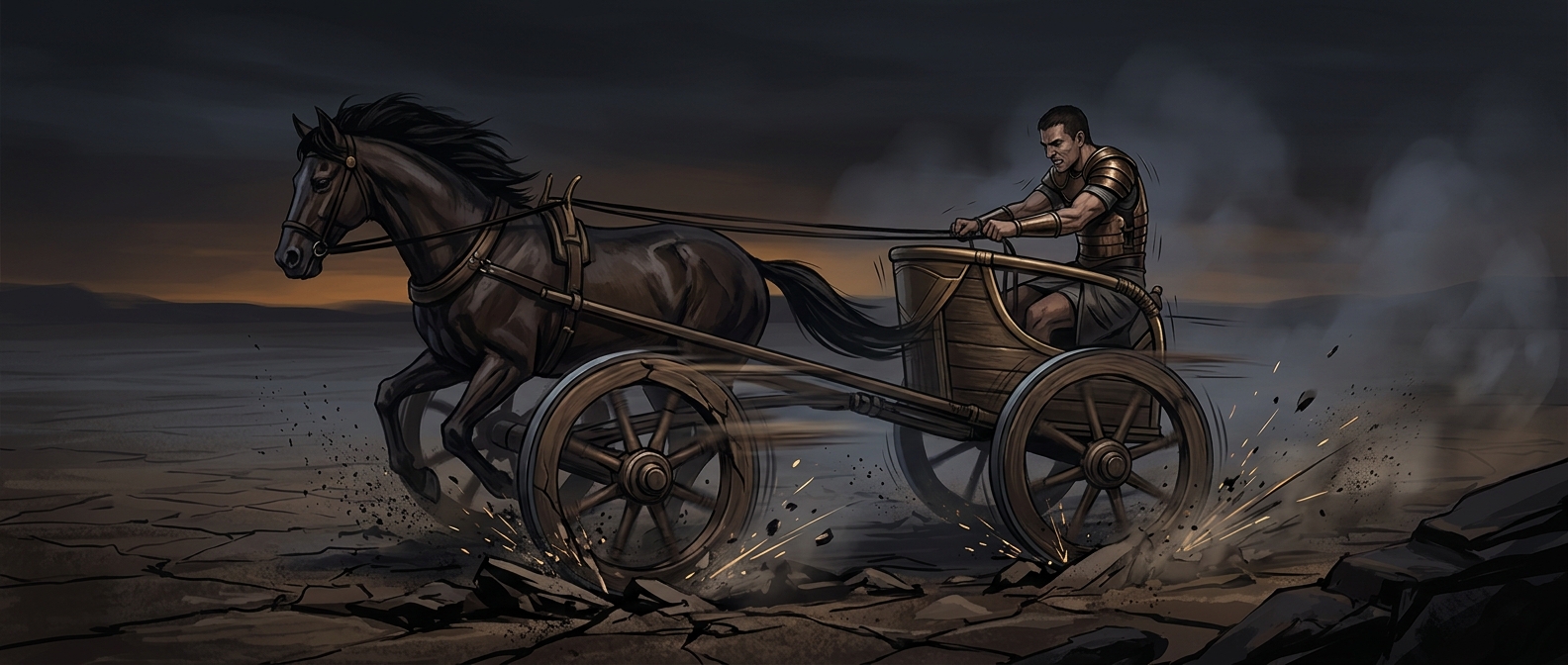
A chariot’s wheels could roll over a rut, but the body above them did not float independently. In the design described here, the wooden basket was fixed to a solid axle, so when a wheel climbed a bump or dropped into a hollow, the axle and basket moved with it. There was no spring or suspended frame to absorb that vertical motion.
The wheel’s rotation helped it keep moving; it did not cancel the upward jolt. And unlike a modern vehicle’s pneumatic tires, a wooden wheel offered little cushioning of its own. The driver’s body became part of the shock-absorbing system: bent legs and knees could flex, but every rough patch still demanded balance and effort.
The Road Shaped the Ride
That made surface and speed matter. A smoother, firmer track meant fewer abrupt changes in wheel height; uneven ground delivered sharper jolts. Moving faster left the driver less time to brace or adjust position. A chariot was therefore not simply a fast vehicle in every setting: its usefulness depended partly on ground that its wheels could cross without constantly throwing the driver off balance.
A rigid arrangement also avoided the added parts and movement of a suspension system, but it passed impacts straight into the vehicle. The chariot’s ride was governed as much by the road beneath it as by the horses pulling it. On a rough route, the driver had to manage the terrain with posture and control, because the vehicle itself could not soften the blow.