Turning a Car Into a Place to Stay
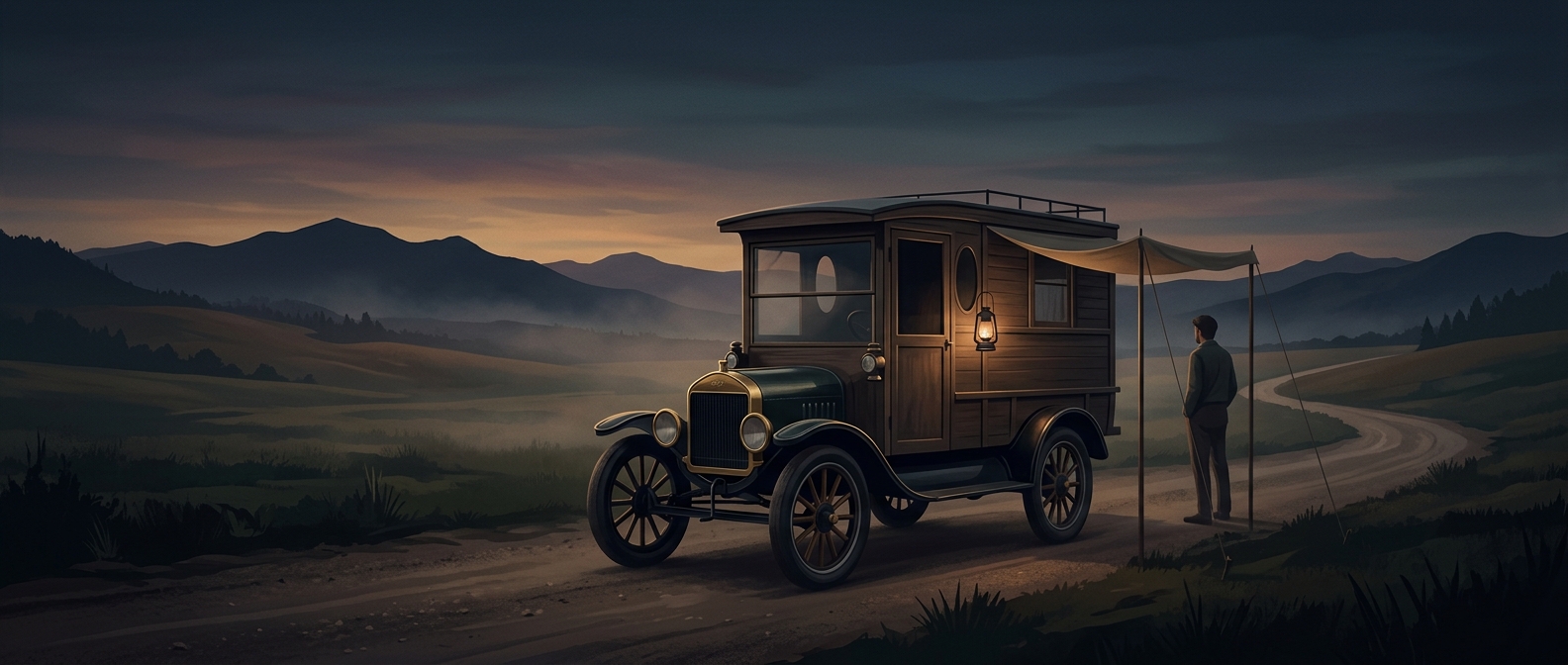
Early motorhomes began as a practical workaround: travelers added a wooden living space to a Model T’s existing automobile chassis instead of building a purpose-made recreational vehicle. The chassis—the frame and running gear that carry the engine, wheels, and body—already provided a way to travel under its own power. A cabin bolted on top could provide shelter and a place to sleep without requiring a separate tent or lodging stop.
That arrangement also imposed a sharp engineering limit. A Model T was built to carry a car body and passengers, not a heavy wooden room. The extra mass made the vehicle harder to control, especially when stopping. Brakes have to turn a moving vehicle’s energy into heat; add weight, and they must dissipate more energy to bring it to a halt. A tall cabin could also make the vehicle feel less stable than an ordinary car.
A Tradeoff That Shaped Mobile Living
The cabins offered privacy and shelter, but their walls did little to hold warmth in or keep cold out. In effect, travelers gained a roof and a bed while accepting a vehicle with few of the comforts and safety margins expected from a modern motorhome.
The important innovation was not a polished design. It was the combination of two functions: transportation and accommodation in one vehicle. That idea let travelers carry their temporary home with them, but the Model T conversions also made clear that a living space on wheels needed more than a car with a cabin attached. The demands of the road—weight, braking, and weather protection—had to shape the home as much as the desire for room inside.