Why an Early Electric Trip Needed a Plan
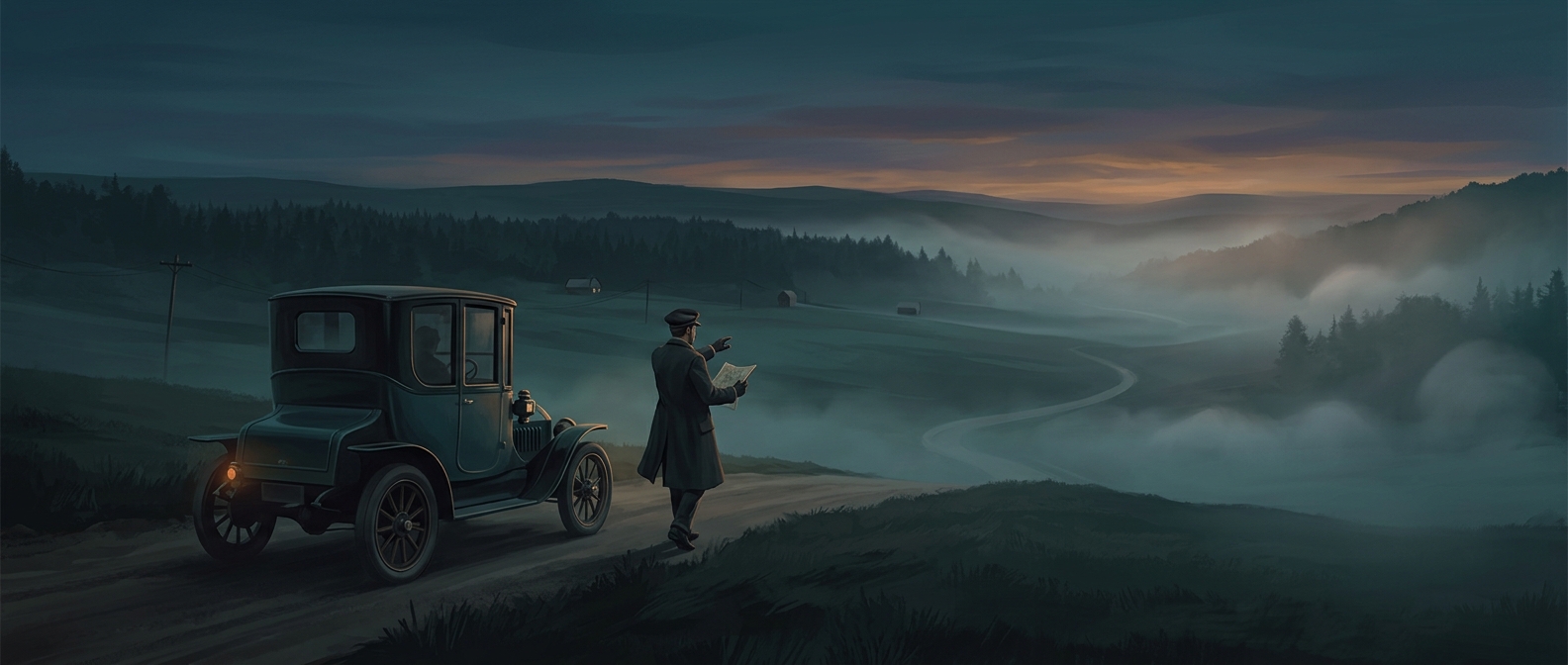
For an early electric-car driver, a journey was shaped by where the car could be recharged, not just by the distance on a map. Electricity was easiest to obtain in towns and at private homes or garages with suitable connections. Beyond familiar routes, a driver could not assume that a place to plug in would be waiting at the destination.
The battery made that uncertainty harder to manage. Early batteries stored relatively little energy for their size and weight, and recharging took far longer than filling a tank. A stop was therefore not simply a brief pause: it could determine whether the next leg of the trip was practical at all. Drivers had reason to favor known routes, reachable destinations, and enough time to recharge before setting out again.
Why Gasoline Changed the Travel Calculation
Gasoline cars had their own early limitations, including an uneven supply of fuel. But liquid fuel carries a great deal of energy in a compact amount, and a tank can be refilled quickly. As fuel became easier to find along travel routes, drivers gained a kind of flexibility electric cars could not match with their batteries and charging arrangements.
That difference mattered beyond speed. A traveler could make a detour, continue farther than planned, or set off without first confirming an electrical connection at the far end. The early electric car’s challenge was not simply that its range was short; it was that every unfamiliar stop could become part of the trip’s engineering. For those drivers, choosing a destination meant choosing a charging plan, too.