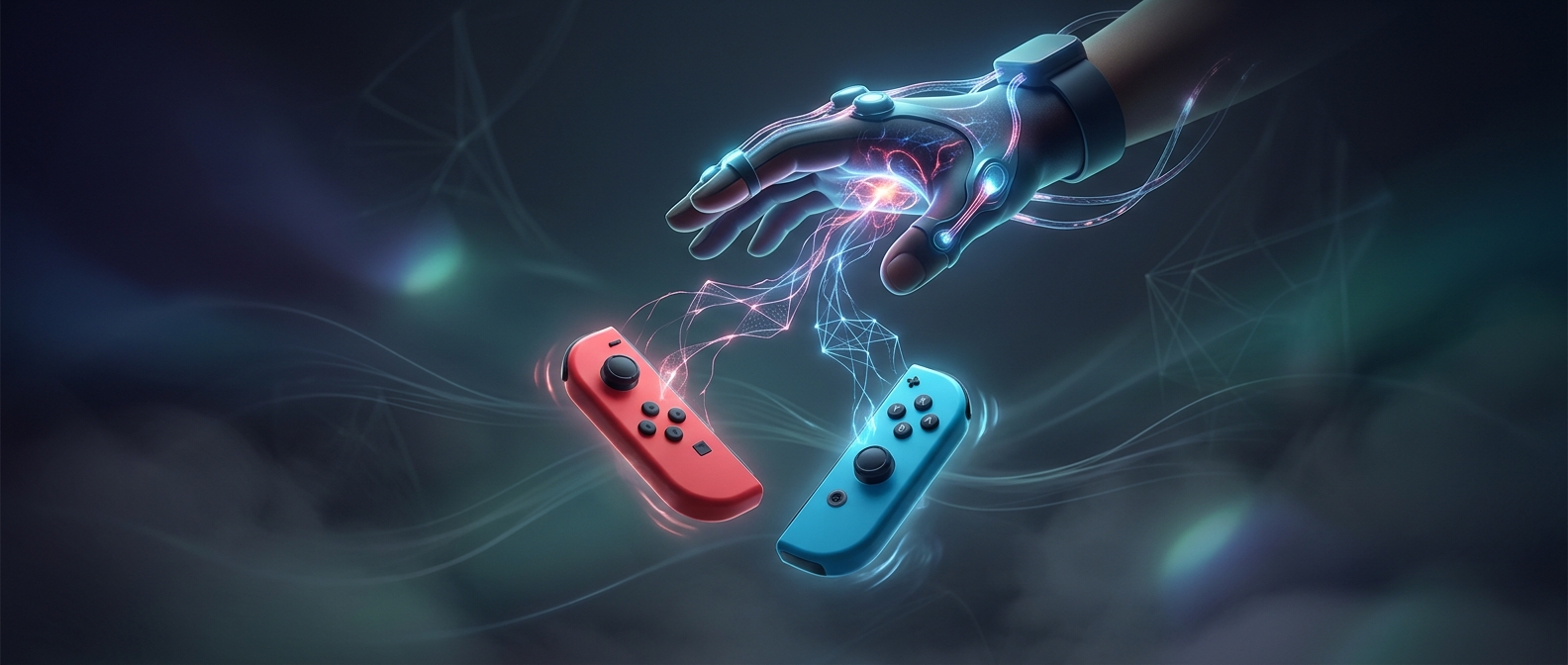
How a small motor can suggest a specific sensation
A conventional game-controller rumble often comes from a motor spinning an off-center weight. That creates a broad, familiar buzz: useful for signaling impact, but not especially good at making one vibration feel different from another.
Joy-Con’s HD Rumble uses a more finely controlled haptic system. Haptics are touch sensations created by a device. By varying the vibration’s strength and timing, the controller can produce more distinct patterns instead of a single undifferentiated shake. The technology drew on work associated with virtual reality, where touch-like feedback can help make a digital action feel more present.
From vibration pattern to virtual cow
The controller is not reproducing the physical feel of milking a cow. It is delivering a carefully timed series of vibrations that a player can interpret as a particular action. In a game, those changing pulses can serve as tactile cues—something happening in the player’s hands, not just on the screen.
That is the trick behind the milking example: a small controller cannot recreate the full sensation, but it can make the interaction feel more specific than a generic rumble. The same principle lets designers use touch to distinguish events and actions, adding information without requiring another visual prompt.
The VR connection matters because virtual experiences need ways to make digital events feel tangible. In Joy-Con, that idea fits into an everyday controller: a subtle change in vibration can help turn a simple button-driven action into something players recognize through their hands.