A villain becomes a rival, not a threat
In a Mario adventure, Bowser’s role is usually to create the problem: he threatens the Mushroom Kingdom, and Mario sets out to stop him. Mario Kart changes the situation. The racers meet inside a contest with shared rules, where the goal is to cross the finish line first—not to settle the story’s larger conflict.
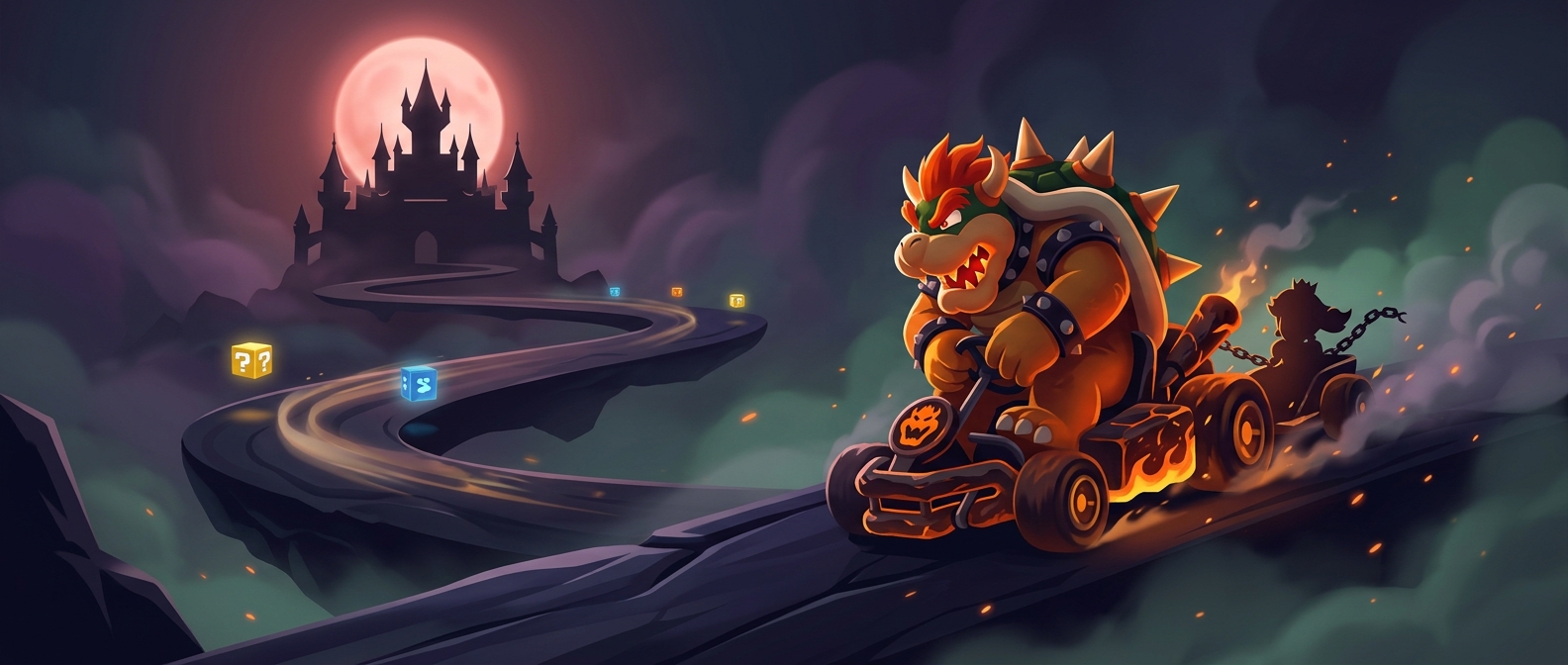
That shift lets the game use familiar characters without carrying their full story roles into every race. Bowser can still feel like Bowser: a hulking opponent who looks imposing on the grid. But once the countdown ends, he is simply another racer, vulnerable to the same hazards and able to use the same kinds of trackside advantages as everyone else.
The cast makes the competition personal
Racing against a recognizable rival gives a win a little story of its own. Beating Bowser can feel like an extra bit of payback; choosing him lets a player take the villain’s side without endorsing his behavior in the adventure games. That flexibility suits a party-style game, where people may choose characters for their look, personality, or attachment to the series rather than for a fixed allegiance.
The result is a playful kind of continuity: the characters remain recognizable, but the rules of the spin-off decide what they can do together. On the track, even Mario’s usual nemesis is less a menace than a competitor who might get hit by the same shell he throws.