The split screen came before the Mushroom Kingdom
The earliest test for Super Mario Kart was not about Mario at all. The team first tried a simpler question: could two players race at once while each saw their own view of the course? The prototype used ordinary cars, keeping the experiment focused on the two-player format rather than on characters or a recognizable setting.
That distinction matters. In a split-screen race, the game must show two separate views simultaneously. The test was about whether that arrangement made racing together work; it did not yet answer what would make the experience memorable.
Why plain cars were not enough
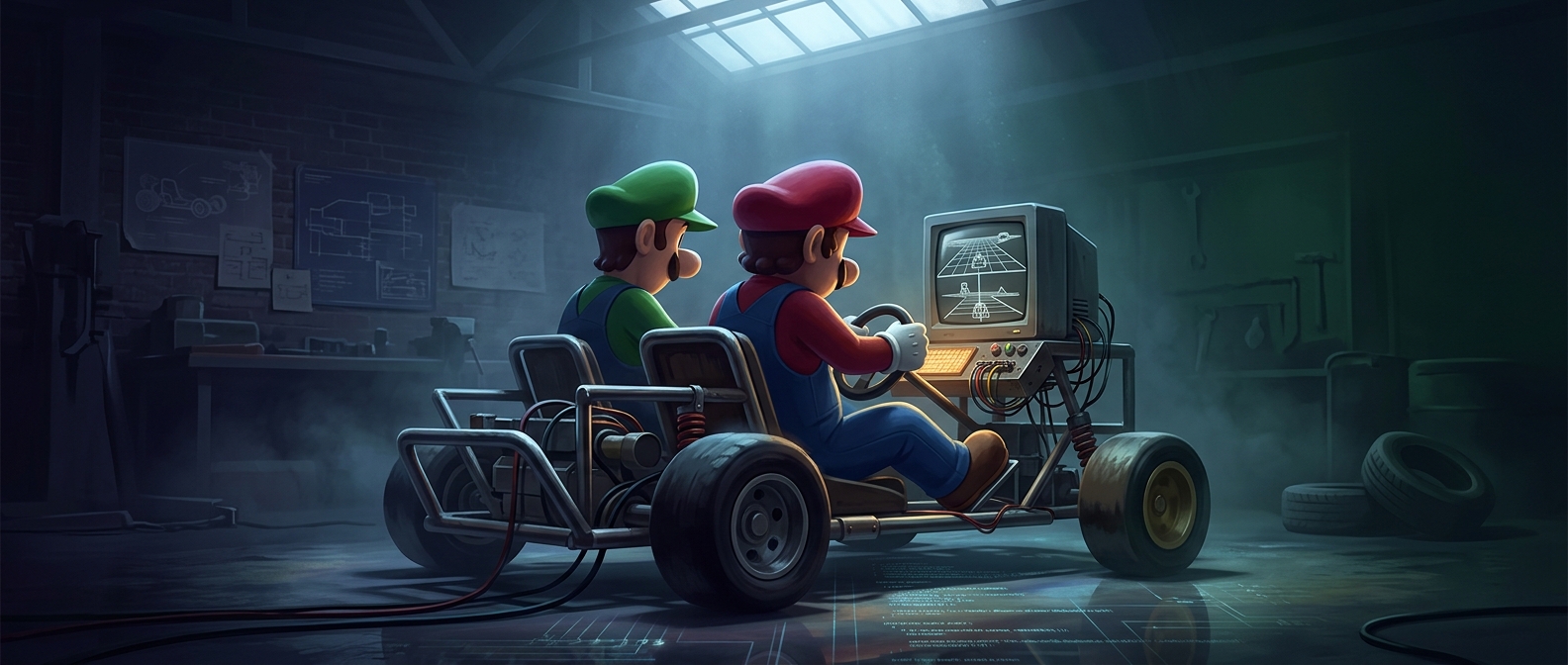
The cars proved the basic idea, but they felt dull. The team then brought in Mario and other characters, giving the racers identities and placing the competition inside a world players could recognize. The project’s character was added after the central format had already been tested.
That sequence helps explain the game’s appeal: it joined a practical multiplayer experiment to a cast with built-in personality. Instead of two anonymous vehicles sharing a screen, players could choose familiar characters and turn the race into a contest between them.
The memorable part of the origin story is that the Mario setting was not the starting point—it was the answer to what the plain-car test was missing.