Why graphics work suits parallel processing
A game frame is built from layers of work: the computer determines which surfaces are visible, how light falls on them, and what color each spot on the screen should be. Much of the final shading can be repeated independently across many spots. That makes graphics a natural fit for a processor designed to carry out a large number of similar operations at the same time.
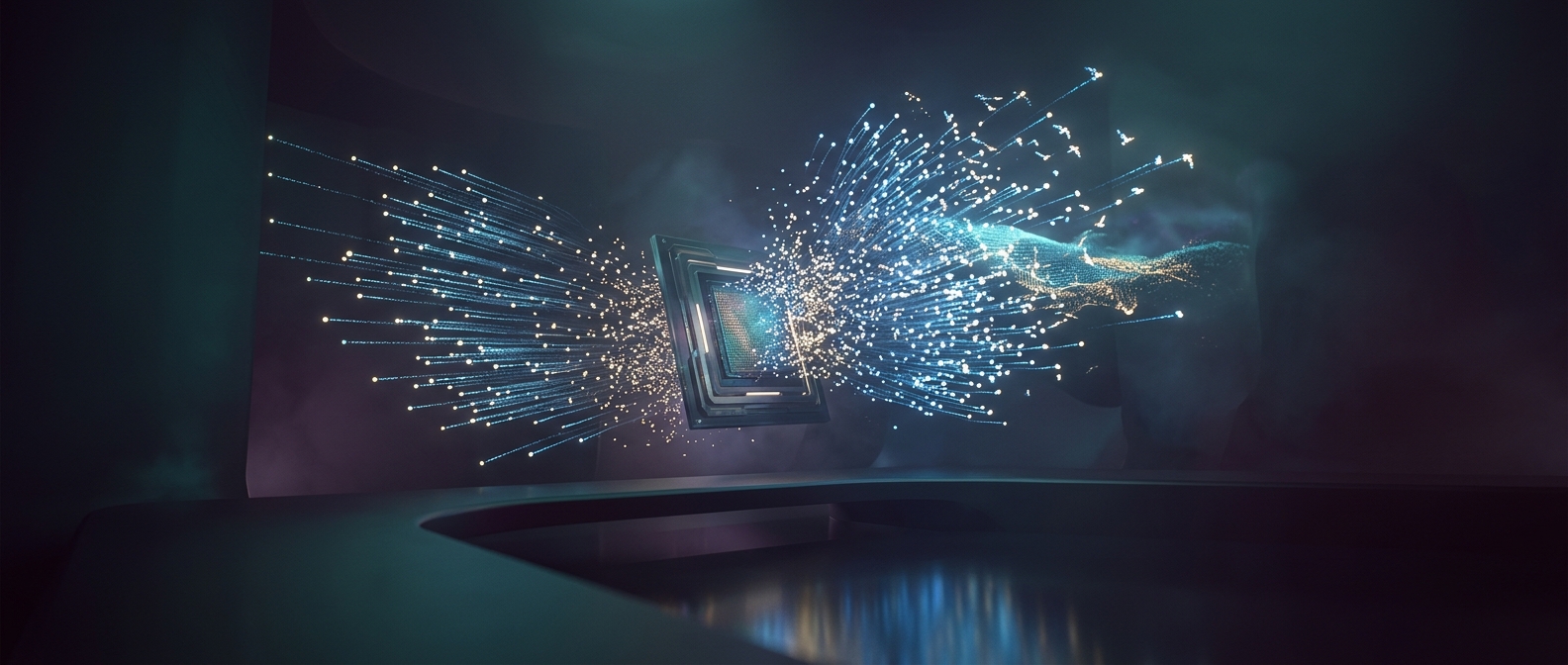
A GPU divides this work into groups. Each group applies the same kinds of instructions to different pieces of image data—for example, calculating how a surface’s color changes with its lighting. Rather than waiting for one calculation to finish before beginning the next, the GPU keeps many calculations in flight together.
The frame is a pipeline, not one giant calculation
Parallelism does not mean every part of drawing a scene happens at once. Some steps depend on earlier ones: the system must work out what objects are in view before it can shade their visible surfaces. Graphics hardware moves the results through stages, with each stage handling a different part of the job. When the stages stay busy, one frame can be processed while work on later frames is already getting underway.
The GPU also needs rapid access to image data. If its processing units must wait for textures, geometry, or intermediate results to arrive, extra arithmetic capacity alone will not make the picture appear sooner. Graphics performance therefore depends on coordinating computation with the movement of data.
Why this matters to motion
A game has to repeat the rendering process for every new frame. If one frame takes too long, the display has less timely information about how the scene should look as the player moves or turns. By spreading suitable tasks across many processing units, a GPU helps keep those updates moving at a steady pace—so a complicated scene can respond as an image, rather than arriving as a sequence of stalled calculations.