A plasma turns gas into a source of carbon
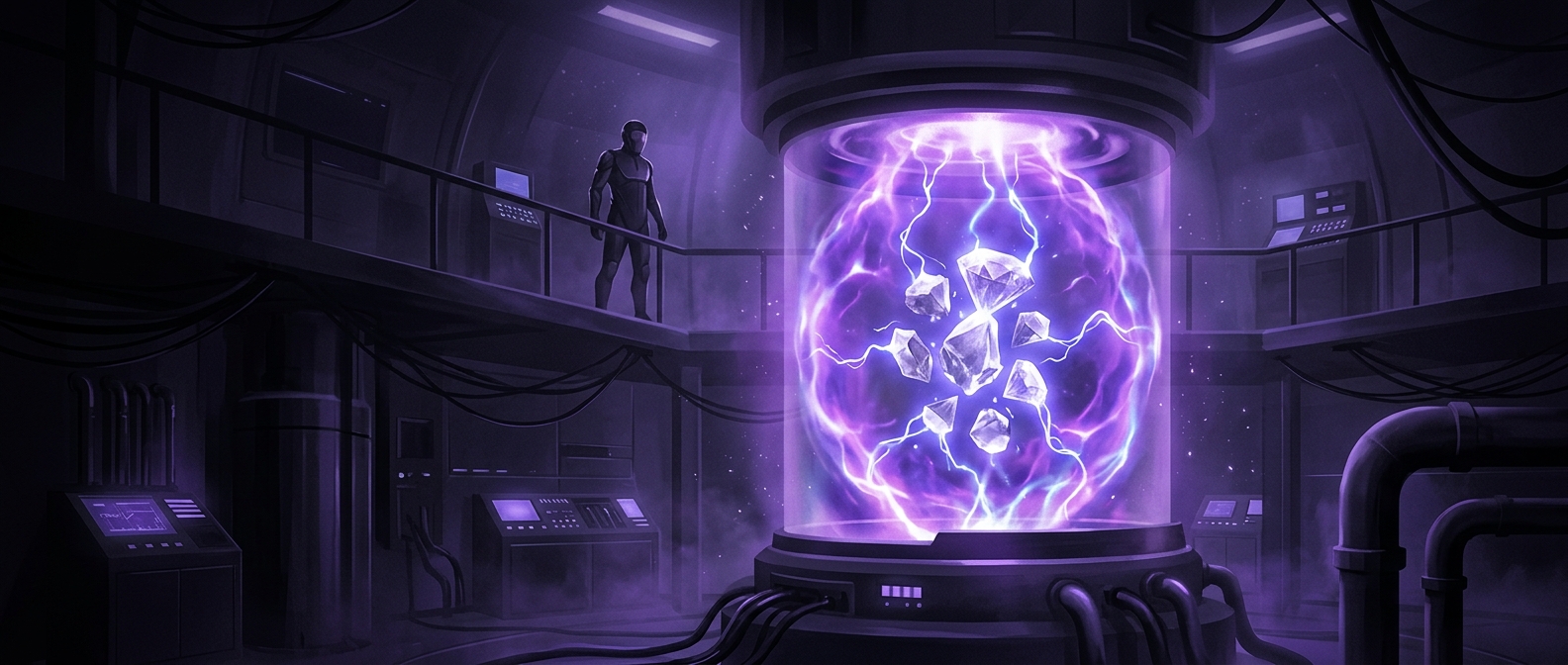
In a microwave-plasma reactor, a controlled mixture of gases—usually including a carbon-bearing gas such as methane and hydrogen—is held in a chamber at reduced pressure. Microwaves energize the gas until some of its molecules break apart and form a plasma, a hot, electrically charged mixture of particles. The plasma supplies reactive carbon-containing fragments that can take part in crystal growth.
The crystal grows on a prepared surface
The carbon does not simply condense into a diamond anywhere in the chamber. It settles onto a small plate, or substrate, that is often prepared with tiny diamond seeds. At the hot surface, carbon atoms attach to the existing crystal in the orderly arrangement characteristic of diamond. Repeated attachment builds the crystal layer by layer—effectively atom by atom, though the process is governed by surface chemistry rather than a machine placing each atom individually.
Hydrogen plays an important supporting role. It helps remove carbon arranged in unwanted, non-diamond forms, while conditions at the surface favor continued diamond growth. Adjusting the gas mixture, microwave power, pressure, and substrate temperature lets operators manage how quickly the layer grows and what properties it develops.
Slow growth, useful control
This method, called chemical vapor deposition, can make diamond coatings or larger crystals without the geological pressures that form natural diamonds. Its advantage is control: a reactor can grow material on a chosen surface and, with carefully managed conditions, produce diamond suited to applications such as cutting tools, heat spreaders, or electronic components. The crystal’s final quality depends on keeping the delicate balance between adding carbon and preventing defects or unwanted forms of carbon from taking over.