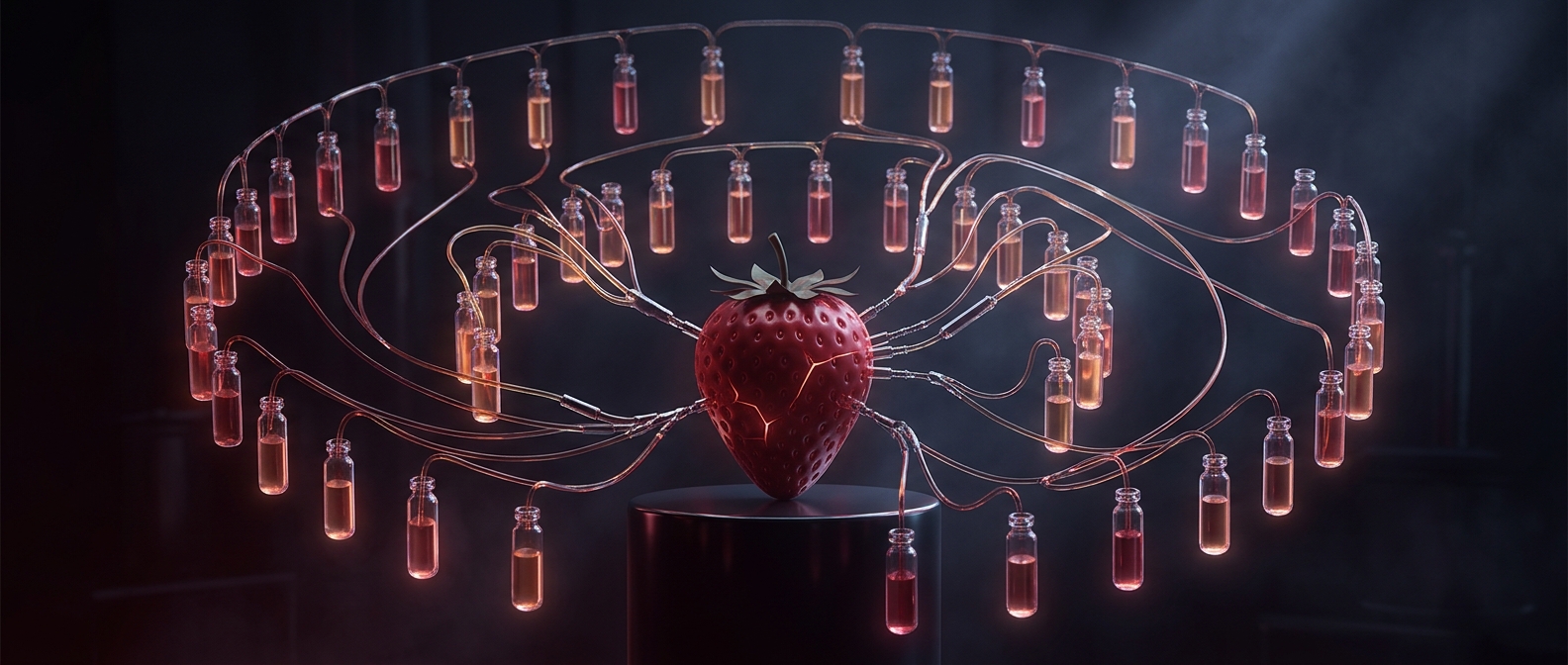
Why Strawberry Flavor Is a Blend, Not a Single Molecule
A strawberry does not owe its flavor to one defining chemical. Its familiar character emerges from a mixture of volatile compounds—molecules that evaporate and reach the nose—as well as sweetness and acidity detected by the tongue. A flavor maker trying to imitate the fruit must recreate that balance, not simply add one “strawberry” ingredient.
That is why a convincing imitation can call for around 40 synthesized compounds. Each can contribute a small part of the impression: fruity or floral notes, a greener edge, or the ripe, sweet aroma people recognize. Used alone, many would smell unlike strawberry; blended in the right proportions, they can suggest it. The mixture also has to avoid letting one sharp or perfumey note overwhelm the rest.
The Nose Helps Complete the Flavor
What people call flavor is partly smell. As a person chews or drinks, aroma molecules travel from the mouth to the nose, where the brain combines that information with sweetness and sourness. A strawberry flavoring therefore has to work as a coordinated sensory cue, not just taste sweet.
The target is also an impression rather than a perfect copy of every fresh berry. A flavor designed for candy or a drink must remain recognizable in that product, where sugar, acidity, and other ingredients affect the overall experience. The many-compound blend gives formulators room to adjust individual notes while keeping the result recognizably strawberry. That complexity is the hidden reason a simple berry label can stand for a carefully assembled recipe.