One molecule, not the whole bean
Vanillin is the main compound people recognize as vanilla’s aroma, but a vanilla bean contains many other aromatic substances too. Together, those compounds create the fuller flavor associated with natural vanilla. A flavoring made with vanillin can reproduce its familiar central note without reproducing the bean’s entire chemical mixture.
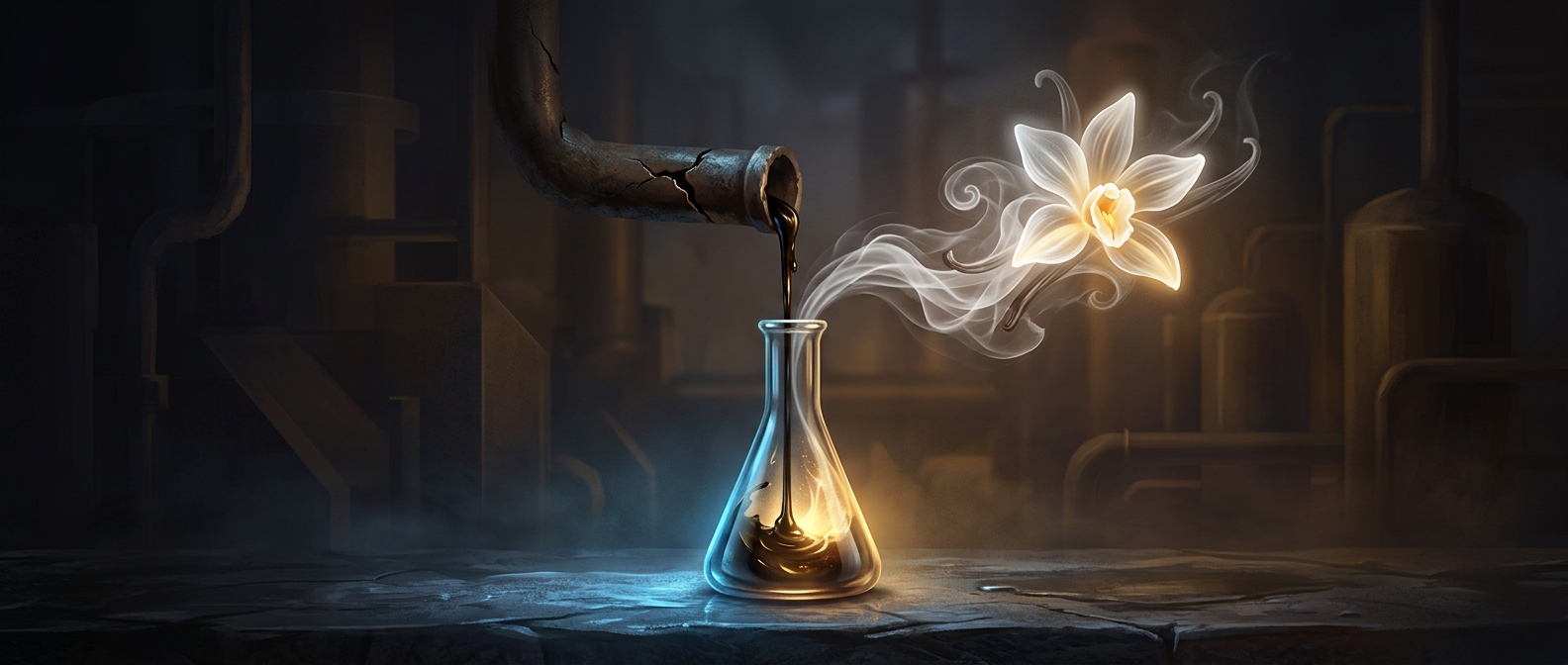
That distinction helps explain why “vanilla flavor” can come from very different sources. Manufacturers can obtain vanillin through chemical processes that start with petrochemical ingredients, or produce it from lignin, a material found in wood and separated during paper-making. The starting material changes; the vanillin molecule is still vanillin.
Why orchids make vanilla costly
Vanilla comes from the fruit of an orchid. For a flower to produce a bean, pollen must reach the part of the flower that can fertilize it. In many growing regions, farmers cannot rely on the right natural pollinator being present, so they pollinate flowers by hand. The work must be done while each flower is open, making production labor-intensive and vulnerable to missed timing.
After harvest, the beans also need curing: a sequence of handling and drying that develops their characteristic aroma. Natural vanilla flavor therefore reflects both a demanding crop and the many compounds formed or concentrated as beans are processed.
What the label difference means
Synthetic vanillin offers a consistent way to supply vanilla’s most recognizable note without depending on a harvest of beans. Natural vanilla, by contrast, carries a broader profile and the costs of growing and processing the crop. The flavor may point to vanilla, but the route to the flavor can be an orchid field—or a chemical process.