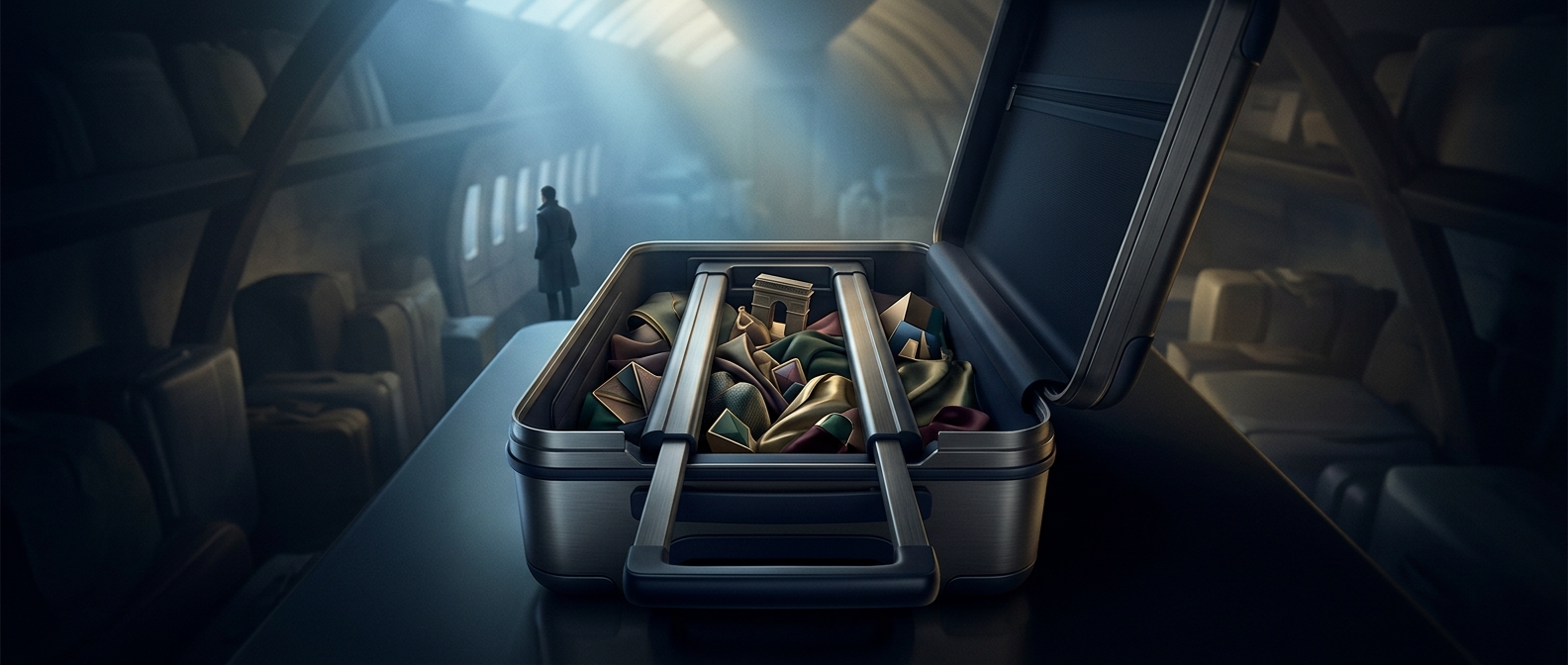
A case built around a suit
“Suitcase” joins two ordinary words: suit, meaning a set of clothes, and case, a container. The name points to a practical problem that became more common as people traveled with clothing they wanted to wear neatly: how to carry a suit without crushing it.
A rigid, flat-sided case gave a jacket and other garments more protection than a soft, loosely packed bag. Its shape helped keep clothes folded in a predictable way, limiting the creases that could make formal wear look rumpled on arrival. The case was not simply a smaller trunk; it was a container suited to carrying a particular kind of load.
From garment container to travel staple
As travel luggage evolved, the suitcase became useful for far more than suits. Its compact shape made it convenient to carry and store, while its enclosed sides kept belongings together. The name outlasted its original clothing-focused purpose: today, a suitcase may hold anything from casual clothes to gadgets and toiletries.
That older purpose is still visible in the word. A suitcase began not as a generic name for any travel bag, but as a case designed around the awkward challenge of bringing a suit along and having it ready to wear.