How One Satellite Channel Could Crowd Out Another
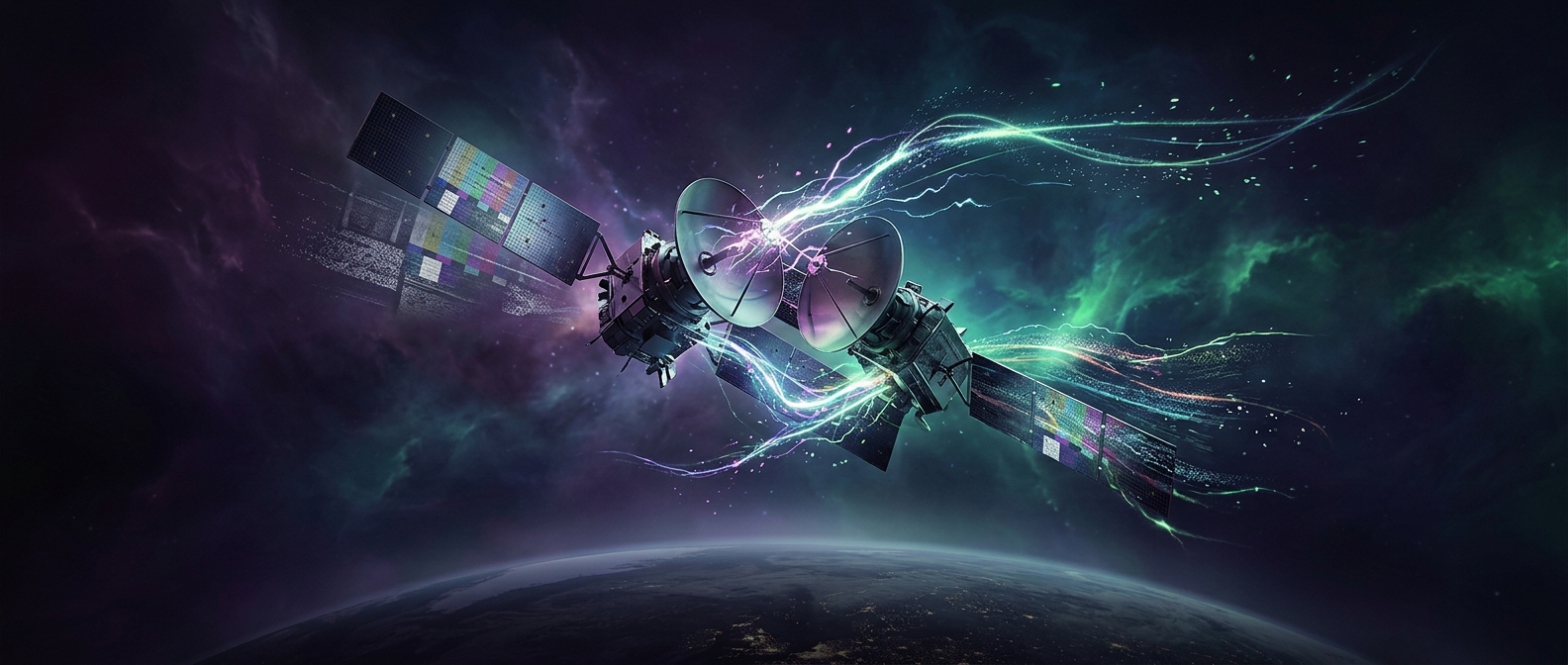
A satellite transponder is a relay: it receives a signal sent up from Earth and retransmits it over a wide area. To carry many broadcasts at once, operators assign signals separate slices of radio frequency. But those slices are not perfectly sealed compartments. Filters have limits, and a strong signal near a channel’s boundary can spill into the space used by a neighboring one.
If that spill reaches a receiver strongly enough, it can interfere with the intended broadcast. The receiver may lose the movie feed or, in some cases, lock onto the competing signal instead. The result could be startlingly mundane: a film gives way to raw news footage or religious programming, not because anyone changed HBO’s schedule, but because another transmission reached the receiving equipment.
Why a Corporate Feed Wasn’t Automatically Safe
A guarded broadcast can still be vulnerable to interference. Security measures control who is authorized to send or view a signal; they do not make radio frequencies physically impermeable. A receiver has to distinguish the desired transmission from other energy arriving in the same neighborhood of the spectrum. Signal strength, frequency accuracy, and the receiver’s filtering all matter.
That distinction also explains why satellite intrusion did not necessarily mean that an outsider had broken into a company’s network. The disruption could happen in the radio link itself. In an era when television programming traveled between studios, distributors, and stations by satellite, that link was part of the broadcast chain—and an unexpected signal could become part of what viewers saw.
The unsettling twist is that a movie could be interrupted without anyone touching the movie or its schedule: the weak point was the invisible space between the transmitting dish and the satellite relay.