Why Scrabble’s Wild Tile Scores Nothing
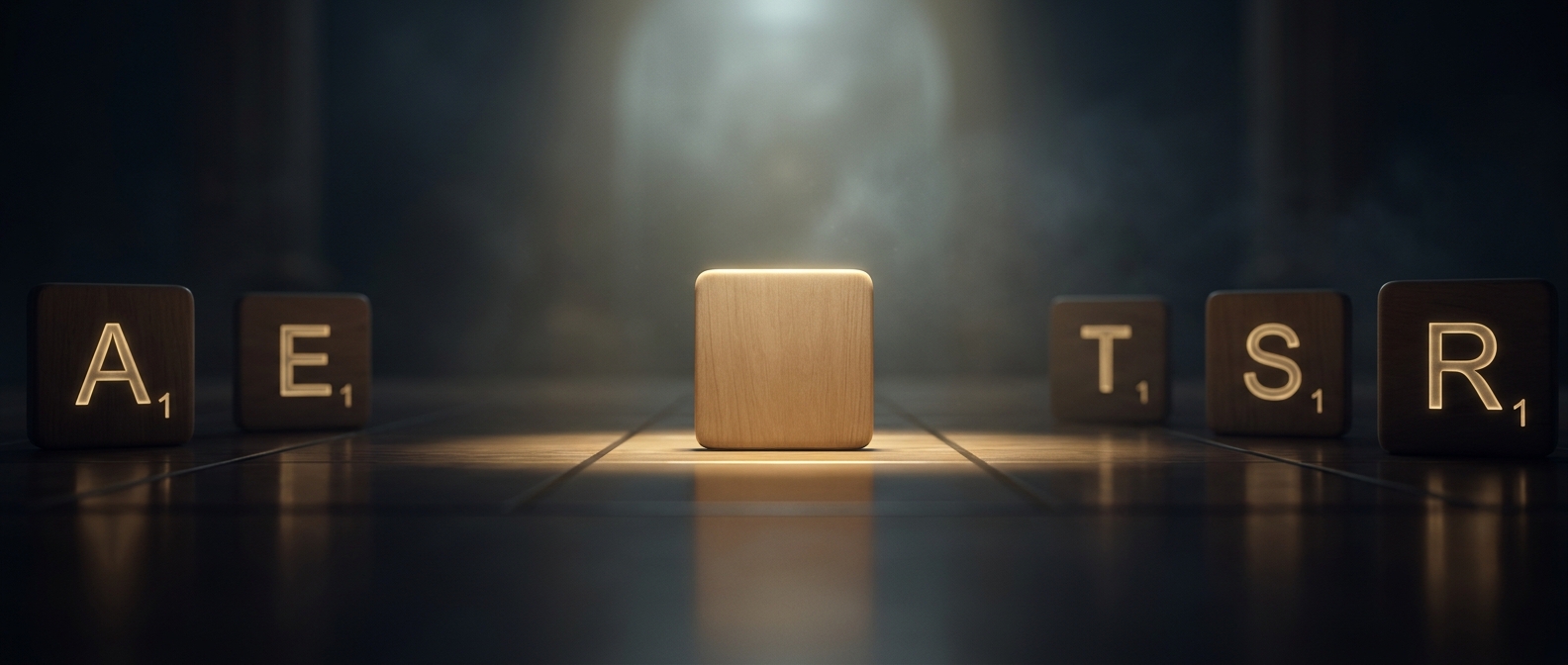
A blank tile can represent any letter, but it contributes zero points wherever it is played. That makes it a powerful shortcut: if a player is missing a rare or awkward letter, a blank can complete the word without needing that letter from the rack. Its flexibility is the reward; its lack of points is the tradeoff.
The Blank Helps the Word, Not Its Letter Total
Scrabble scores a play by adding the values of its tiles, then applying any relevant bonus squares. Because a blank is worth zero, placing it on a double- or triple-letter square still adds nothing for that tile. A word multiplier can increase the score for the whole word, but multiplying zero does not turn the blank into a valuable letter.
The rest of the play can still score well. A blank may unlock a long word, let other high-value letters fit together, or create new words where tiles cross. Its contribution is strategic rather than numerical: it makes a strong arrangement possible.
A Choice About Timing
Once played, the blank represents the letter chosen for that move; it does not later become a different letter. Spending it can rescue a difficult rack or seize a scoring opportunity, but keeping it preserves that option for a future turn. The zero-point rule gives players a reason to weigh those possibilities instead of treating the blank as a free high-value tile.
That is the blank’s distinctive bargain: it can supply exactly the letter a word needs, while the score still reflects the tiles that actually carry point value.