How the guitarrón makes its bass heard
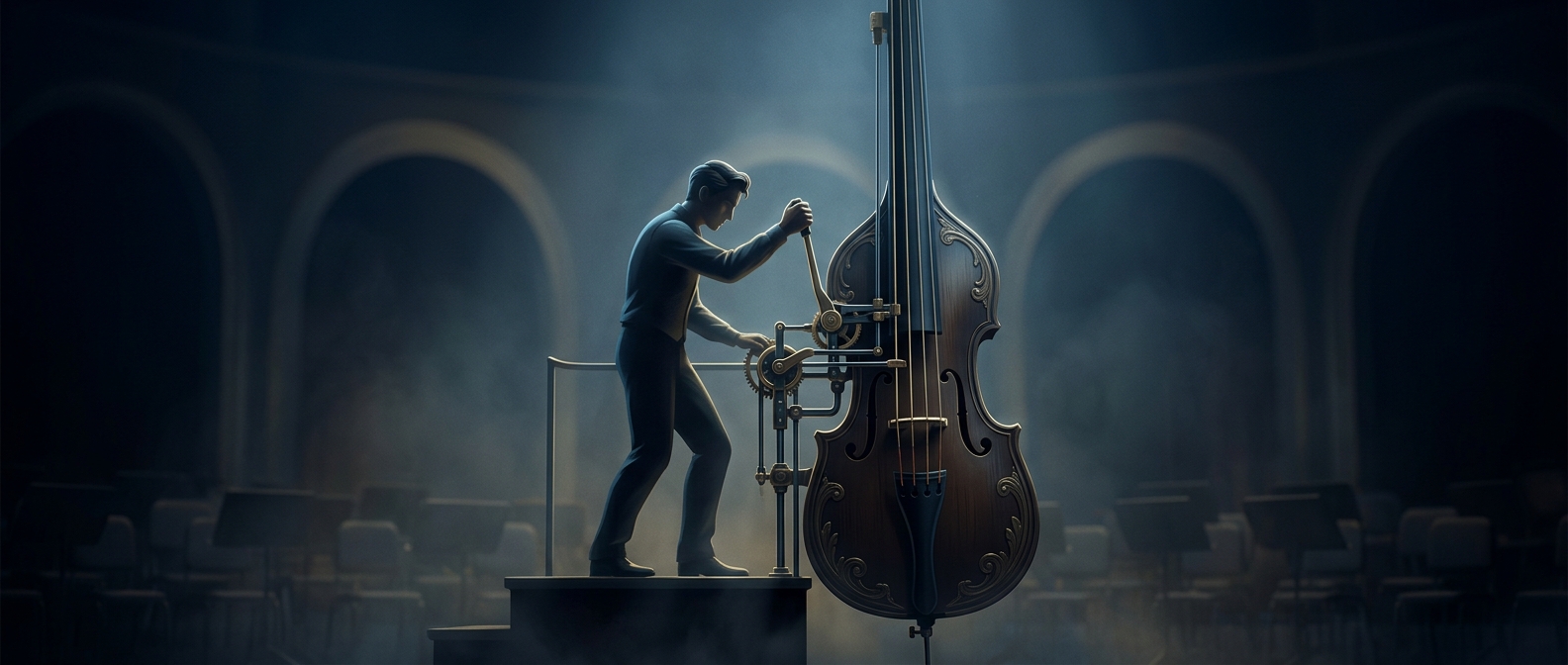
In a mariachi ensemble, the guitarrón supplies the low notes without relying on an amplifier. Its large, hollow body gives the strings’ vibrations a broad wooden surface to set air in motion. The deep, vaulted back helps give the instrument its roomy shape, while the soundboard—the thin front panel—vibrates and sends sound outward.
The player plucks the thick strings with force, producing a strong attack as well as a low note. That sharp beginning helps the bass line remain audible amid the brighter, higher sounds of trumpets and violins. The instrument’s size is not decoration: it is part of how a relatively small group can create a full, outdoor-ready sound.
More than a source of low notes
The guitarrón’s line often marks the music’s pulse, giving the other players a stable foundation to follow. Its notes can also move in time with the harmony, so the bass player is shaping the ensemble’s motion rather than simply holding one note beneath it.
That combination—low register, forceful plucking, and a resonant body—lets the guitarrón do the work of a bass section in a compact acoustic group. When the trumpets rise above the melody, the bass remains physically present in the sound, keeping the music grounded without cables or speakers.