A built-in note that never has to move far
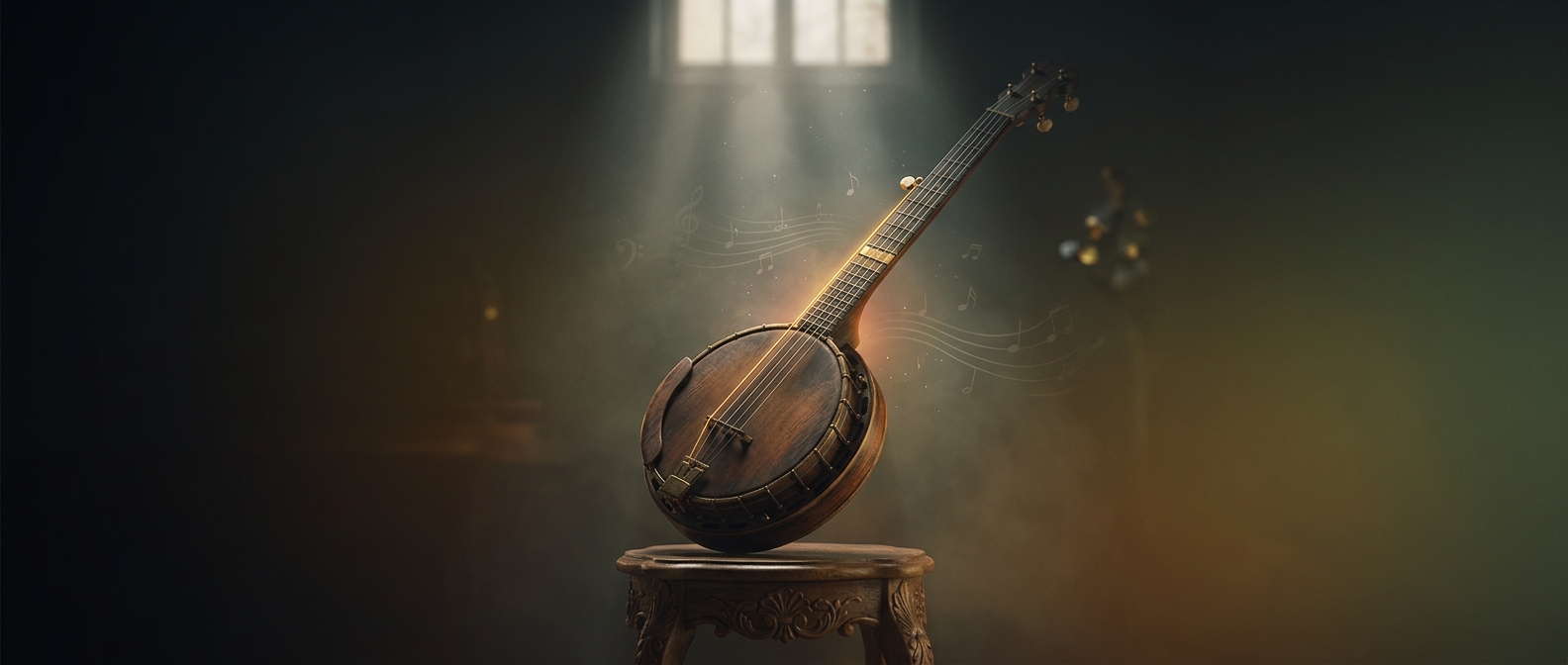
On a five-string banjo, the short string is usually tuned to a high note and anchored by a small peg partway along the neck. Because it has less vibrating length than the other strings, it can reach that pitch without needing the tension a full-length string would require. Its tuning peg sits beside the neck rather than at the headstock.
That shortened layout does more than make the instrument look unusual. The drone stays available under the player’s thumb while the other fingers fret melodies and chords on the longer strings. The result is a steady, bright note woven through music whose other pitches keep changing.
Why the drone changes the sound
A drone is a note that repeats or rings beneath a melody instead of following every chord change. On the banjo, the high fifth string can add a pulse as well as a pitch: in common picking patterns, the thumb returns to it between notes played on the longer strings. This gives the music a continuous, bouncing edge without requiring the player to strike a full chord each time.
The short string also shapes what the hands can do. It is not a second melody string spanning the whole fingerboard; it joins in mainly as an open, high note. That limitation is part of its musical function. The player can change the tune and harmony around a sound that remains strikingly consistent, so even a simple picking pattern can feel busy and layered.