From natural philosophy to spiritual travel
Swedenborg’s turn was not simply a change of subject. Before his visions, he had built a career studying the natural world, including anatomy, mining, and engineering. In the 1740s, he began describing encounters with Jesus and a new capacity to perceive spirits. He then wrote at length about what he said he learned in conversations with them.
That shift changed the kind of evidence his work relied on. His accounts of other planets were not reports from a telescope or a physical journey through space. They were presented as knowledge gained through spiritual experience—an account of a universe that, to him, had both a material and an unseen dimension.
What Mars meant in his account
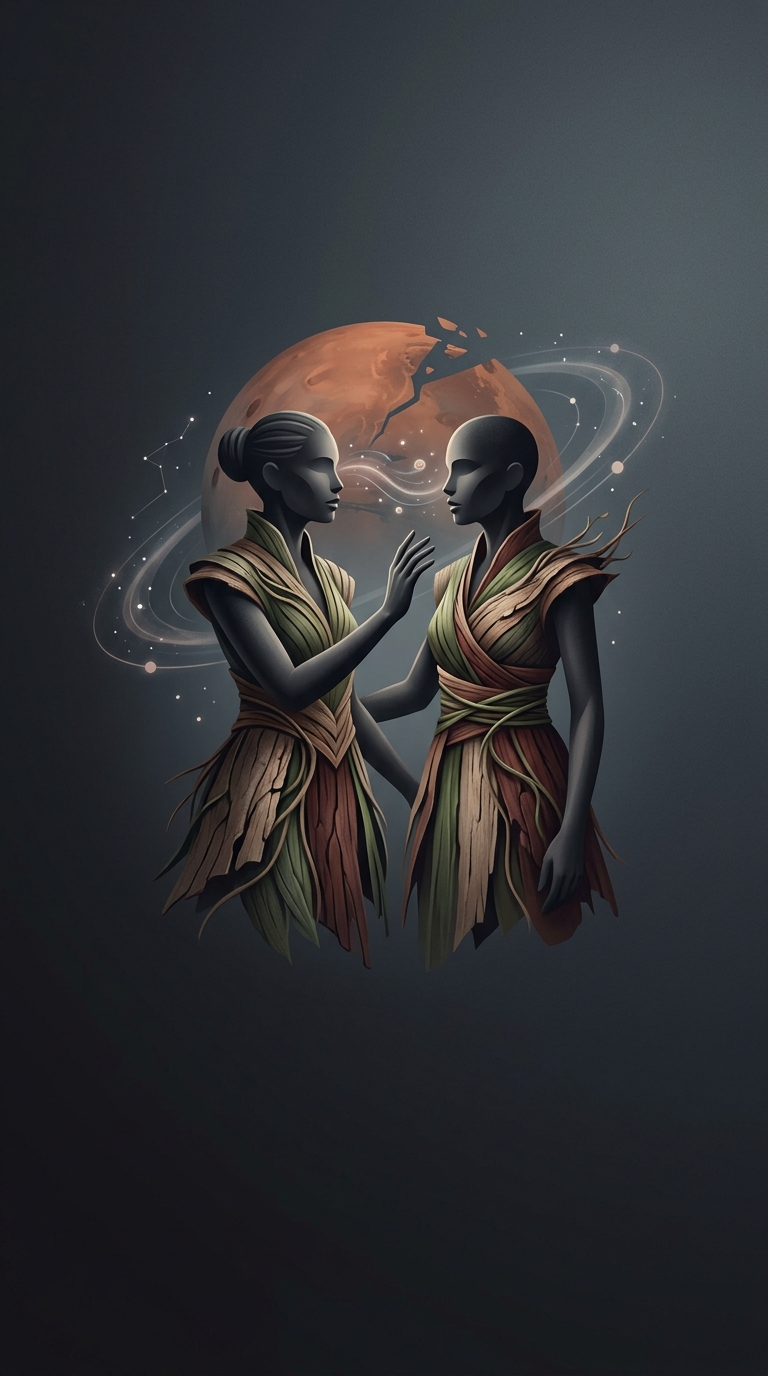
In Earths in the Universe, Swedenborg described inhabitants of several planets, including Mars. He portrayed Martians as communicating through facial expressions and wearing garments made from tree bark. These details belong to his reported vision of their society, not to astronomical observation.
The distinction matters: the planet names gave his spiritual descriptions a cosmic setting, but the subject was also human character and conduct. By imagining other worlds with different bodies, customs, and ways of communicating, Swedenborg could present spiritual life as something encountered across the universe—not confined to Earth.
His writings therefore sit at an unusual meeting point between eighteenth-century interest in inhabited worlds and religious vision. The striking image of bark clothing is not a clue about Mars’s actual inhabitants; it shows how concretely Swedenborg rendered a world he said he had visited in spirit.