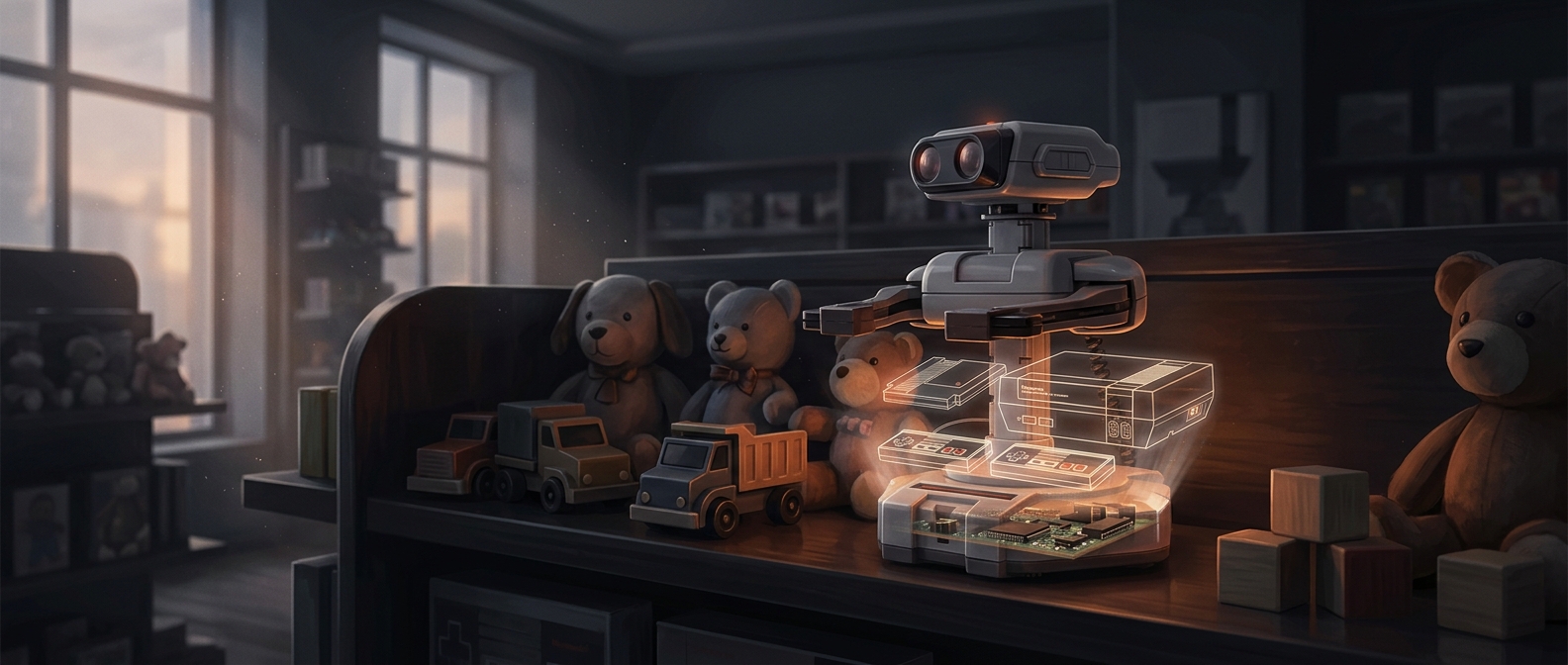
A robot gave the console a different identity
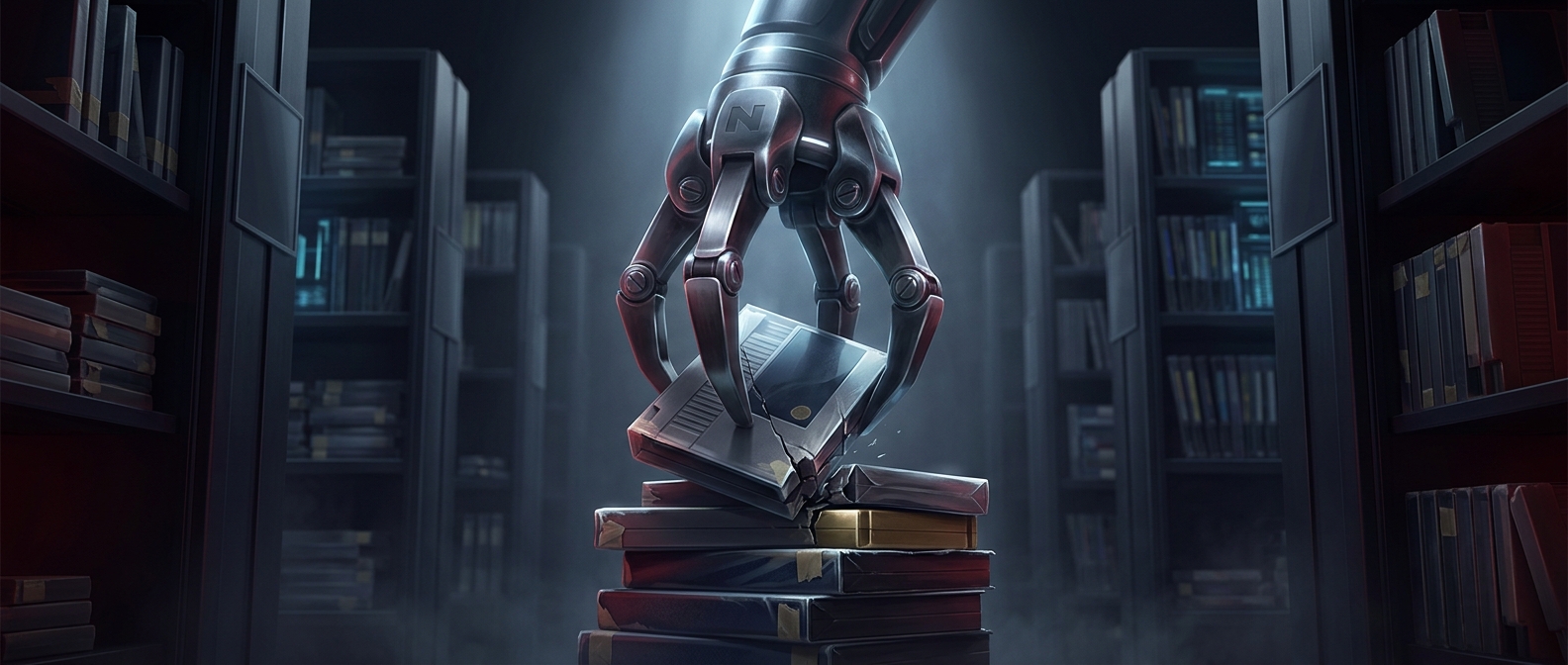
R.O.B.—short for Robotic Operating Buddy—was more than a mascot placed beside the Nintendo Entertainment System. It was a working accessory: the player gave commands through a second controller, and R.O.B. watched flashes on the television screen, then moved its arms to handle pieces on the floor. In Gyromite, for example, it could raise and lower barriers while the player guided a character through the game.
That made the NES easier to present as a toy. A retailer wary of stocking another video game console could instead see a robot-and-game set, a product that fit more naturally among toys. The bundle offered a way for Nintendo to get its hardware in front of shoppers without asking stores to embrace consoles on their own terms.
The disguise had a real, if narrow, function
R.O.B. did not turn the NES into a robot game system in the modern sense. It responded to visual signals from the television, so it worked only with games designed to communicate with it. Its role was limited, and the setup added extra steps to play. The feature was therefore both a demonstration of novelty and a practical selling point—not a replacement for the ordinary controller-based games that would define the system.
The packaging mattered because getting a product onto shelves is part of getting it into homes. Once shoppers could encounter the NES as a toy, Nintendo had a route into stores that might otherwise have passed on a game console. R.O.B.’s most important job may have been less about moving pieces on the floor than changing what a retailer thought the box contained.