The hose is designed to come apart safely
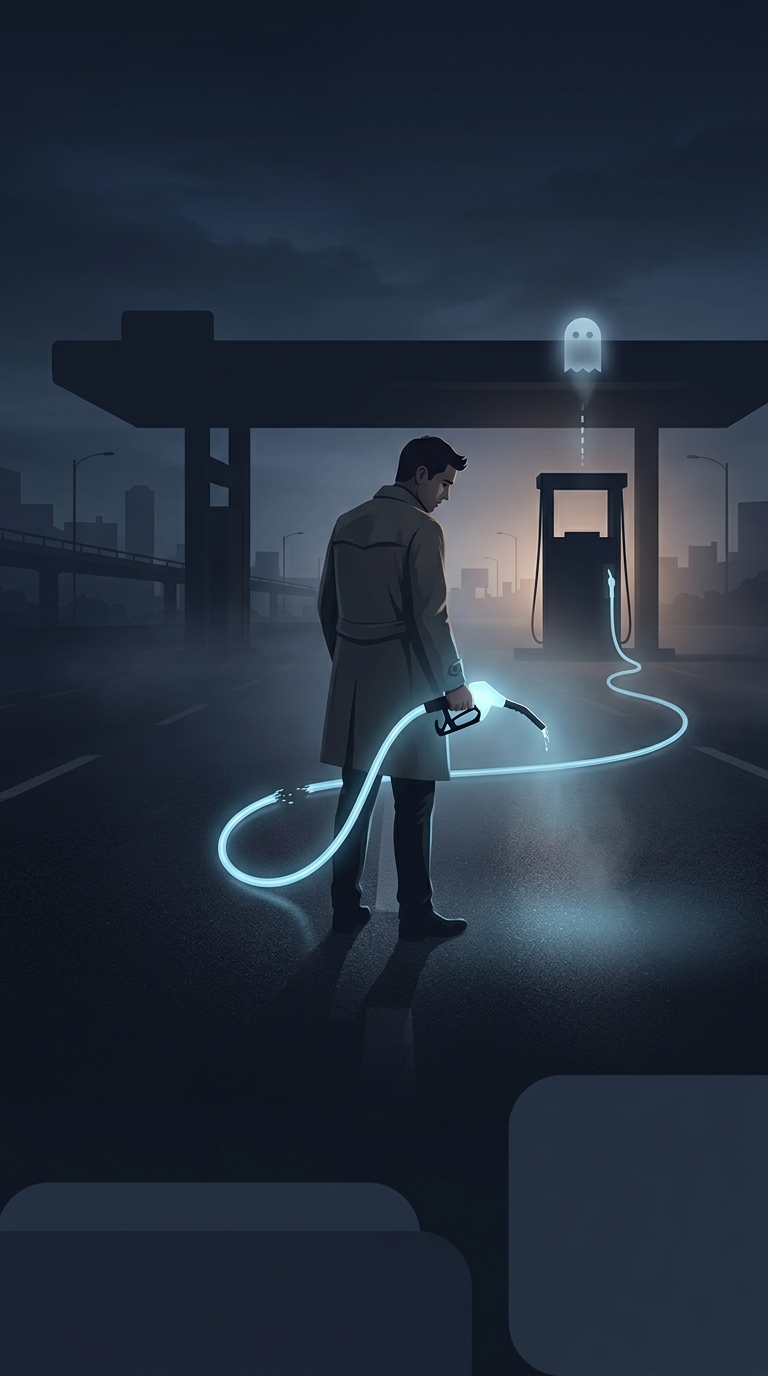
A driver can pull away with the nozzle still in the vehicle’s fuel filler, putting sudden tension on the hose. Rather than letting that force tear open the fuel line or topple the dispenser, many pumps use a breakaway coupling: a connector in the hose engineered to separate when pulled hard enough.
The separation is controlled. Valves inside the coupling close as its two halves part, restricting fuel flow from both the pump side and the hose side. That limits the amount that can spill and helps keep the hose from whipping loose while fuel continues to run.
A small weak point protects a larger system
The coupling is intentionally the vulnerable link. In ordinary use, it stays joined and carries fuel; in a drive-off, it is meant to give way before the hose, dispenser plumbing, or vehicle bears the full pull. The separated parts can then be inspected and reconnected or replaced before the pump is used again.
This is different from a shutoff valve installed at the dispenser’s base, which is designed to close if the dispenser itself is knocked over or its piping is damaged. Together, these safeguards address different kinds of impact: one responds to a stretched hose, the other to damage at the pump. The result is that a drive-off may still break equipment, but it is less likely to turn a pulled hose into an uncontrolled fuel leak.