Why Stromboli glows above the sea
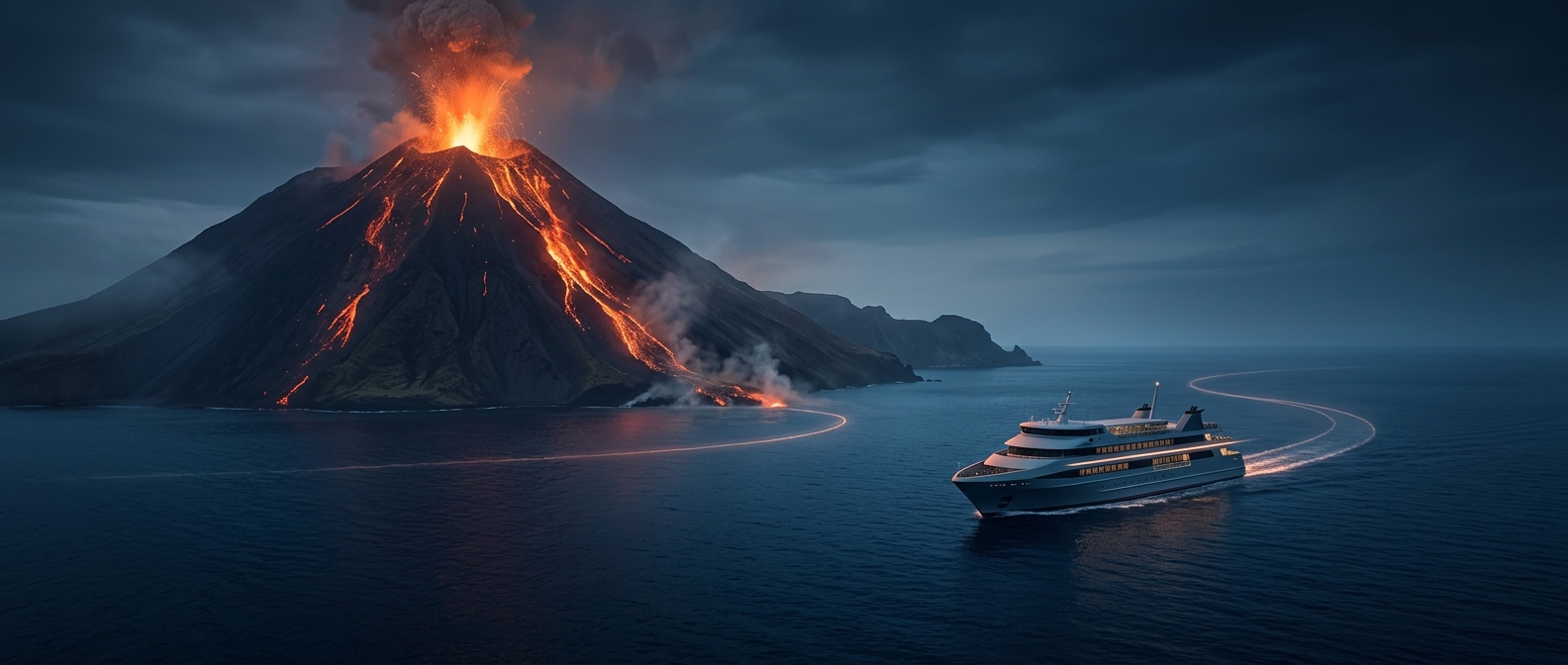
Stromboli is one of the Aeolian Islands, north of Sicily, and its active crater sits high above the water. In its familiar pattern of activity, gas pressure pushes blobs of molten rock from the crater. These volcanic bombs—chunks of lava large enough to travel through the air before landing—may glow as they arc against the night sky. The eruptions are not a constant stream of lava; bursts are separated by quieter intervals, and their timing and intensity can vary.
The contrast is what makes the volcano so visible to boats: the sea around it can be dark while a burst briefly lights the summit and its plume. That glow is a striking landmark, but it is also a reminder that the island’s drama comes with real hazards, not a show staged for visitors.
A landmark, not a dependable lighthouse
Stromboli’s traditional nickname, the “Lighthouse of the Mediterranean,” captures how its eruptions could help sailors recognize the island at night. Before modern navigation, a conspicuous natural feature could help orient a vessel when coastlines were hard to see. The volcano’s glow offered a visible reference point in these waters, although it could not provide the steady, precise guidance of a built lighthouse or replace knowledge of routes and hazards.
Its reputation rests on a long history of recurring activity, often described as near-continuous over many centuries. That does not mean every generation saw an identical eruption pattern, or that the volcano has been erupting without interruption for exactly two millennia. Stromboli’s activity changes, and its night-time flashes are a landmark—not a promise of safe passage close to shore.