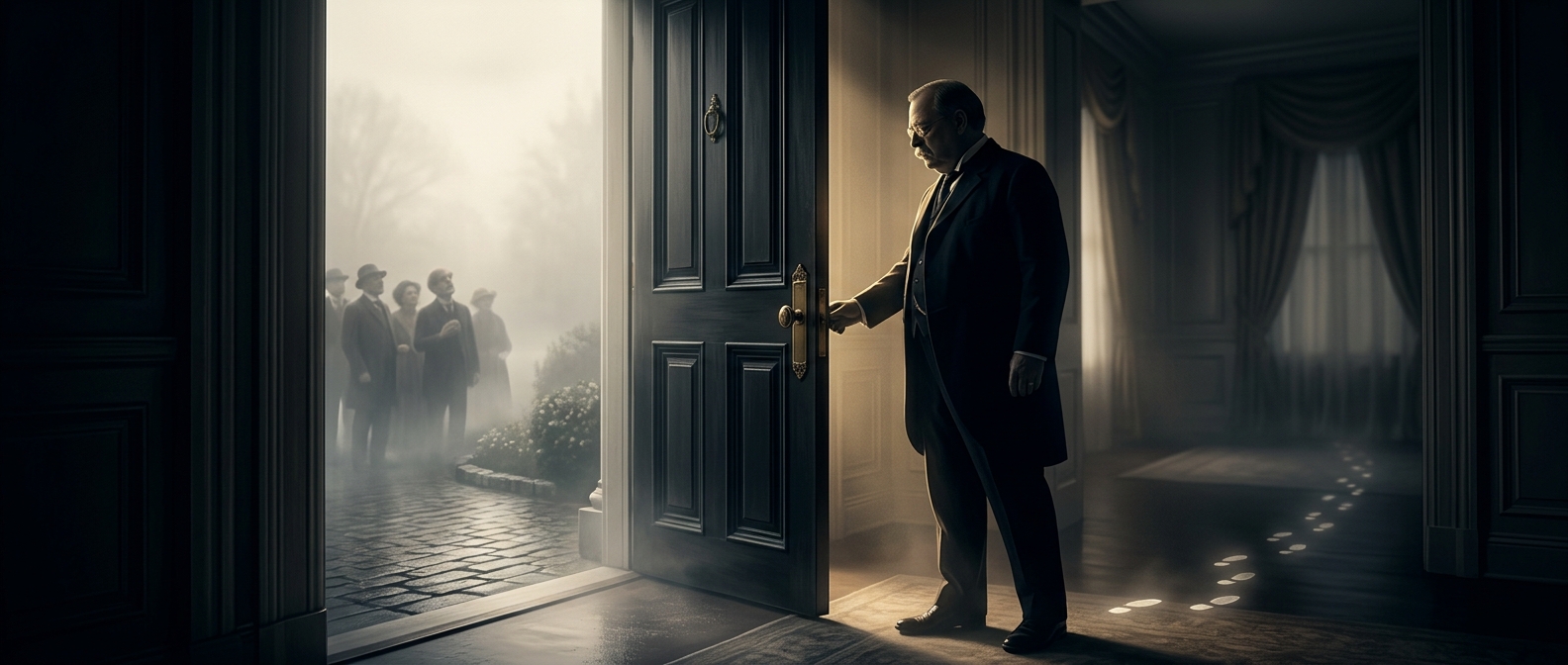
A presidential greeting at the threshold
The White House was both the president’s official workplace and his home. That overlap makes Cleveland’s occasional role as his own receptionist striking: instead of every arrival being handled by an intermediary, the president might be the person who opened the door and met the visitor first.
A front door is a small point of contact, but it changes the feel of an encounter. A visitor did not begin by speaking to an office-holder from behind a desk or at a formal event; the first exchange could happen at the entrance to the family residence. The act made the presidency seem less distant in that moment, even though the office itself remained anything but ordinary.
A different scale of presidential life
Today, the image of a president casually answering the door can seem startling because people associate the office with layers of staff and tightly managed access. Cleveland’s example offers a glimpse of a less formal-seeming interaction—not proof that the White House was unguarded or that the president routinely handled visitors. The key detail is the word sometimes: this was an occasional personal gesture, not a description of how every visit worked.
That small distinction is what makes the anecdote memorable. At the threshold between public office and private home, the country’s chief executive could briefly take on the familiar job of welcoming someone at the door himself.