Why a dune is more than a hill of sand
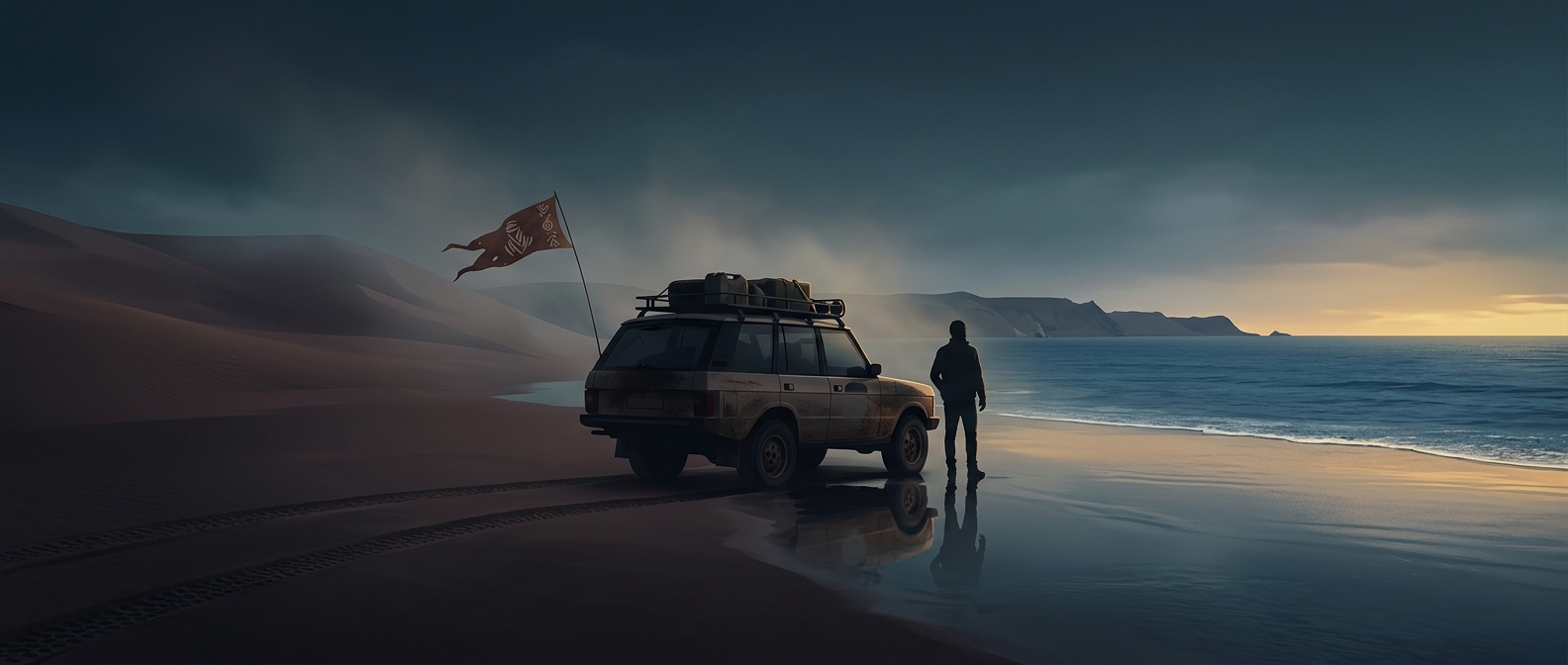
In the Sahara, a rally route could run across terrain with no firm road to follow. Wind continually reshapes dunes, and a vehicle’s tracks may disappear behind it. A crest can hide a steep drop or a softer patch on the far side, so drivers often had to judge the ground before committing to a line.
Soft sand also changes how a vehicle moves. Tires can sink instead of gripping, and repeated jolts over ridges put stress on suspension parts—the components that absorb impacts and keep the wheels in contact with the ground. Getting stuck costs time; forcing the vehicle onward can cost a repair.
Finding the route when the landscape erases it
Navigation was difficult for a reason beyond distance: the desert offered few fixed landmarks. Competitors relied on route directions and navigation tools rather than simply following a visible road. In open terrain, a small error in direction could carry a team away from the intended crossing; following another vehicle’s tracks was no guarantee, since that vehicle might have taken a wrong turn too.
That made progress a sequence of choices: where to cross a dune, how much speed to carry, and when to slow down to inspect what lay beyond a crest. The fastest-looking line was not always the quickest if it ended in deep sand or a recovery stop.
The route shaped the race
Crossing the Sahara made the rally a test of judgment as well as speed. Teams had to balance forward progress against the risk of damage, while organizers faced the challenge of routing competitors through remote country. The event’s African routes belong to an earlier chapter of the rally’s history; later editions moved to other regions. What made those desert stages distinctive was the terrain itself: the landscape could hide both the road ahead and the consequences of choosing it.