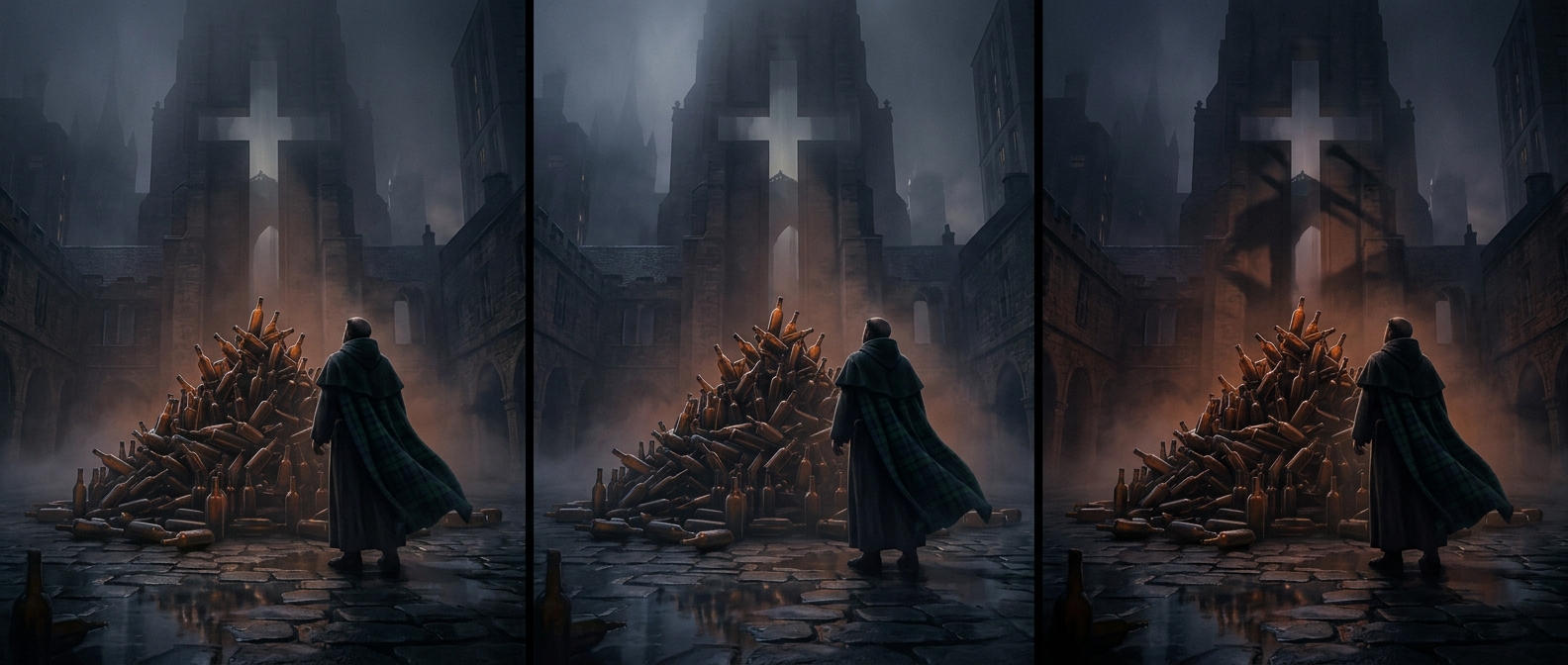
How a monastery’s wine became a Scottish street symbol
Buckfast Tonic Wine is made at Buckfast Abbey, a Benedictine monastery in Devon, England. Despite the word “tonic,” it is an alcoholic wine, not a health remedy. Its distinctive combination of alcohol and caffeine—and its association with the monks who make it—sets it apart from ordinary wine and helped give it a memorable identity.
That identity travelled far beyond the abbey. In Scotland, the drink became especially familiar among some young people and acquired the nickname “Buckie.” Its popularity there grew into more than a matter of taste: the bottle became a recognizable marker in local youth culture, making Buckfast unusually prominent in a market where it might otherwise have been a niche product.
Why the caffeine matters—and what it does not do
Caffeine can make someone feel more alert, but it does not reduce alcohol’s effects or make a person sober. When the two are consumed together, a drinker may feel less sleepy while still being impaired. That mismatch helps explain why the combination attracts attention in discussions of alcohol-related behavior, though it does not prove that caffeine causes someone to commit a crime.
Buckfast has been linked in Scotland with petty crime and disorder, but a link is not the same as proof that the drink itself caused those incidents. Its visibility can also make it a convenient symbol for wider concerns about youth drinking and public behavior.
The striking contrast is that a product associated with a quiet monastery became, in Scotland, a conspicuous part of street culture—its reputation shaped as much by where and how people encountered it as by what was in the bottle.