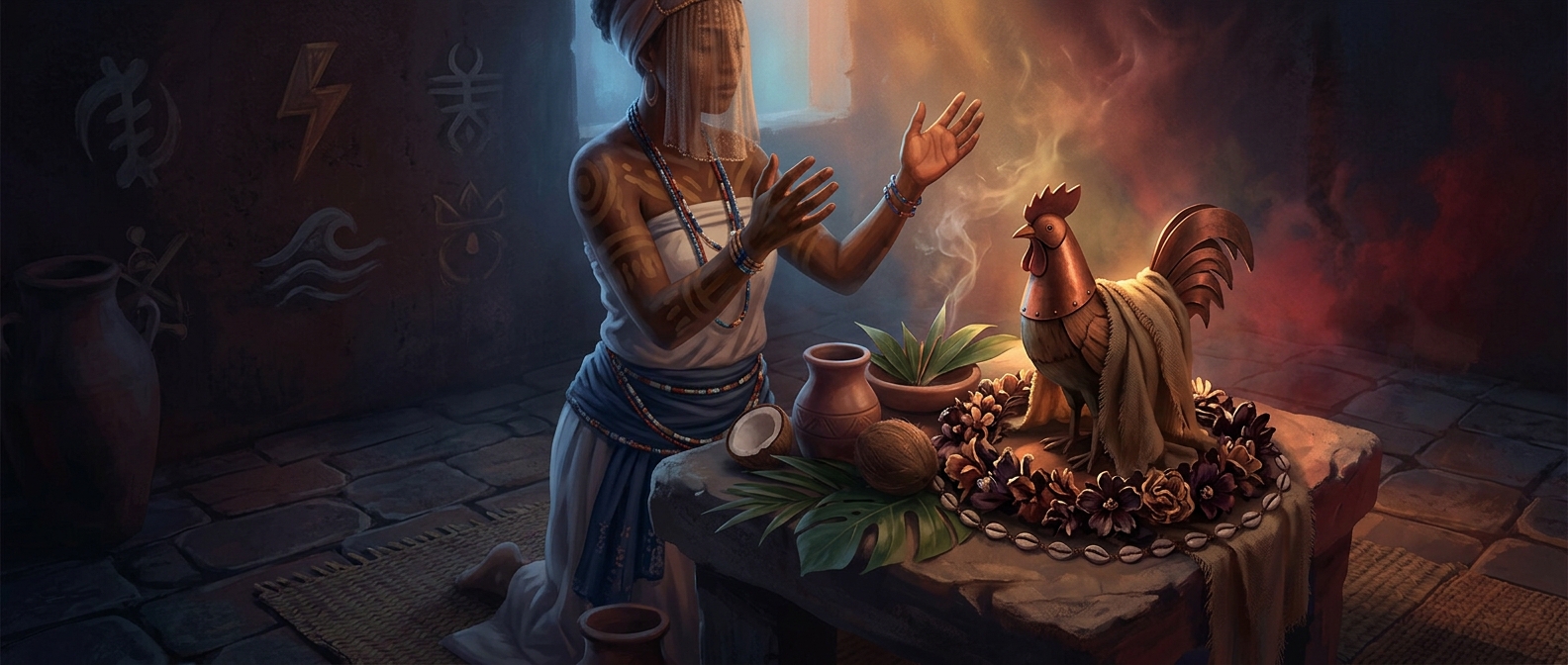
What an Animal Offering Means in Santería
In Santería, also known as Lucumí, an offering is a way to honor and communicate with the orishas—sacred powers associated with aspects of nature and human life. It is not simply a sacrifice made to appease a deity. Within the tradition, giving something of value can express gratitude, ask for help, or restore balance in a person’s relationship with the spiritual world.
The Offering Has a Ritual Purpose
When an animal is used, the act takes place within a ceremony governed by religious knowledge and practice. The offering may be directed to a particular orisha or connected to a specific need. In some understandings of the ritual, blood represents life and vitality, making it a meaningful gift rather than an incidental detail.
The choice of offering is not arbitrary: what is appropriate depends on the orisha and the circumstances. Santería communities and practitioners do not all follow identical customs, and animal offerings are only one part of a much wider religious life that includes prayer, music, divination, and community ceremonies.
The Food Is Often Shared
The animal is not necessarily discarded after the ritual. In many ceremonies, portions are prepared and eaten by participants, while other portions may be set aside as offerings. This links the rite to communal meals as well as worship: the ceremony involves both a relationship with the orishas and the people gathered around it.
That combination can be unfamiliar to outsiders, who may see only the act of slaughter. For practitioners, its meaning lies in the full sequence—who the offering is for, why it is made, and how the community handles what follows.