A death designed to become a beginning
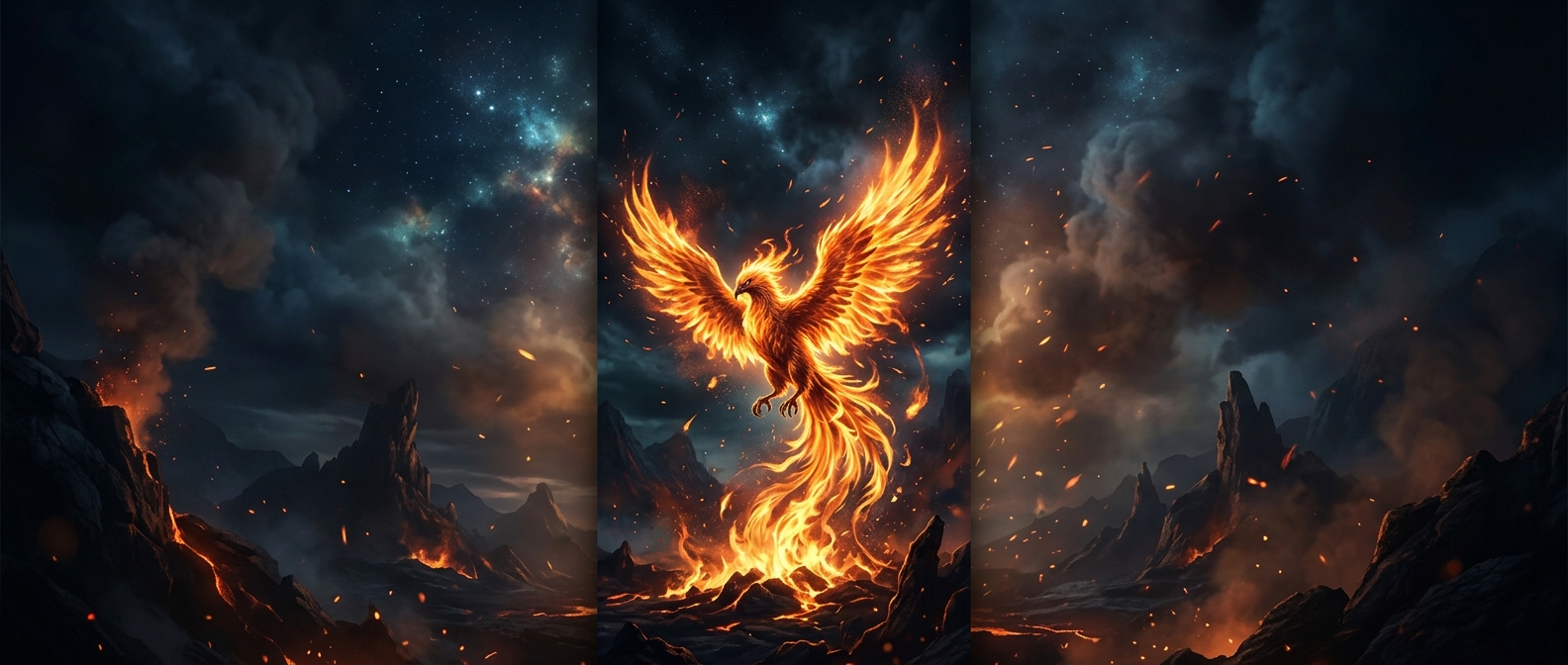
The phoenix’s fire is not simply a disaster that happens to an unlucky bird. In the familiar version of the myth, the old bird’s death is part of a cycle: it prepares a fragrant nest, burns, and gives rise to a successor from the remains. The nest makes the ending seem deliberate and ceremonial, rather than accidental.
The costly spices matter to that image. They turn the pyre into something precious, filling the scene with fragrance and suggesting that the bird’s final act deserves care. The story does not explain the phoenix’s renewal as an ordinary biological process; it presents it as a marvelous exception to the usual rule that death is final.
Why the ashes matter
The phoenix is powerful as a symbol because its renewal passes through destruction. It does not merely grow old and become young again: the old form disappears before a new one emerges. That sequence gives the myth a vivid way to imagine survival through catastrophe, whether the subject is a person, a community, or something else that seems lost.
Versions of the phoenix story differ, so the details are not one fixed set of rules. But the central image remains easy to remember: the ashes are not only what remains of the old bird; they are also where the new one begins.