Why put an ATM at Khunjerab Pass?
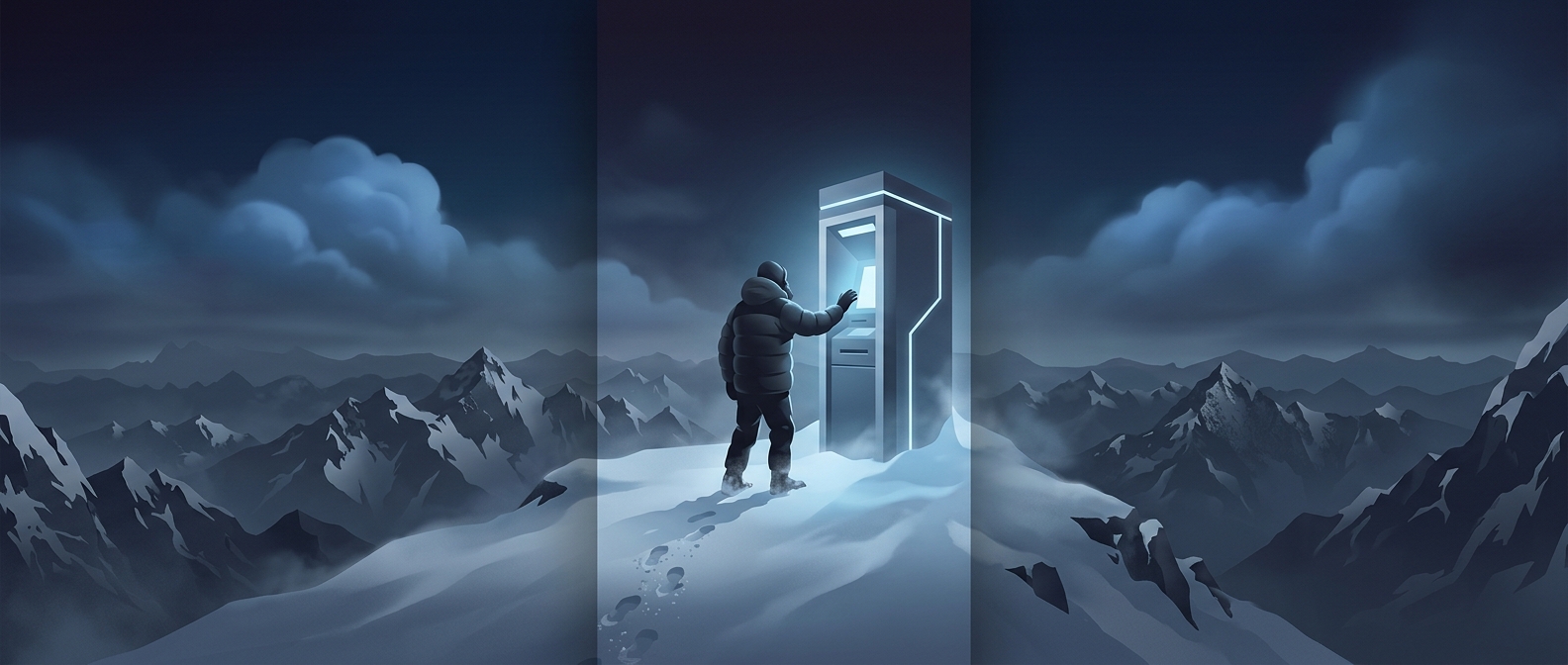
At more than 15,000 feet, Khunjerab Pass is a remote crossing between Pakistan and China, far from the dense network of banks and services found in towns. Yet border guards stationed nearby and travelers passing through may still need cash. The ATM brings a familiar piece of everyday infrastructure to a place where reaching another one can mean a long journey through high mountain terrain.
Its location also makes the machine unusually dependent on its surroundings. Solar power supplies electricity where ordinary connections are impractical, but sunlight alone cannot keep it stocked with money. A bank employee has to make the difficult trip to refill it, crossing mountain passes where severe weather can disrupt travel.
A cash machine with a mountain-sized supply chain
An ATM is only useful while it has cash inside. In a city, replenishment can be part of routine service; at Khunjerab, each refill depends on someone being able to reach the site. The machine therefore links two very different systems: solar energy that helps it operate locally, and a human delivery route that keeps its most important supply from running out.
That contrast is what makes the installation notable. The technology can work at extreme altitude, but it cannot remove the logistical challenge of serving an isolated border post. Every withdrawal depends, in the end, on a person getting cash up the mountain.