Why a cassowary’s patch of forest matters
A cassowary’s territory is not a fenced plot but a familiar stretch of rainforest it uses while moving between food and shelter. These large birds mostly forage alone, so a close encounter can put another cassowary—or a person—inside space the bird is trying to keep. A charge is a forceful way to make an intruder retreat, not a hunt for prey.
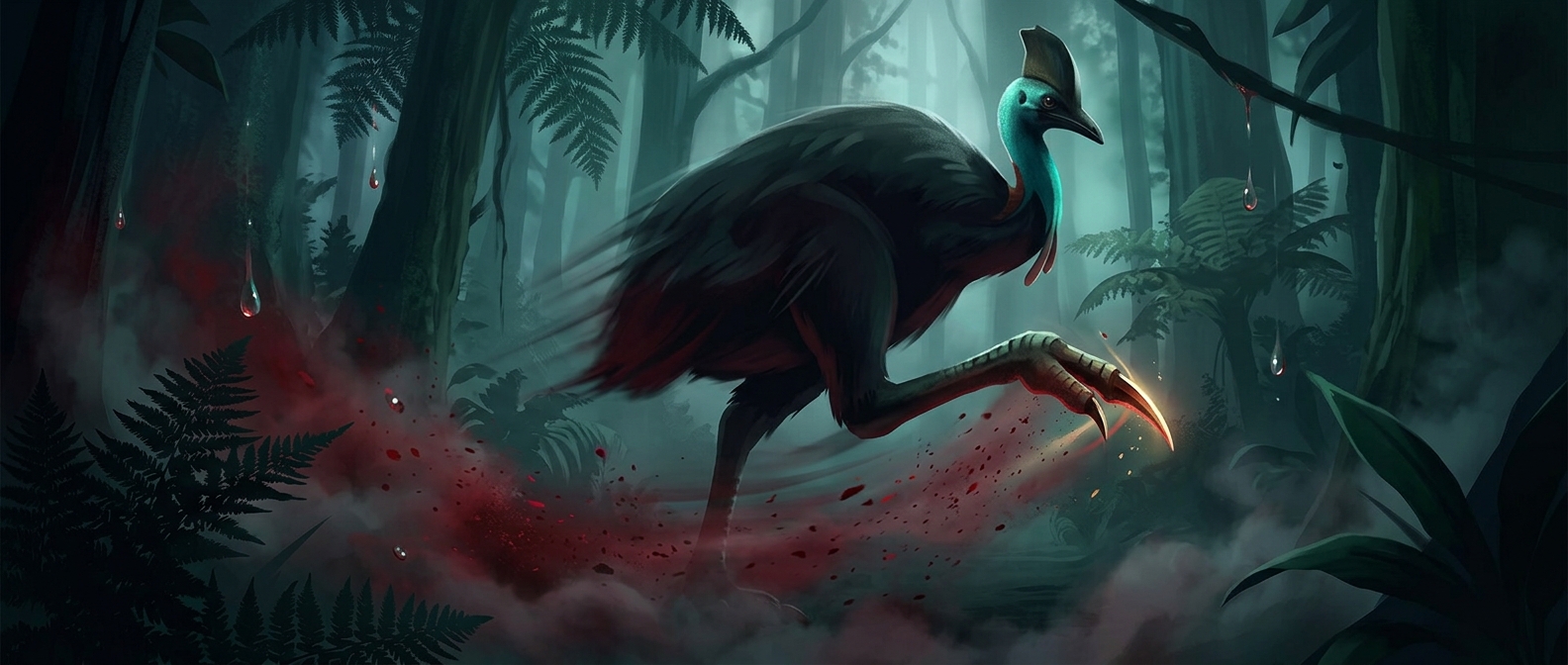
That defense matters in thick forest, where visibility is short and there may be little room to sidestep. A cassowary can rush forward and strike with its powerful legs. The inner toe carries a long, sharp claw; because the bird attacks from ground level, that claw—not the casque—is the feature that can cause the most serious wounds.
The head crest is not a weapon
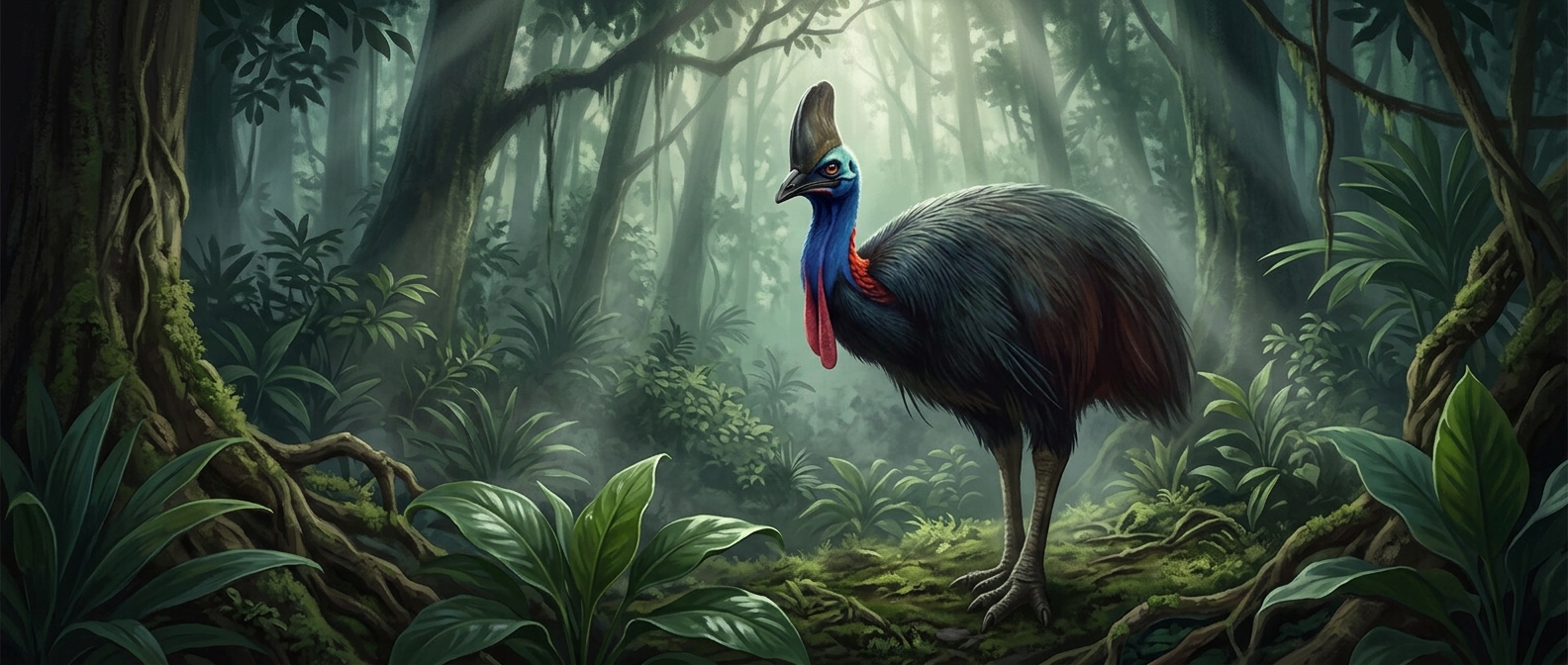
The casque is the hard, helmet-like structure atop the bird’s head. It may help the cassowary move through dense vegetation, but its precise role is not fully settled. It is not a blade or battering ram used to injure rivals. Treating it as the source of the danger misses the mechanics of a charge: the bird’s legs deliver the blow.
The practical lesson is to give a cassowary room, especially if it is guarding food or young. In a narrow forest path, a bird that feels crowded has limited ways to increase the distance—so a sudden charge can be its answer.