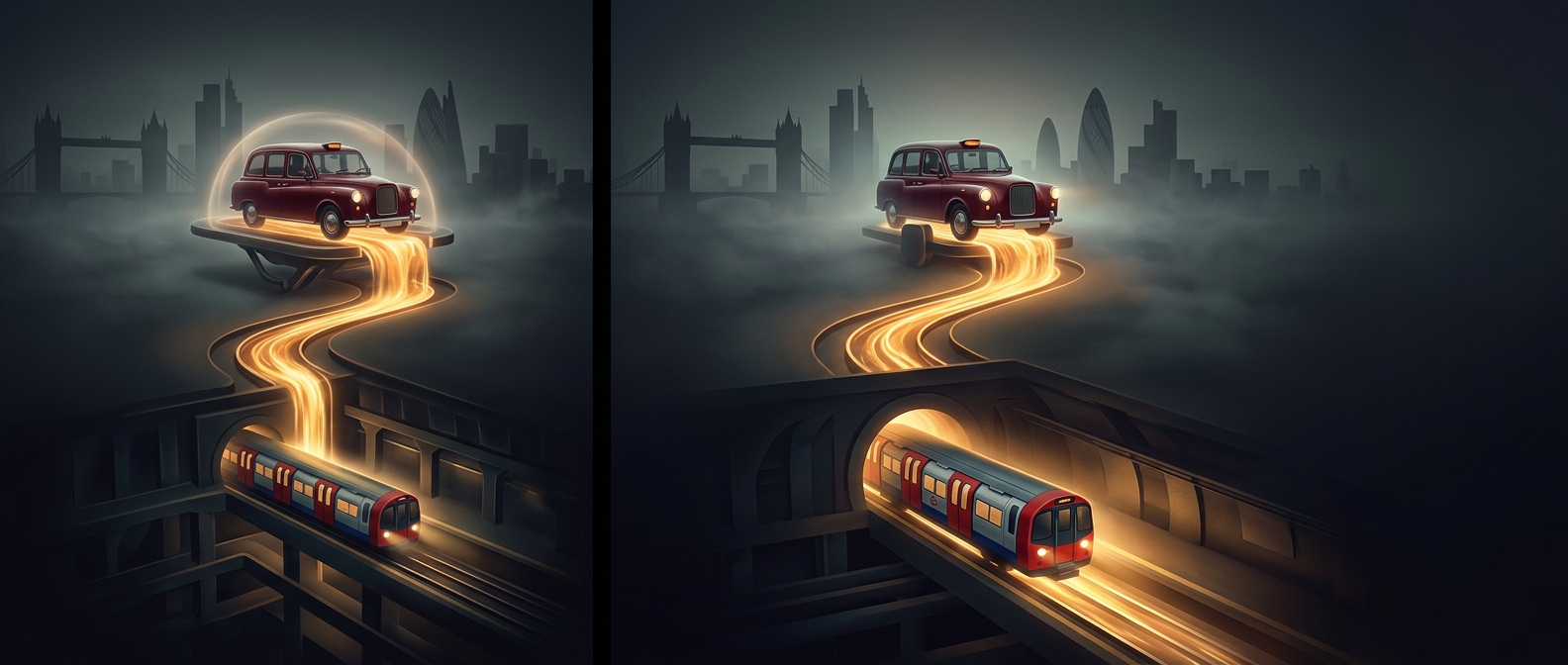
A road charge with a transit return
A charge for driving in central London does more than raise the cost of a car trip. It puts a price on using busy road space at a time and place where many people are competing for it. For some drivers, the added cost makes another option—such as a bus or the Underground—more attractive. If enough trips shift, fewer vehicles are competing for the same limited street space.
The revenue also connects the policy to those alternatives. After the costs of collecting and running the scheme, the money raised is directed to transport improvements, including public transport. It is not a literal fare transfer: a particular driver’s payment does not buy a particular bus journey or train ride. Instead, charge revenue supports the wider transport system that can make leaving the car behind more practical.
The tradeoff behind the policy
This creates a feedback loop: driving in the charged area costs more, while the proceeds help support ways to travel without a car. The arrangement can benefit people who use public transport, but the charge falls most directly on drivers who must or choose to enter the zone. How fair it feels depends partly on whether those drivers have workable alternatives—and whether improved service reaches the places and times they need.
The memorable part is that the road fee is not simply a penalty collected from motorists. It is designed to help finance the alternatives that can reduce dependence on the road being charged.