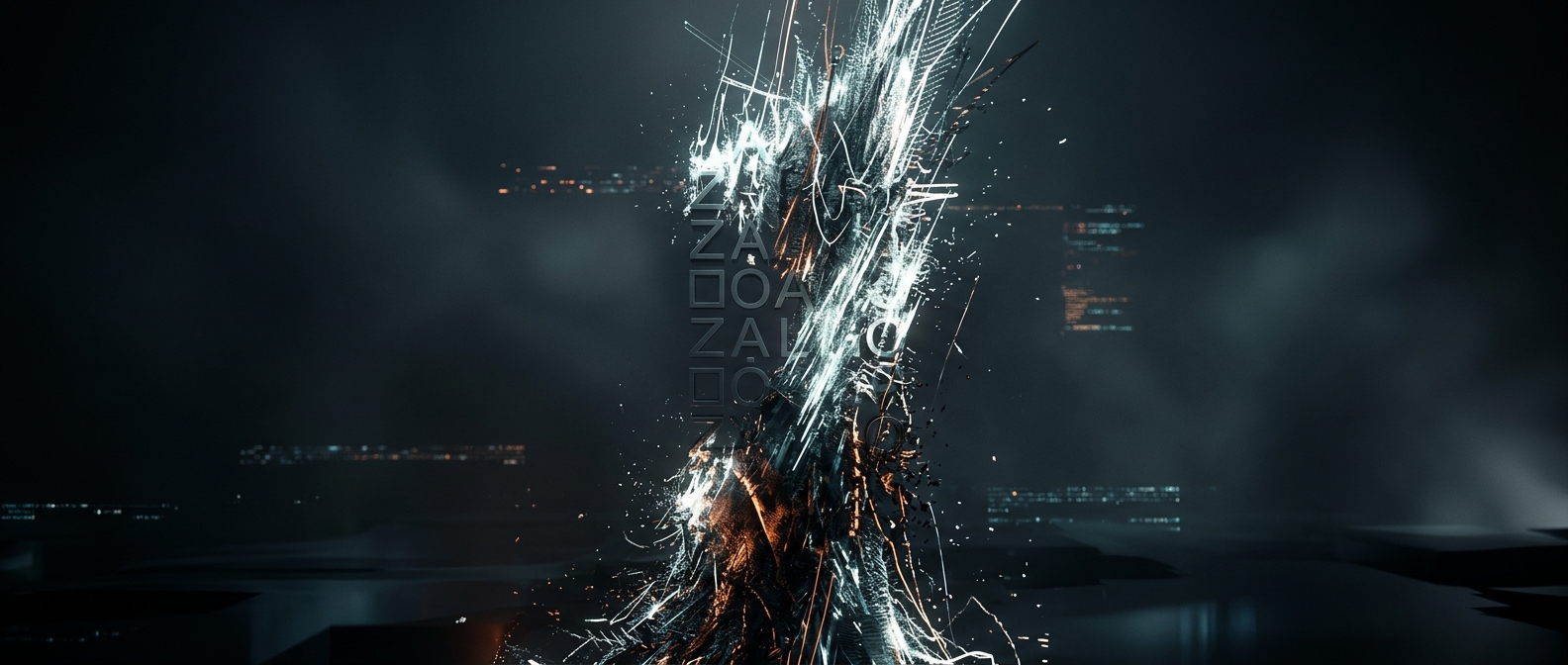
Why one letter can grow into a tower
Unicode includes combining marks: characters such as accents that modify the character before them instead of normally taking up a separate position. A text sequence can put many of these marks after one base letter. They remain part of the text data even when they are difficult to read.
A text renderer—the software that turns characters into visible shapes—tries to place each mark near the base letter. With an ordinary accent, that means positioning it above or below the letter. With a long run of marks, the renderer must place many shapes in the same crowded area. They can pile up, overlap, or spread vertically, producing the distorted look associated with Zalgo text.
The text is valid; its display is the strain
Unicode defines how characters are encoded and how combining marks relate to preceding text, but the visible result also depends on the font and rendering software. Different apps may position, overlap, clip, or scale the same sequence differently. There is no single visual effect guaranteed across every device.
This exposes a gap between valid text and manageable text. A system can accept a sequence as legitimate Unicode while its interface struggles to lay it out. If a text box assumes that a line has ordinary height, unusually tall marks may spill into nearby space or be cut off; a layout that expands to fit them may instead disrupt surrounding content. That is why robust text handling has to account for what characters can do to a display, not just whether they are allowed in the encoding.