Why a “wheel” became a map of the body
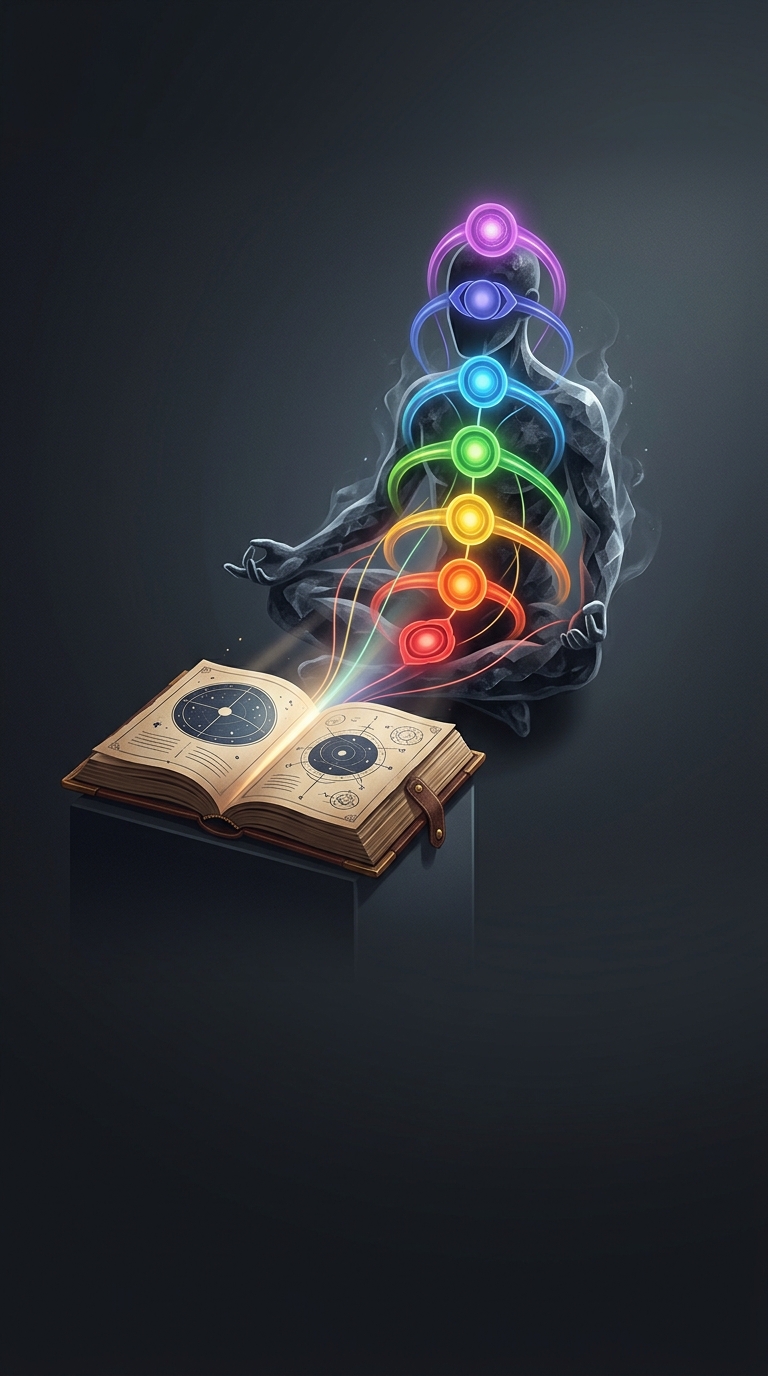
In traditions that describe chakras, the wheel is more than a visual decoration. It offers a way to imagine the body as having an inner, subtle system—a religious or contemplative model, rather than a set of structures identified by anatomy. A chakra is understood as a point where forces or pathways in that system meet, much as spokes gather at a wheel’s hub.
That image makes an invisible idea easier to picture. Instead of treating spiritual experience as something vague and everywhere at once, a practitioner can focus attention on particular centers and the qualities associated with them. In yoga and related traditions, these centers may be used in meditation, visualization, or other practices.
A traditional map, not a medical diagram
Chakra systems are not identical across every Indian tradition or teaching. Popular modern accounts often present one standardized sequence, but descriptions and interpretations have varied. The wheel metaphor belongs to a way of understanding spiritual practice; it does not mean that glowing discs can be seen inside the body or that chakras are organs.
That distinction explains why the image can be meaningful without being literal anatomy: the wheel is a map for attention and spiritual meaning, not a picture of hidden body parts.