The Legend of Denis’s Long Walk
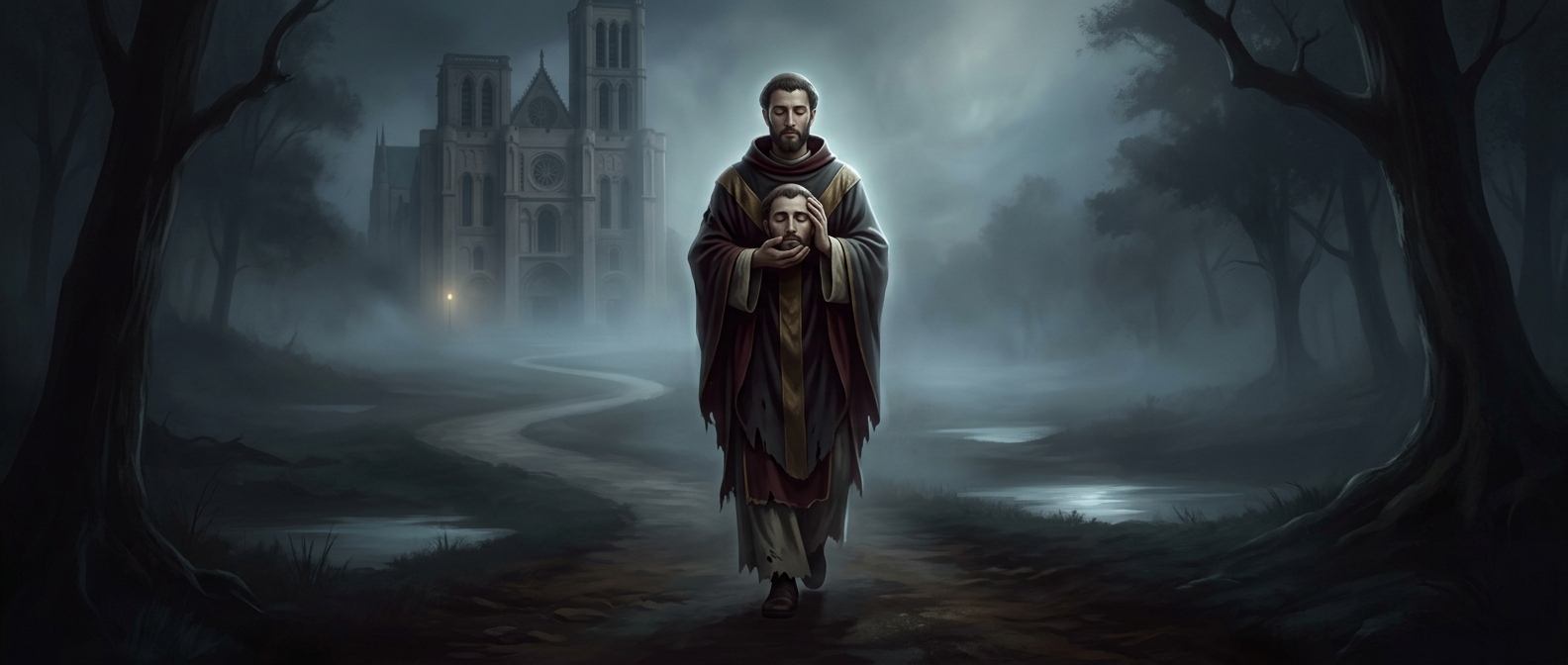
In the story of Denis of Paris, execution is not the end of the saint’s mission. After being beheaded, Denis is said to have picked up his own head and walked several miles, preaching as he went. The tale belongs to a tradition of Christian stories about cephalophores—saints depicted carrying their severed heads. The word comes from Greek roots meaning “head-bearer.”
The detail makes the story more than a marvel of endurance: it turns the body’s apparent defeat into a sign that Denis’s message continues. In medieval religious storytelling, extraordinary events could make a saint’s holiness vivid and memorable, especially for people encountering the story through images, sermons, or local ritual.
From Martyrdom to a Place on the Map
Denis was associated with the Paris region, and the legend connects his final journey with the place where the Basilica of Saint-Denis later stood, north of central Paris. The traditional account places his execution at Montmartre and says he carried his head to his burial place. The route helped bind the saint’s story to the landscape: a martyrdom site at one end, a shrine at the other.
The miles in the tale are therefore part of its local meaning, not just a measure of distance. They explain, in legendary form, why Denis’s memory belonged to a particular place—and why a walk after death became one of the most recognizable images associated with him.