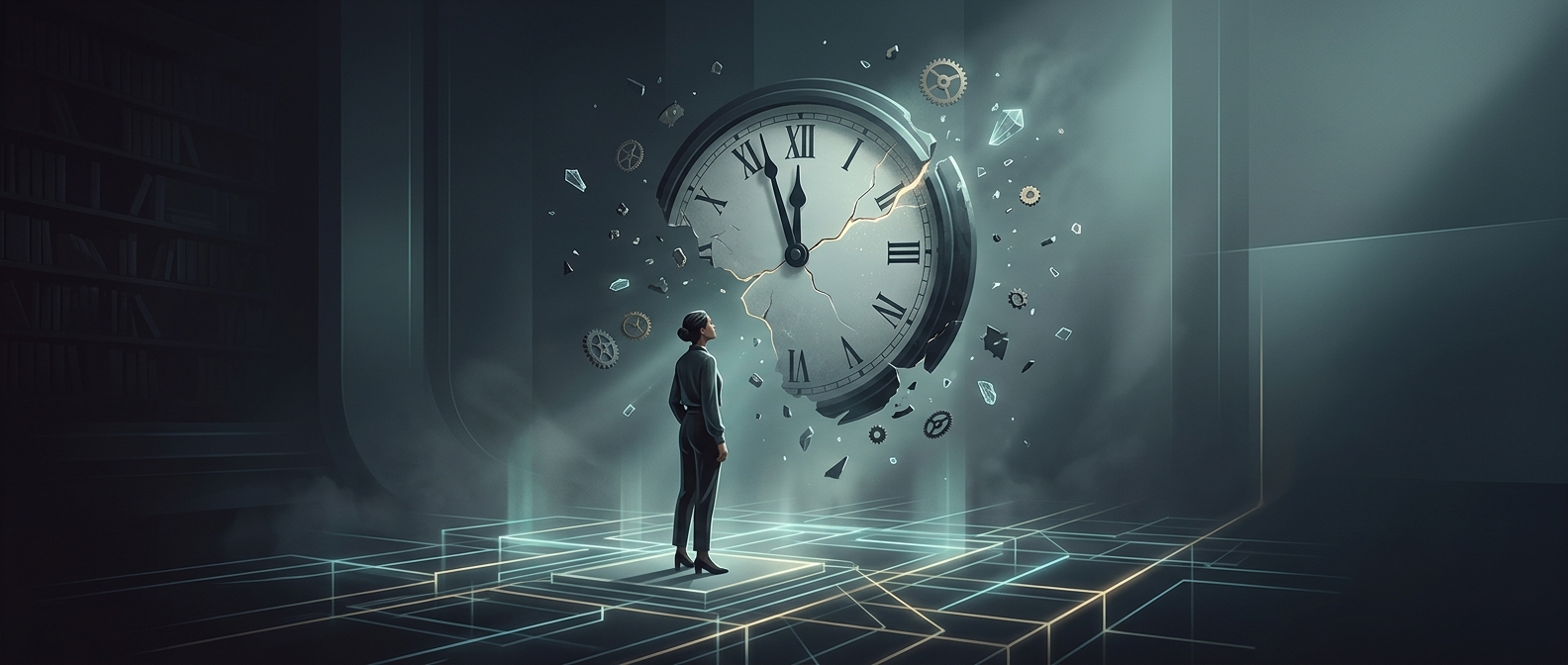
The clock has a fixed-size counter
Some older software measures time by counting seconds since January 1, 1970, a convention known as Unix time. On affected 32-bit systems, that count may be stored in a signed 32-bit integer: a box with room for 32 binary digits, one of which indicates whether the value is positive or negative.
Because one bit marks the sign, the largest positive count is 2,147,483,647 seconds. At 03:14:07 UTC on January 19, 2038, that limit is reached. When the counter advances again, software that treats the value as signed can read the result as negative—interpreting the date as a day in 1901 rather than a moment in 2038.
A wrong date can disrupt a working device
The clock itself may keep ticking, but programs often rely on time to decide what happens next. A date that suddenly appears to be more than a century in the past can confuse software that orders events, checks whether a certificate or license is valid, schedules a task, or records a log entry. Depending on how a system handles that unexpected value, a feature might malfunction, a process might stop, or a device could reset.
The risk is not limited to a computer visibly displaying the wrong date. Timekeeping code can sit inside appliances, industrial equipment, network devices, and other products expected to run for years without attention. A device may work normally today while still carrying the vulnerable counter in a component that only becomes important when it handles a future date.
The fix has to reach the whole system
A common remedy is to use a wider time value, such as a 64-bit integer, which can represent vastly more seconds. But changing the clock is not always enough: software components must agree on how dates are stored and passed around, and old programs may still expect the narrower format.
That makes the date less like a universal shutdown switch than a deadline for finding hidden assumptions. The most exposed systems are those that combine the old counter with long service lives and no practical way to install an update—where a date that looks impossibly far away can arrive before the hardware is retired.