A Schoolteacher’s Public Life and Private Project
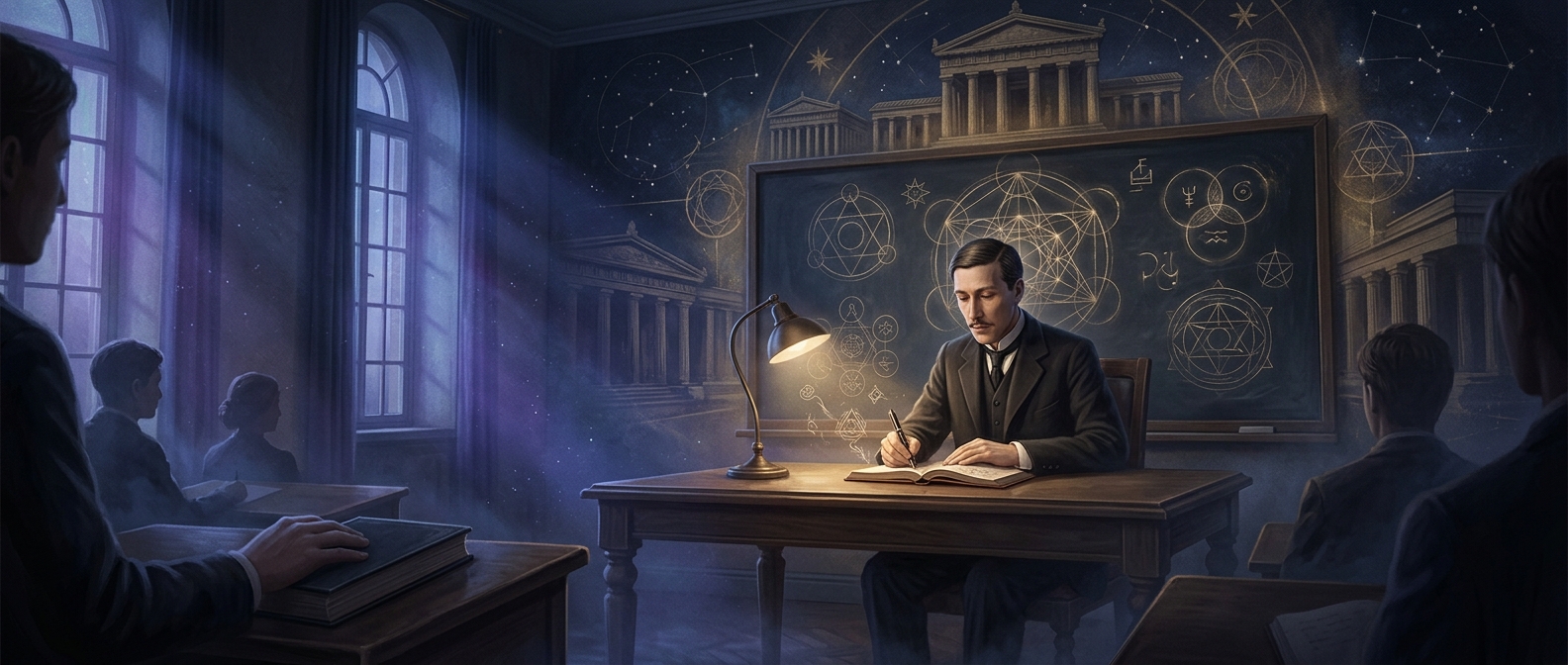
Before settling in Cairo, René Guénon supported himself by teaching philosophy in French provincial public schools. His students were teenagers, and his work placed him inside an ordinary institution of modern education even as his writing challenged many of modernity’s assumptions.
Guénon’s own project was not simply academic philosophy. He argued that lasting spiritual traditions preserved a deeper understanding of reality than modern societies could offer. That outlook later became associated with Traditionalism, a current of thought that treats sacred traditions as expressions of enduring principles.
The Classroom Was Not the Whole Story
Teaching philosophy provided a profession; it does not, by itself, explain Guénon’s beliefs or why he eventually left France. The useful distinction is between his public role—introducing young students to philosophy as a school subject—and the broader metaphysical questions he pursued in his books.
His move to Cairo marked a change in setting, not the beginning of his intellectual concerns. Those had developed alongside his working life in France, showing how a conventional teaching post could coexist with a project aimed at rethinking the foundations of modern thought.