How a Séance Made a Table Seem to Rise by Itself
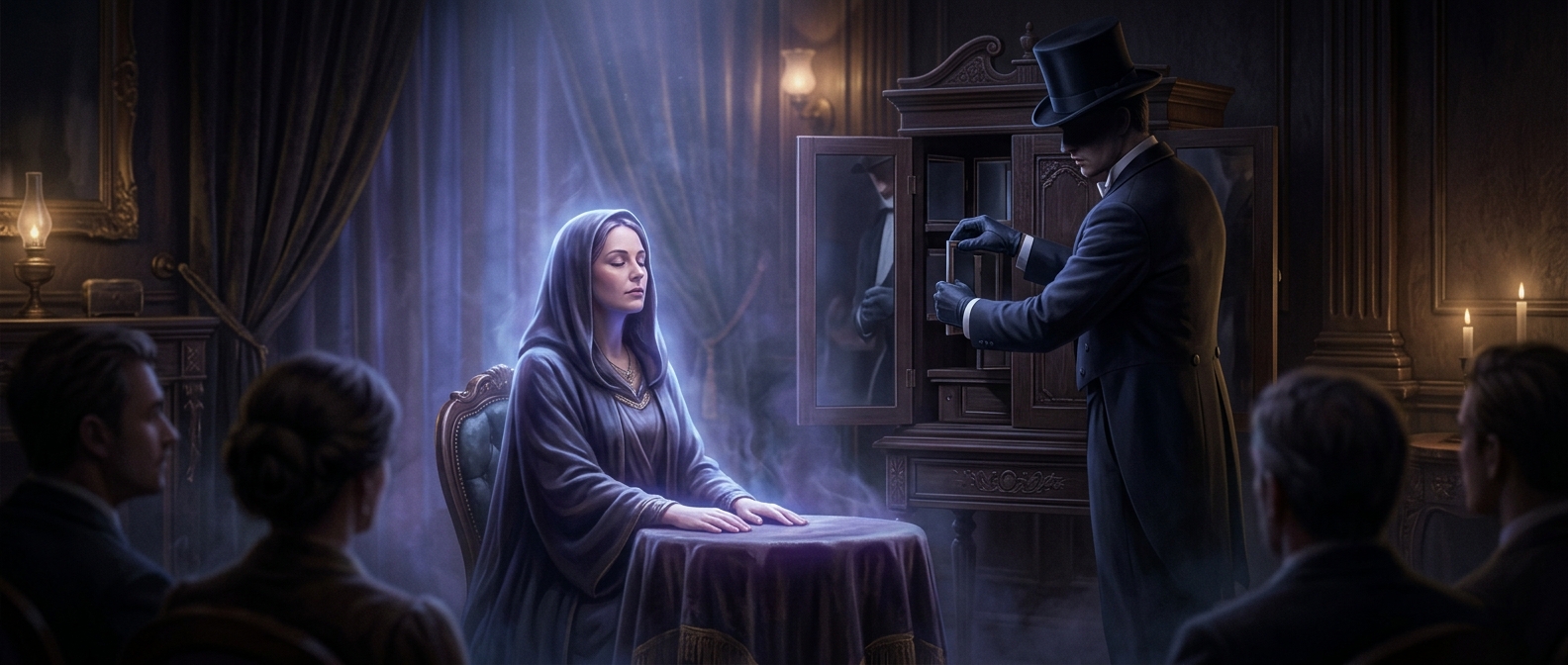
A table that shifts or lifts in a darkened room can look like evidence of an invisible force. But the same darkness that made a séance feel mysterious also made small physical actions hard to see. In that gap between what guests felt and what they could observe, Eusapia Palladino’s performances became especially compelling—and especially difficult to assess.
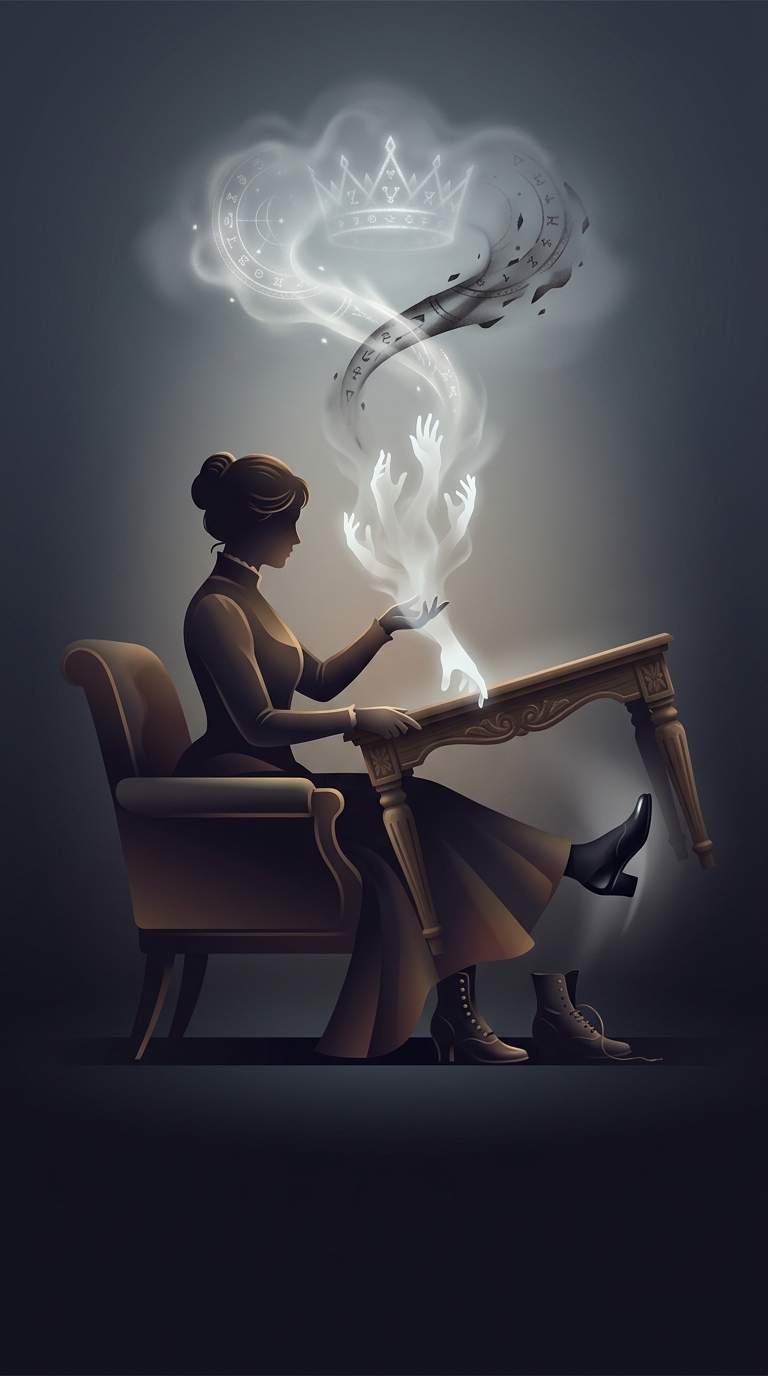
One reported method was simple leverage: Palladino could slip a foot out of its shoe and use it to lift the table. A movement that appeared to come from the furniture itself could therefore come from the person seated beside it. If attention was fixed on the table or on other activity in the room, the small motion that caused the effect could go unnoticed.
Why Small Props Could Look Like Spectral Hands
A hairpin could serve as a narrow, hard-to-see extension of the hand, allowing Palladino to nudge or manipulate objects in the dark. From across a table, an object that moved without an obvious hand nearby could seem to be controlled—or even touched—by a separate presence. The “materialized” hand was not a supernatural explanation for the movement; it was the impression an unseen manipulation could create under séance conditions.
These tricks depended on more than darkness. They also depended on where observers were looking and how closely they could watch Palladino’s hands and feet. A striking result might be clear while the means of producing it remained obscured. That is why demonstrations could impress an audience yet still attract scrutiny from skeptics and scientists: the central question was not merely whether something had moved, but whether every ordinary way of moving it had been ruled out.
Palladino’s notoriety rested on that tension. The effects could feel immediate and uncanny, while the proposed mechanisms were small enough to hide in plain sight. In a séance, the difference between a levitating table and a lifted table might come down to a foot moving beneath the tablecloth.