How a spirit cabinet turned concealment into a spectacle
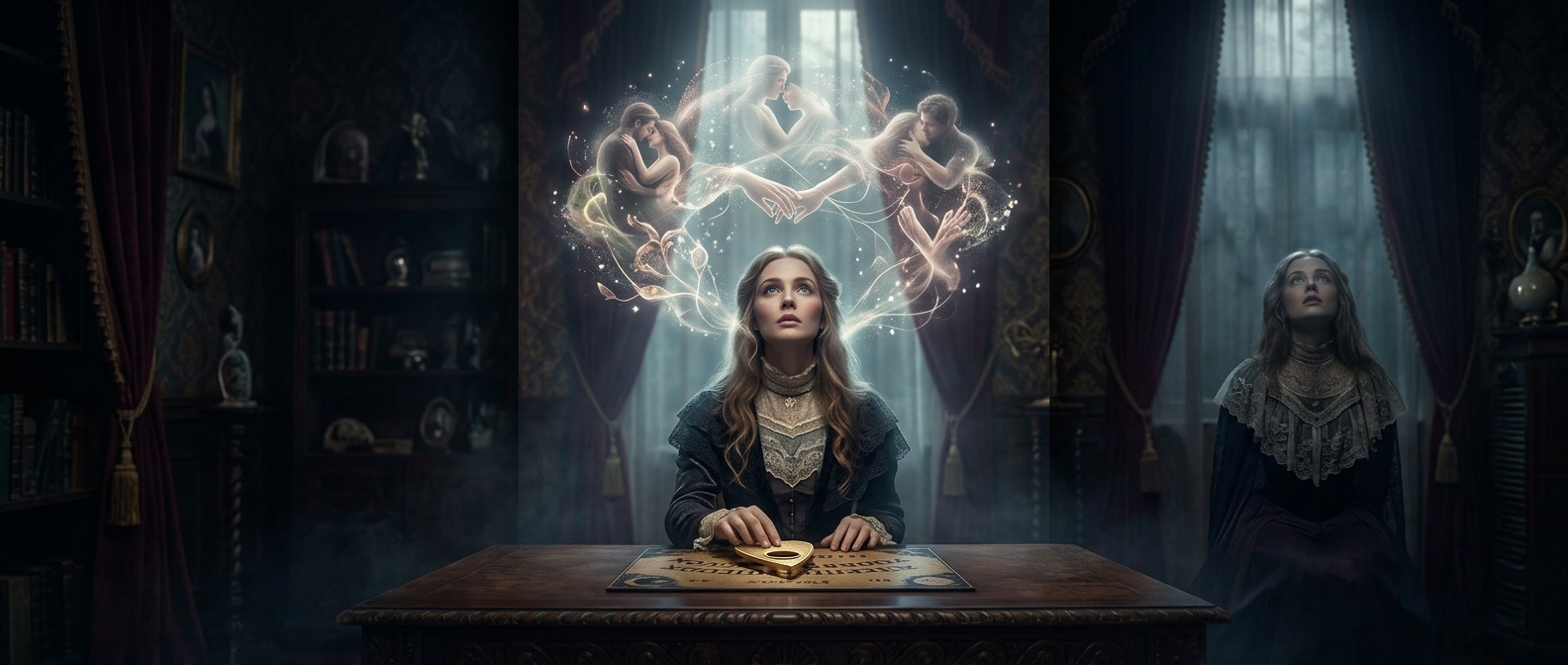
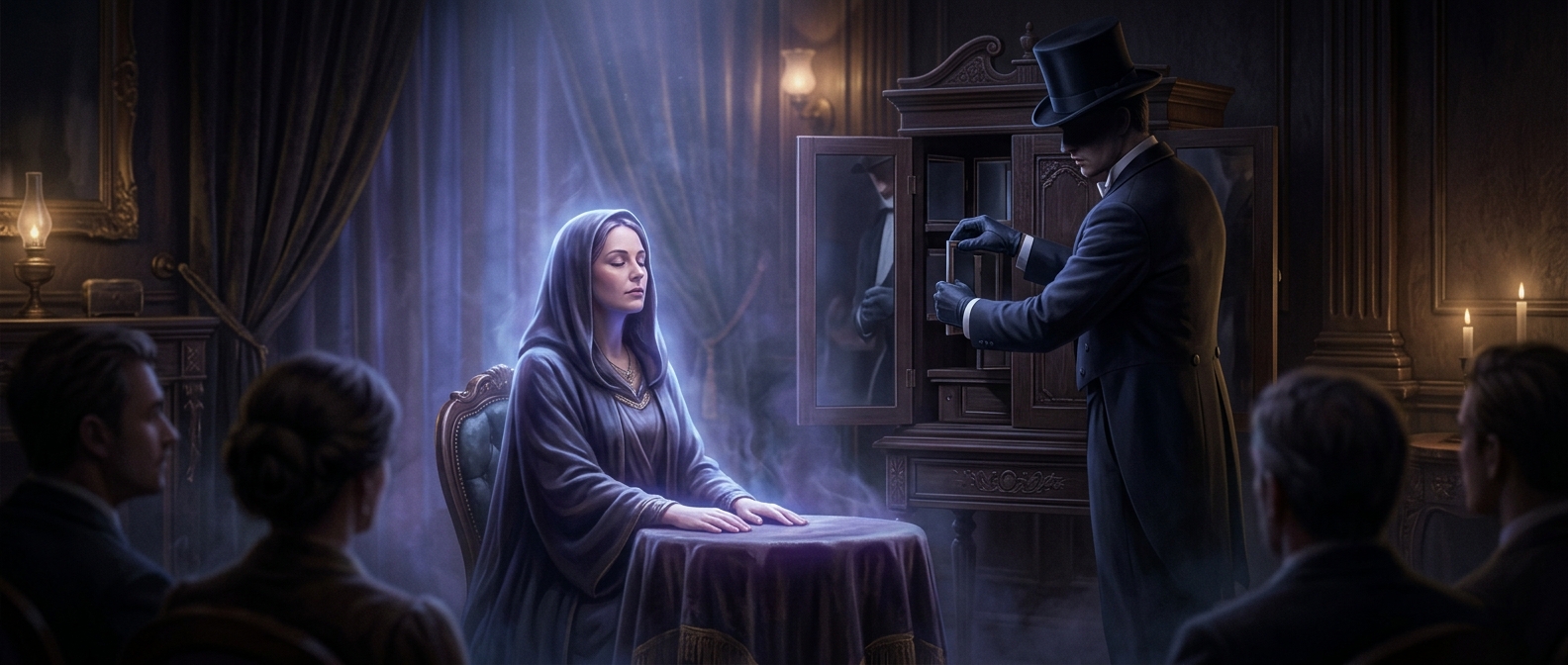
A spirit cabinet was a small enclosed space—often a curtained booth or cabinet—where a medium claimed that spirits could manifest. The darkness and barriers helped create the impression that something extraordinary was happening out of sight. Some mediums brought in stage illusionists, whose practical knowledge of deception could make the setup more convincing.
A magician designing such a cabinet could use hidden compartments, concealed openings, or a trapdoor: a panel that lets a person or object enter or leave without being seen. These features could allow a hand, face, fabric, or other prop to appear briefly and then vanish. Material presented as “ectoplasm”—a supposed substance produced by a spirit—could be staged in the same way. The effect depended not only on the mechanism but on controlling attention: guests watched the cabinet or listened for a sound while an unseen movement took place elsewhere.
The room was part of the apparatus
A cabinet could make a performance feel like a test. The medium might be seated inside while visitors gathered around, sometimes believing that restraints or rules prevented ordinary movement. But a visible barrier does not guarantee that every concealed opening is sealed, and dim light makes small movements hard to track. The audience’s expectations filled in what it could not clearly see.
That is why the involvement of professional illusionists matters: the trick was not necessarily a crude prop, but an engineered arrangement of space, timing, and attention. A cabinet could make a staged manifestation seem to come from an unreachable place. The ghostly appearance lasted only moments; the audience’s uncertainty about how it happened could last much longer.