Turning a Séance Into a Test
A séance could feel convincing in a dark room: a table moved, a message appeared, or a medium seemed to know something hidden. But those same conditions made it difficult to tell whether an effect came from an unknown force or an ordinary method that nobody had noticed. The Scientific American prize tried to move the question from atmosphere to evidence: could a claimed psychic ability produce an effect that held up under laboratory observation?
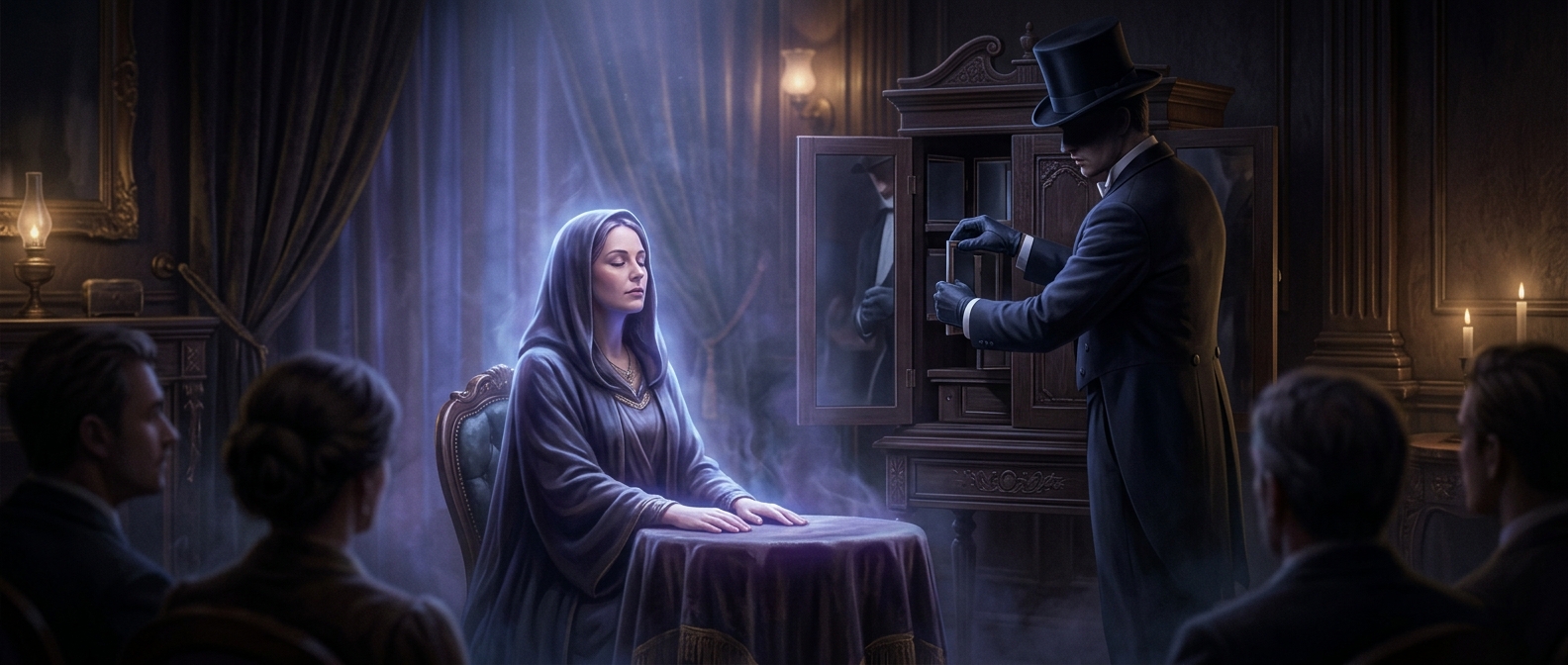
That change in setting mattered. In a controlled test, investigators could watch the medium’s hands, inspect materials, and keep track of the table and other objects. The point was not simply to catch someone in a trick. It was to make the conditions clear enough that a result could be checked and repeated, rather than accepted because it seemed uncanny in the moment.
Why Houdini Looked for the Ordinary Explanation
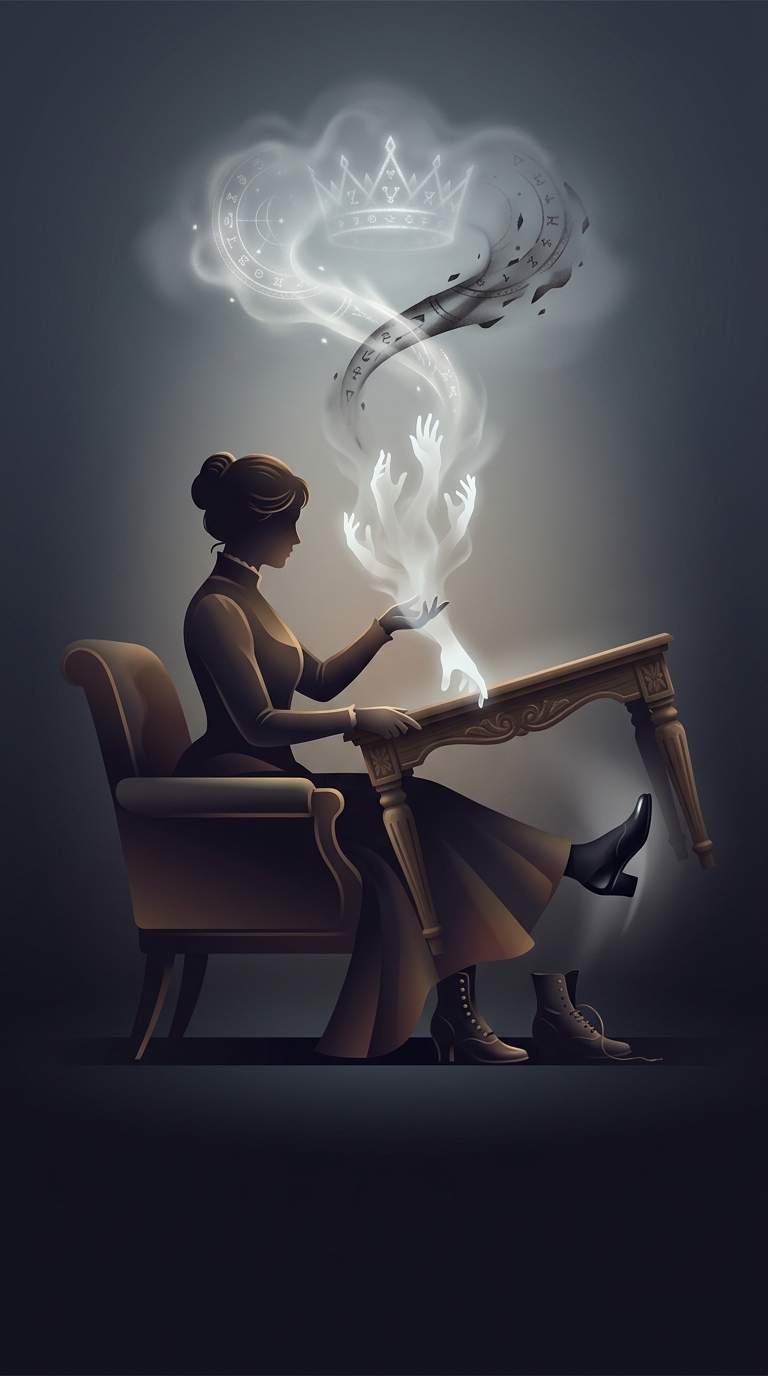
Houdini brought a magician’s practical knowledge to the committee. He knew that a small hidden aid could create a large impression when an audience’s attention was elsewhere. Chalk tucked under a fingernail could leave a mark; concealed wire could move an object; pressure from a knee could shake a table. Each method exploited a gap between what spectators thought they were watching and what they could actually see.
Those examples show why the investigation depended on control, not just suspicion. If a performer could touch an object unseen, or if the apparatus could be moved without notice, a successful demonstration would not establish that psychic powers were involved. A phenomenon had to survive scrutiny that closed off ordinary routes to the effect.
The prize made a popular fascination into a public challenge with a testable standard. It also exposed a lasting difficulty in investigating extraordinary claims: the more dramatic an effect looks, the more carefully observers must rule out familiar ways of producing it.