How a swing becomes a full rotation
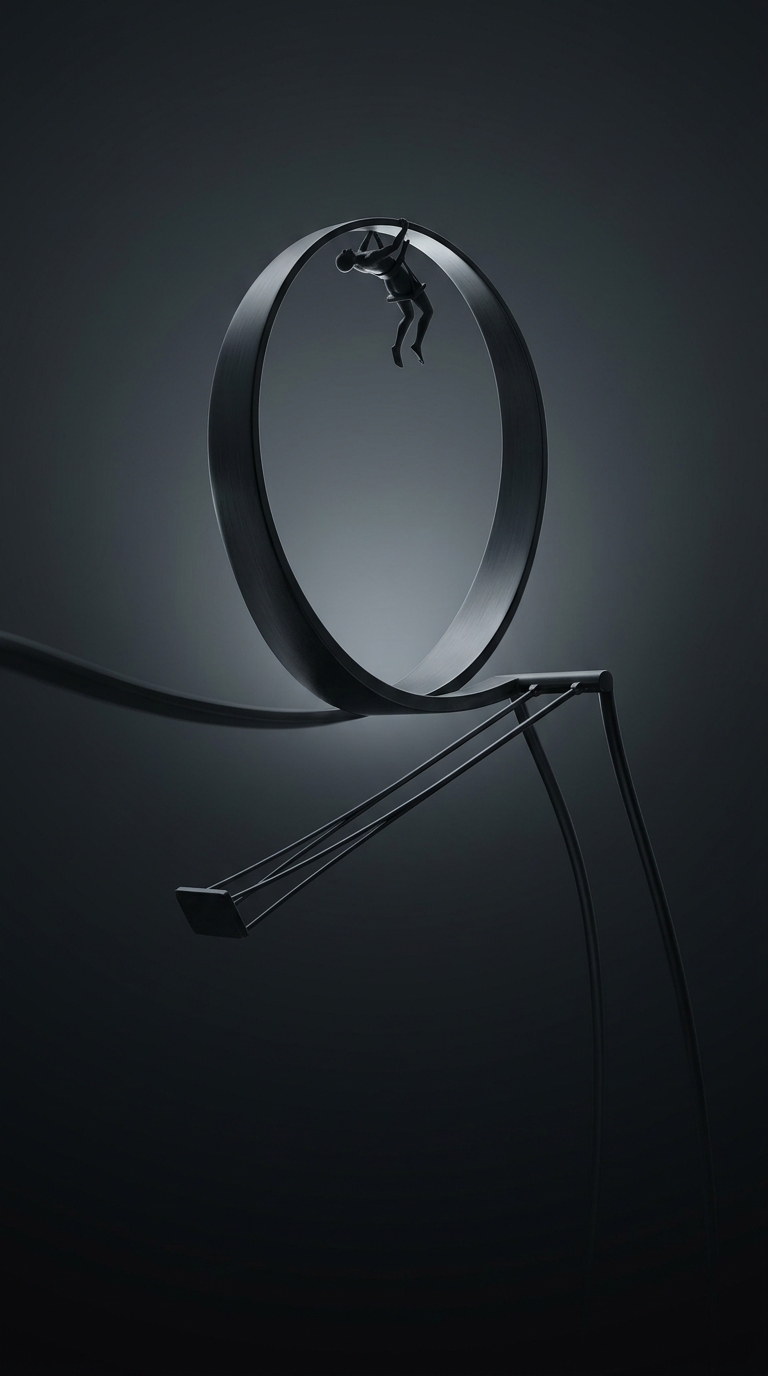
A playground swing moves back and forth because gravity pulls the rider down from each high point. Kiiking turns that familiar motion into a controlled attempt to pass the swing’s top spindle—the axle—completing a full loop. Riders are secured to a purpose-built steel swing, then use their body movements and the swing’s growing momentum to keep climbing around the pivot.
The key challenge is getting the rider and swing high enough to continue over the top, rather than falling back into a normal arc. As the swing rises, the rider must coordinate movement with its rhythm: mistimed effort can waste momentum, while a well-timed shift helps build it.
Why longer arms make the feat harder
In kiiking, the swing’s arms—the supports connecting the seat to the spindle—can be lengthened. A longer arm carries the rider farther from the pivot, so a complete rotation demands more energy: the rider must gain enough height and momentum to travel around a larger circle. That makes arm length a practical measure of difficulty, not just a visual flourish.
The sport’s challenge is therefore a combination of strength, timing, and nerve. Muscular effort helps generate motion, but it has to be applied in rhythm with the swing; brute force alone cannot substitute for a full, continuous rotation.
Kiiking developed in Estonia, where its name comes from the Estonian word for swinging. What looks at first like an oversized playground ride is engineered around a precise question: how long can the arms be while the rider still makes it all the way over the spindle?