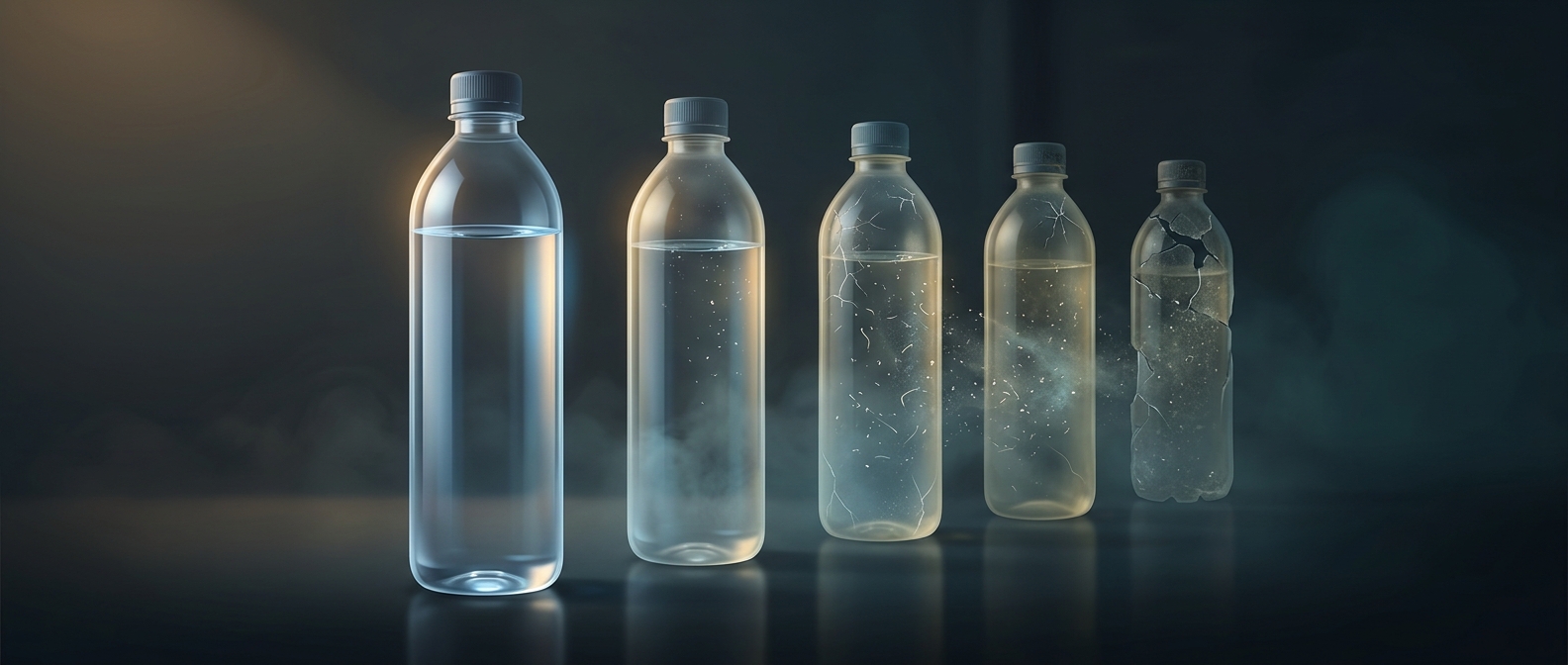
What a bottled-water date is really tracking
Water does not spoil on a schedule the way fresh food does. The date printed on a bottle is generally a guide to the expected quality of the packaged product—not a measurement of when the water itself becomes unsafe. The package matters because water sits in contact with its bottle and cap for months or years.
Plastic packaging is not perfectly unchanging. Over time, and especially when exposed to heat or sunlight, it can affect the water’s taste or smell. The bottle or cap can also be damaged, compromising the seal. These changes are reasons to store bottled water in a cool place and avoid drinking from a container that is leaking, badly damaged, or has an unusual odor or taste; they do not mean that plastic routinely breaks down into a bottle of water by its printed date.
Why the date still matters
For sellers, a date helps manage stock and signals how long the manufacturer expects the product to retain its intended quality under ordinary storage conditions. It is a practical limit on the bottled product, not a countdown to water suddenly becoming hazardous. Storage can matter more than the calendar: a bottle left in a hot car or direct sun has had a different life from one kept cool and sealed.
So the useful distinction is between the water and its packaging. The date is chiefly about confidence in the packaged product’s quality, while the condition of the bottle and how it was stored help explain whether that confidence still makes sense.