Why a Slow Drip Can Change a Farm’s Costs
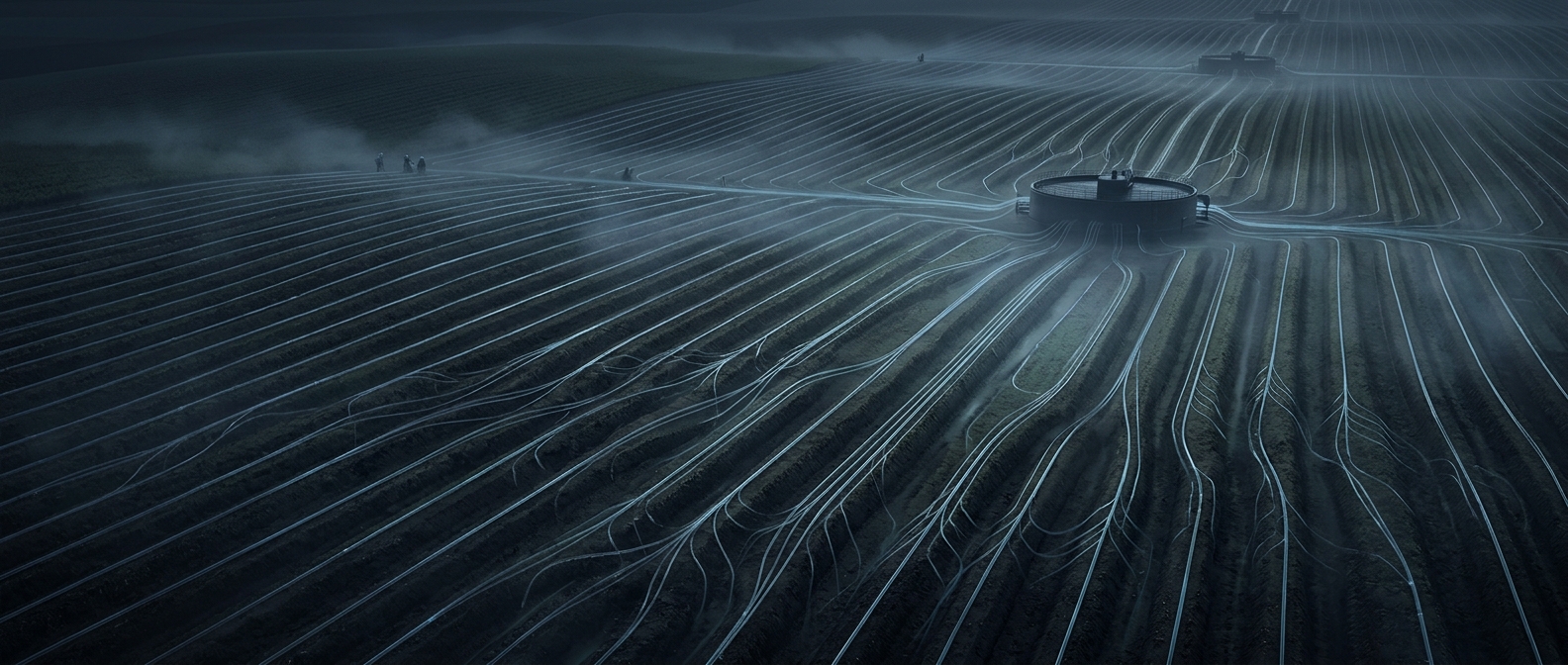
A drip line is valuable not simply because it releases water slowly, but because it delivers water close to the crop’s roots. That targeted placement can reduce losses from evaporation and runoff compared with watering broad areas of soil. It can also leave the spaces between crop rows drier, limiting water available to weeds. For a grower, those effects may mean less water pumped and fewer resources spent managing unwanted plants—though the savings depend on the crop, soil, weather, and system design.
The Tiny Passage Is the Working Part
Inside the tape, each outlet forces water through a narrow, winding channel. The turns create resistance, reducing pressure before water exits. That matters because water entering a long line is under more pressure near its beginning than at its far end; the internal passage helps make delivery more even along the row. If pressure is poorly controlled, plants at one end may receive more than those at the other, undermining the point of precise watering.
The water must also be clean enough to pass through the small openings. Fine particles can clog an outlet, leaving a plant short of water while neighboring plants continue to receive it. Filtration and checking lines therefore become part of the system’s cost and routine, not optional extras.
A Tradeoff Between Precision and Upkeep
Thin plastic tape can be economical to install across large fields, but it is vulnerable to damage and may need replacement. Farmers weigh that expense and the labor of laying, monitoring, and removing lines against potential savings in water, pumping, and crop losses. Drip irrigation is not automatically cheaper everywhere: its advantage is strongest when the value of more controlled delivery outweighs the equipment and maintenance burden.
The small outlet is thus doing more than dispensing water. It turns a field-wide resource into a series of measured deliveries—and makes every clogged or damaged section a potential cost to the crop.