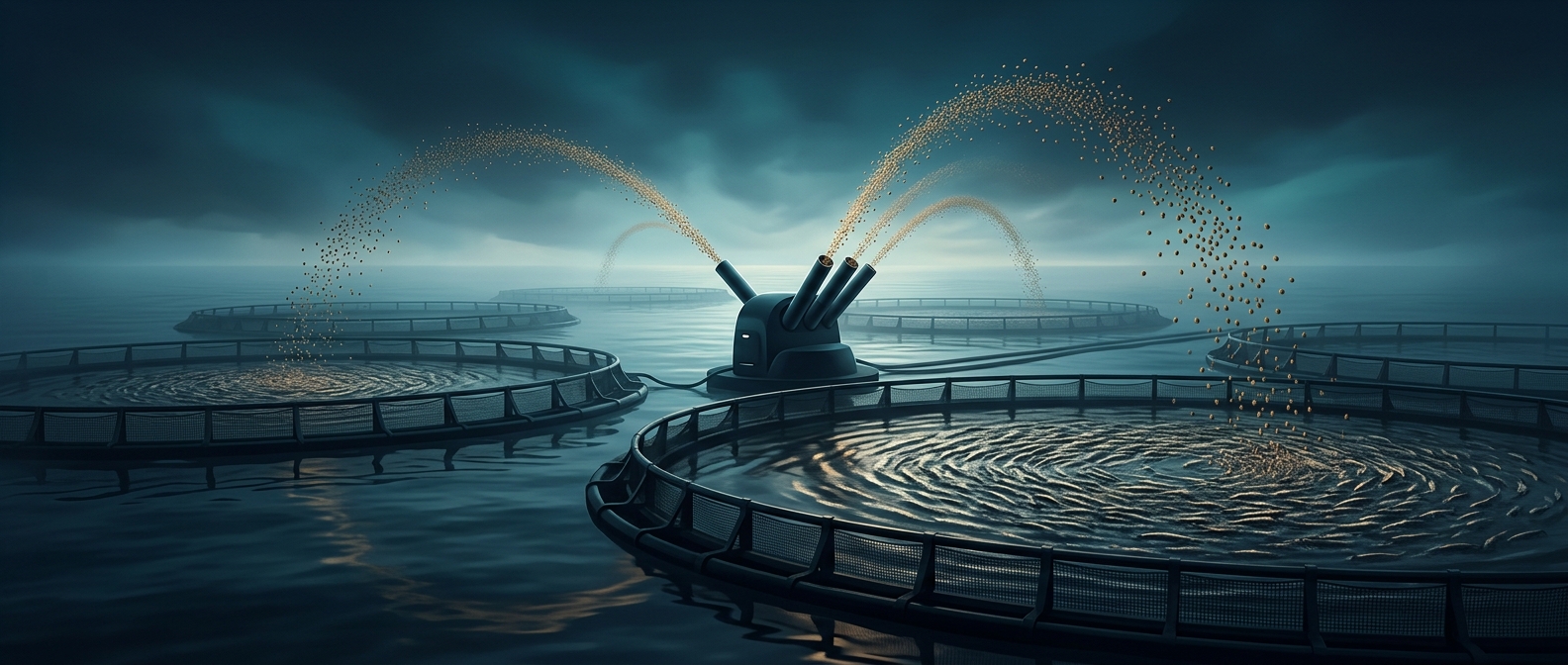
A feeding system built around timing
The cannon is the last step in a delivery chain. Feed is stored in bulk, then moved through pipes by compressed air. At the pen, a controlled burst sends pellets outward so they land over a broad area rather than in one heap. The “cannon” is pneumatic: air supplies the force; there is no explosive charge.
Spreading feed matters because salmon compete for pellets at the surface. A wide scatter gives more fish a chance to eat and helps avoid concentrating the meal in one spot. The delivery can be automated, allowing staff to feed several pens without carrying bags of feed around each enclosure.
Why a few missed pellets matter
Feed is a major recurring expense in fish farming, so the goal is to give fish enough to grow without sending a surplus into the water. Pellets that escape uneaten are not just wasted food: they can add organic material to the seabed as they sink and break down. The system therefore has to balance coverage with restraint.
Operators can adjust how much feed is delivered and when, based on the fish’s appetite and growth needs. A burst that reaches thousands of fish is efficient only if the fish actually consume the food. The practical consequence is that a loud, mechanical feeding moment is also a tightly managed calculation: distribute the meal broadly, but stop before the remaining pellets become waste.