The market rewards fast-growing birds
A broiler is a chicken raised for meat. Breeding programs have long selected birds that turn feed into saleable meat efficiently, with particular value placed on the breast: it is a large, sought-after cut. Each generation of selection favors birds whose inherited traits produce more of that product, helping keep meat production economical.
The change is not simply “bigger chickens.” It is a shift in how quickly the birds grow and where much of that growth goes. Their bodies can add muscle faster than their legs and supporting structures can comfortably accommodate the added load. A bird’s ability to stand and move depends on more than leg strength: bones, joints, and the coordination needed to bear weight all have to keep pace.
Efficiency has a physical cost
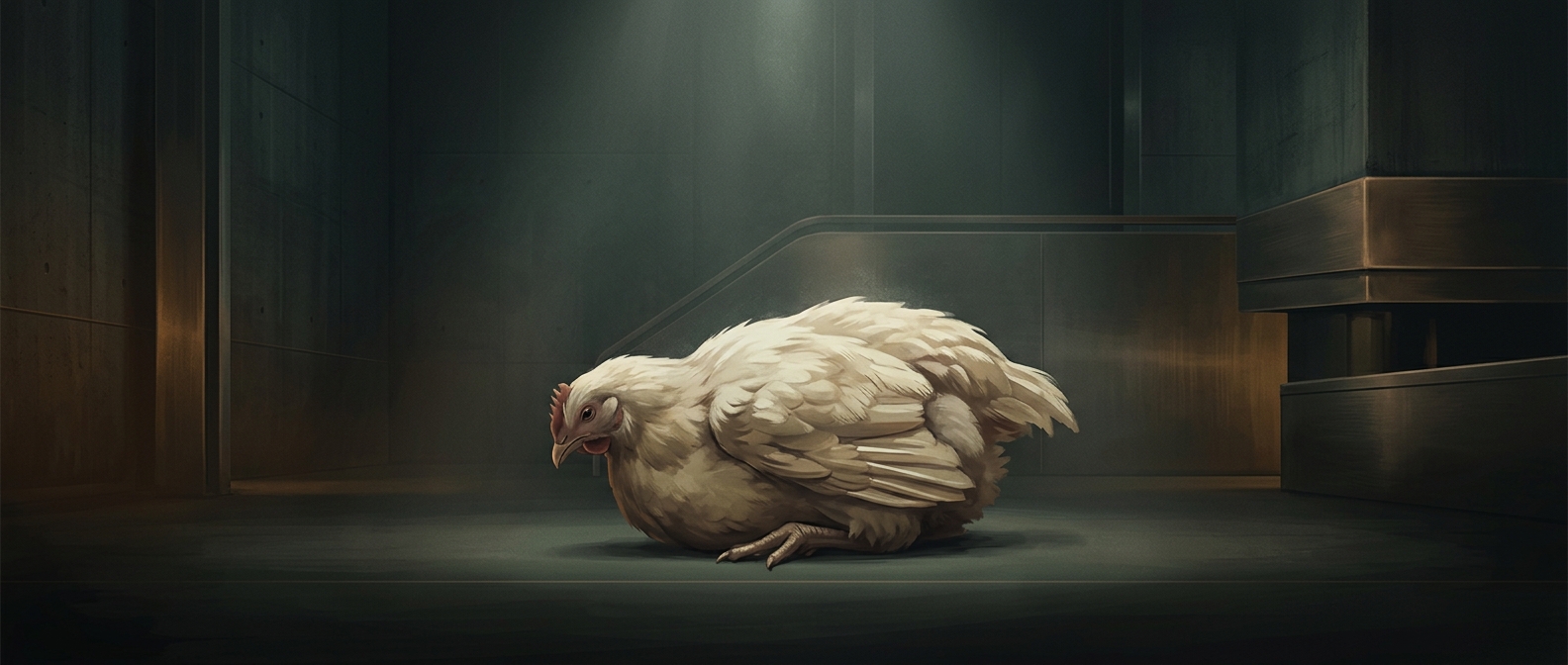
When growth outstrips that support, walking can become difficult. This is why rapid growth is linked to leg and mobility problems in some broilers—not because every large bird is unable to walk, but because the same production trait can raise the strain on a bird’s body. The problem is especially consequential in a crowded production setting: a bird that moves poorly may have more trouble reaching food and water or shifting position.
Producers and breeders face a tradeoff. Faster growth and more breast meat can lower the resources needed to produce a given amount of meat, but selecting so strongly for output can compromise mobility. The practical challenge is to retain efficient growth while also valuing traits that let birds support their bodies and move normally. In the bird, that tradeoff is visible at floor level: a gain measured in meat can become a burden carried on every step.